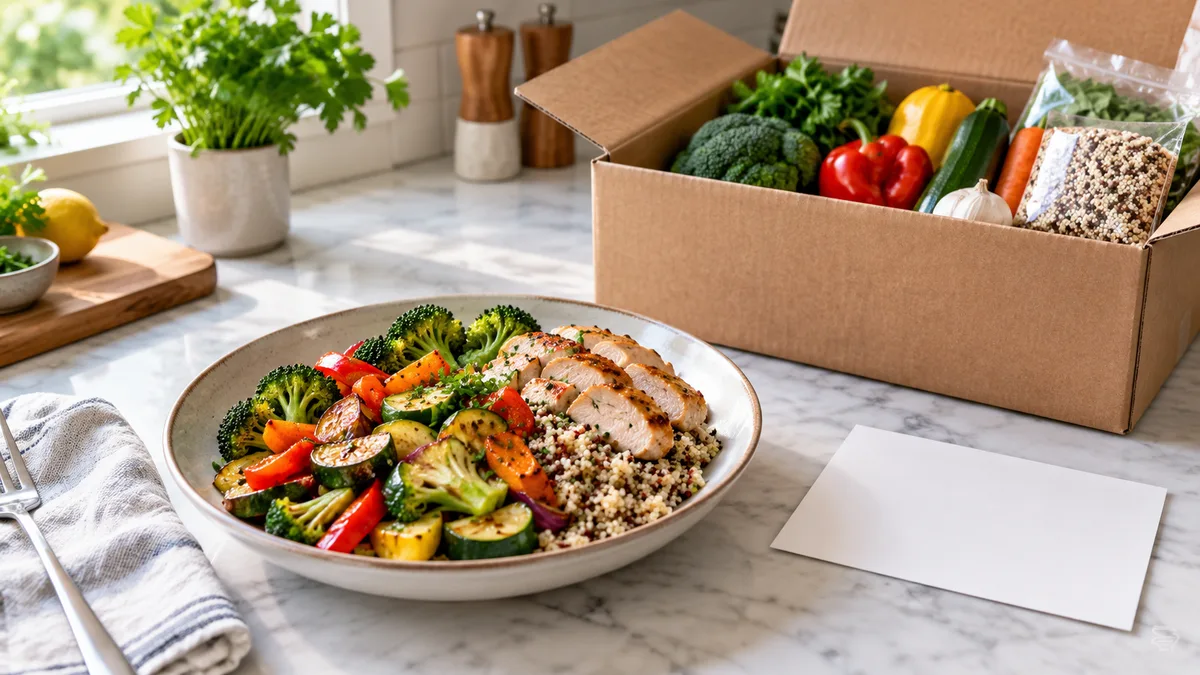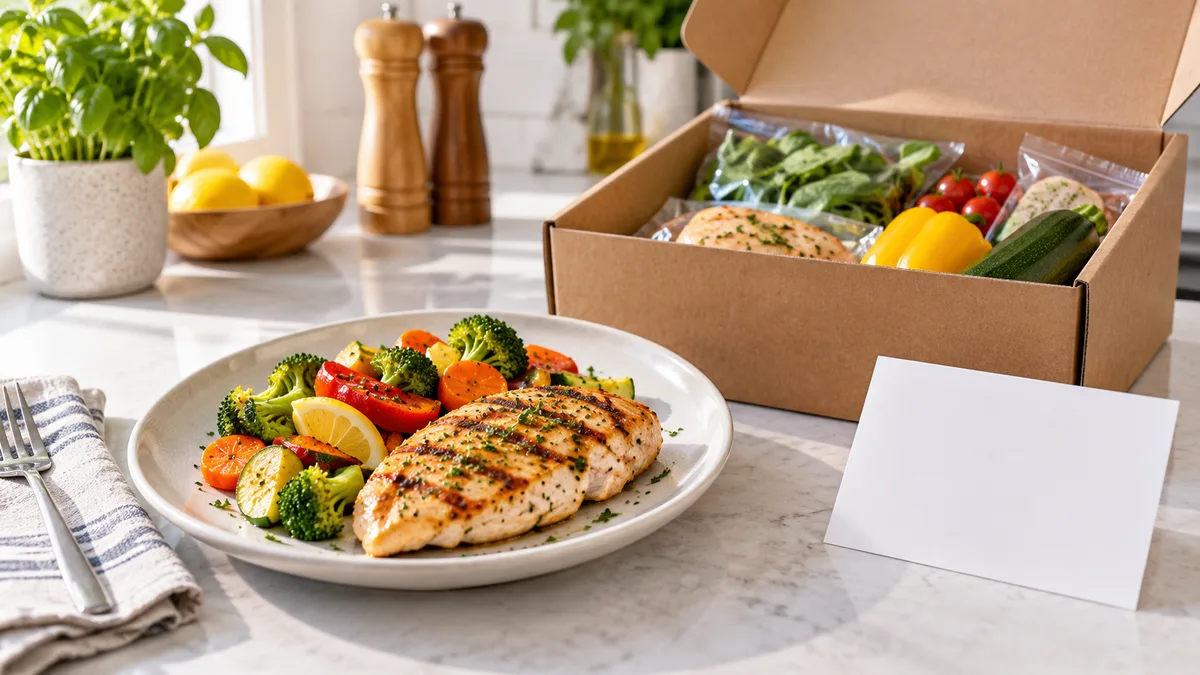
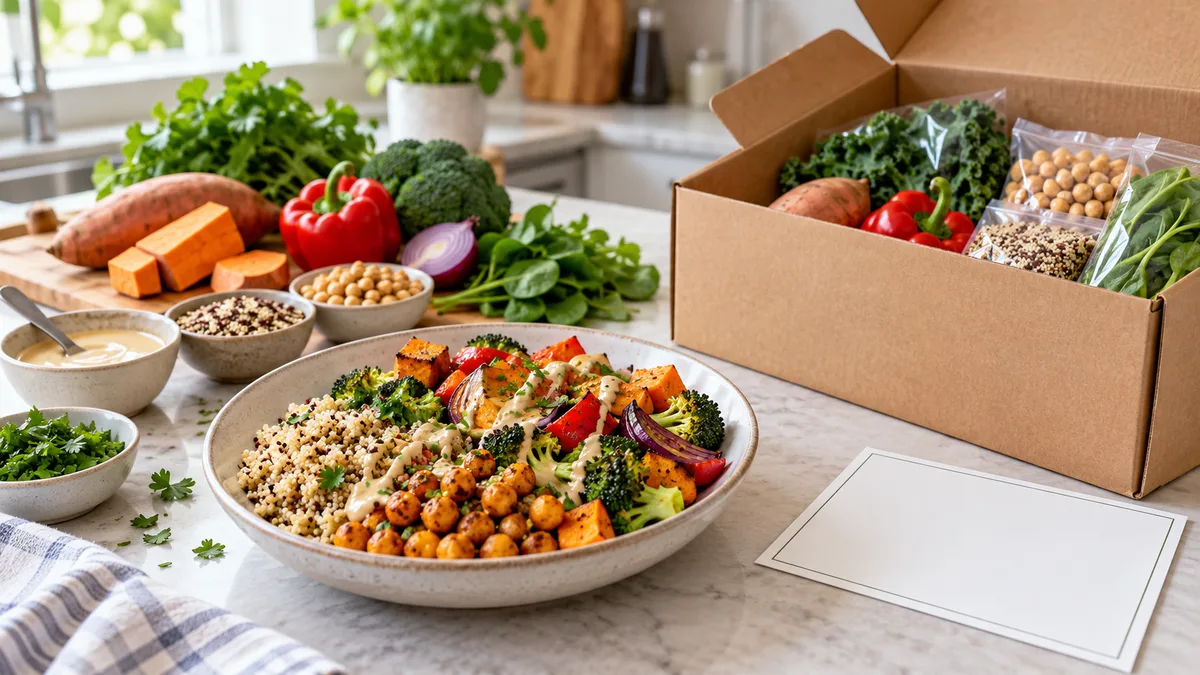
Vegetarian meal delivery covers a wide range — from a filter on a general meal kit website that shows plant-based options alongside meat dishes, to a fully dedicated service where no meat enters the facility at all. Which kind suits you depends on how strictly you eat vegetarian and how much variety you need week to week. This guide explains how the main types compare and what to check before you subscribe. It is part of our wider guide to meal delivery for seniors, which covers how services compare across dietary needs, price and convenience.
Why vegetarian meal delivery makes sense for older adults
The USDA's MyPlate guidance encourages adults to vary their protein sources and include beans, peas and lentils regularly. The NIA's healthy eating guidance for older adults includes plant-based proteins as part of a balanced approach to nutrition. Both reflect the same practical point: eating well doesn't require meat at every meal, and building plant-forward habits is something a delivery service can actively support.
I've been eating mostly plant-based on weekdays for two years. The honest reason is that I like the way I feel — lighter, easier. But the practical reason I started using a delivery service for some of those meals is simpler: I ran out of ideas. The same lentil soup and veggie stir-fry every week gets old fast. A good service keeps the variety up without making you plan every meal yourself.
The NIA also notes that older adults may need to pay attention to getting enough of certain nutrients that plant-based diets can be lower in. That's worth discussing with a doctor or dietitian if you're making a significant change to how you eat — delivery can support a plant-based approach, but it's worth doing it thoughtfully.
First: clarify what "vegetarian" means to you
Vegetarian is not a single category, and services define it differently.
- Lacto-ovo vegetarian: includes eggs and dairy; excludes meat, poultry and fish. This is the most common definition.
- Vegan: excludes all animal products — no meat, poultry, fish, eggs, dairy or honey.
- Pescatarian: excludes meat and poultry but includes fish. Some services include this under a "vegetarian" filter, others don't.
Before you filter by vegetarian on any service, check their definition. The meal that shows up under your filter should match what you actually eat.
The main types compared
Every type on this page carries our Researched label: descriptions come from public product pages and manufacturer specifications. We did not test any of these products, and no brand is ranked.
| Type | Vegetarian variety | Cooking required | Best for |
|---|---|---|---|
| General meal kit with GF filter | High | Yes | People who cook and want wide variety |
| General prepared service with VG options | Moderate | No — heat only | People who want convenience with flexibility |
| Dedicated plant-based service | Full menu | Varies by service | Strict vegetarians or vegans; shared households |
General meal kit services with a vegetarian filter (Researched)
Most major meal kit services offer several vegetarian recipes each week alongside their meat options. You cook the meals yourself using the pre-portioned ingredients and recipe card.
Good for: people who enjoy cooking, want the widest possible variety of vegetarian recipes, and want full control over ingredients and preparation. Limits: you are cooking alongside a general menu that also includes meat — some people prefer not to handle the two in the same shopping delivery. Also, a service's vegetarian section may shrink during certain weeks. What to look at: how many vegetarian meals are offered each week (look at several weeks of menus, not just the current one), how the service defines vegetarian, and whether the variety is enough to avoid repetition.
General prepared meal services with vegetarian options (Researched)
Ready-to-heat services typically have a vegetarian category within their broader menu. Meals are fully cooked; you heat and eat. The vegetarian selection is usually smaller than the full menu.
Good for: people who want minimal cooking effort and are happy to choose from a curated selection rather than the full menu. Limits: the vegetarian category may include fewer meals per week than the general menu, which can mean repetition over time. Variety may be more limited than with a meal kit. What to look at: how many unique vegetarian meals the service offers per week; whether they rotate the selection regularly; and whether they show the main ingredients on the menu page before you order.
Dedicated plant-based delivery services (Researched)
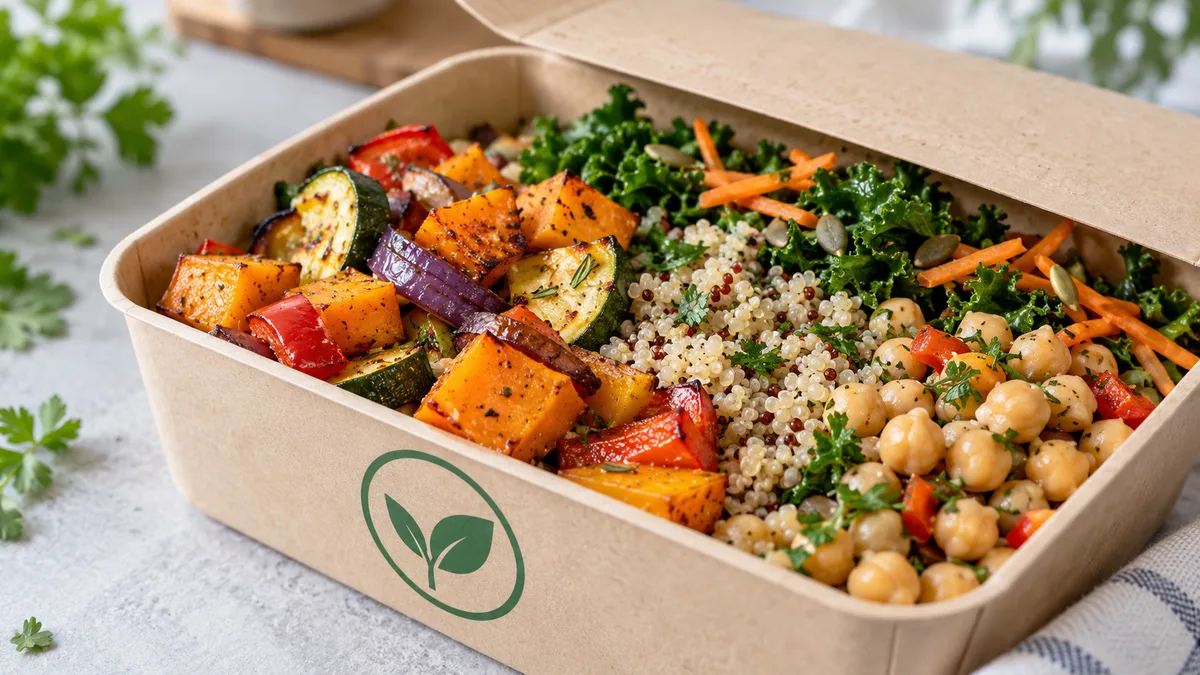
Some services are fully vegetarian or vegan — every meal on the menu fits the dietary requirement, with no meat options. These services are built around plant-based eating rather than offering it as an option within a broader menu.
Good for: strict vegetarians or vegans who don't want to filter a mixed menu; people who share a household with meat-eaters and want a fully separate service; anyone who wants the simplest possible ordering experience for plant-based eating. Limits: menus are naturally more limited in style and variety than general services. Some people find the flavor profiles repetitive over time. What to look at: whether the service is vegetarian, vegan or both; delivery area and minimum order; and whether the menu variety is enough for your week.
What to compare before you choose
Five questions sort out most decisions:
- What is my definition of vegetarian? Lacto-ovo, vegan or pescatarian — confirm the service's definition matches yours before you order.
- Do I want to cook or just heat? Meal kit: you cook. Prepared: you heat. That single choice narrows the options.
- How much variety do I need? Check how many different vegetarian meals are offered each week. Browse several weeks of menus, not just the current one.
- Can I stack dietary filters? If you also need gluten free or low sodium, check how many meals meet both criteria. Our guide to low sodium meal delivery covers how to find services that handle multiple dietary needs.
- Is there a trial or first-order option? Testing the food before committing to a subscription is the simplest way to avoid disappointment.
A note on variety and protein sources
A good week of vegetarian meals includes more than salads and grain bowls. Look for meals that draw on different protein sources across the week — beans and legumes, tofu or tempeh, eggs, cheese, or a combination. Most services list the main ingredients on the menu page before you order.
Browsing two to three weeks of upcoming menus before subscribing gives you a realistic picture of what you will actually be eating. A service that looks varied in week one often settles into patterns by week three.
Frequently Asked Questions
What is the best vegetarian meal delivery service?
The best service depends on how strictly you eat vegetarian and how much cooking you want to do. General meal kit services offer a wide variety of vegetarian meals and let you cook to your taste. Dedicated plant-based services have a fully vegetarian menu — useful if you share a household with meat-eaters and want to keep things simple.
What is the difference between vegetarian and vegan meal delivery?
Vegetarian meals exclude meat, poultry and fish but may include eggs, dairy and honey. Vegan meals exclude all animal products. Some services use the two terms loosely — check the service's own definition before ordering.
How do I make sure vegetarian meals are filling and varied?
Look for meals that include a variety of protein sources across the week — beans, lentils, tofu, tempeh, eggs or dairy — rather than meals that are primarily vegetables and grains. Browse two to three weeks of menus before subscribing to get a realistic picture of the variety.
Can I combine vegetarian and other dietary filters?
Most services allow you to apply more than one filter — for example, vegetarian and gluten free, or vegetarian and low sodium. The number of meals that meet both criteria will be smaller. Check the combined result on the menu page before subscribing.
One thing to try this week
Look at what you ate for dinner the last three evenings. Count how many of those meals were fully plant-based — no meat, poultry or fish. If the number is lower than you'd like, that's your starting point. A delivery service works best when it fills a gap you've already identified rather than replacing a routine that already works. For a full overview of meal delivery options, see our guide to meal delivery for seniors.
Sources
- USDA MyPlate, Protein Foods: myplate.gov/eat-healthy/protein-foods
- USDA MyPlate, Vegetables: myplate.gov/eat-healthy/vegetables
- National Institute on Aging, Healthy Eating: nia.nih.gov/health/healthy-eating