Meal delivery for seniors covers more than one kind of service: local programs like Meals on Wheels, prepared meals that arrive fresh or frozen, meal kits you cook yourself and plain grocery delivery. Each one solves a different problem, whether that's shopping, cooking or simply having a warm meal and a friendly face at the door. This guide compares them side by side and lists the questions to ask before you sign up. It's part of our wider guide to health tips for seniors, where eating well sits next to moving and sleeping well.
General information from personal experience, not medical advice. If your doctor has given you eating guidelines, follow those first.
Why meal delivery can help
USDA's MyPlate and the National Institute on Aging both describe eating well as a mix of foods over the week, and the NIA shares tips for older adults who find shopping or cooking harder than it used to be. Meal delivery is one way to keep regular meals on the table when a trip to the store or an hour at the stove feels like too much.
It doesn't have to be all or nothing. Many people mix options: a delivered lunch on weekdays, a frozen portion on busy nights and a home-cooked meal when they feel like it.
This is a researched comparison: we did not try these services ourselves. Brands appear only as familiar examples, not as picks.
Meal delivery for seniors: the options compared
| Option | What arrives | Effort at home | Good points | Limits |
|---|---|---|---|---|
| Local meal program | A ready meal, often hot, sometimes frozen | Very little | Often by contribution; a regular visit | Waiting lists in some areas; limited menu |
| Prepared fresh meals | Chilled single portions | Reheat only | Wide menus; little cleanup | Subscription terms; fridge space needed |
| Frozen meals | Frozen single portions | Reheat only | Keep for weeks; order less often | Freezer space; texture varies |
| Meal kits | Recipe cards and measured ingredients | Cooking and cleanup | Fresh cooking without shopping | Chopping and standing; lots of packaging |
| Grocery delivery | Your usual groceries | Put away, cook | You choose everything | You still plan and cook |
Local meal programs
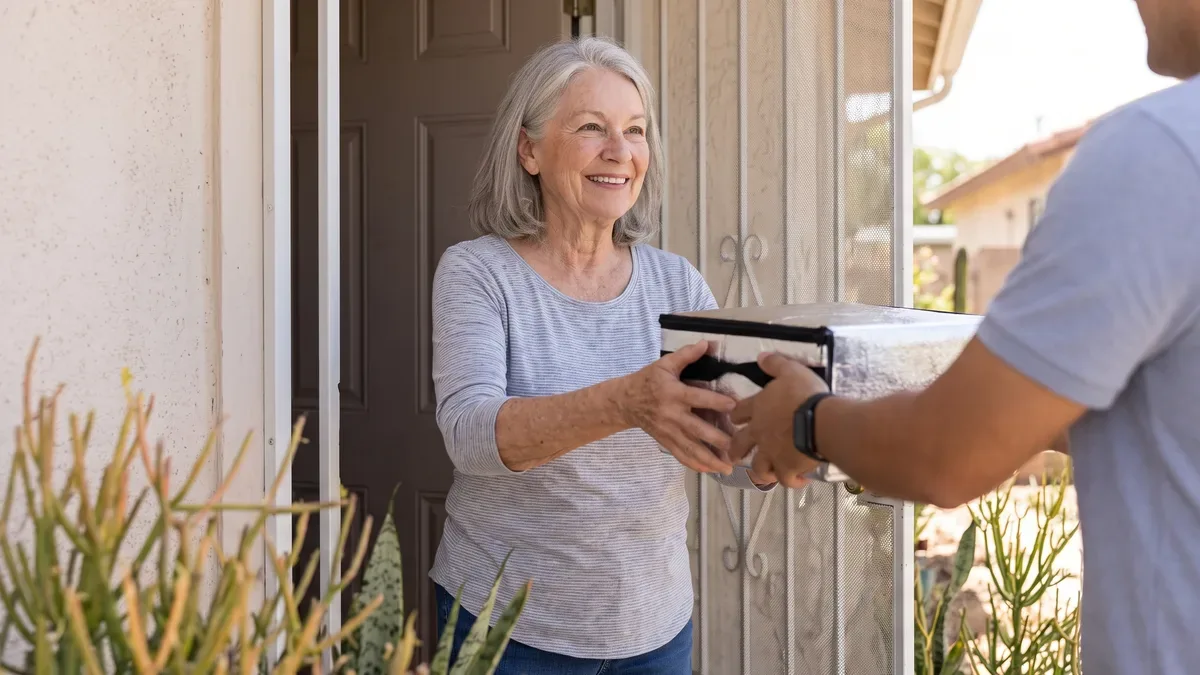
Home-delivered meal programs are the oldest option. Meals on Wheels is the best-known name: a network of local programs across the country, many supported in part through the Older Americans Act. Volunteers or staff bring meals to the door, often on weekdays. For many people, the short visit matters as much as the food.
How to find one:
- Call or visit the Eldercare Locator. It's a free public service of the federal Administration for Community Living. Give your ZIP code and it points you to your local Area Agency on Aging.
- Ask about home-delivered and group meals. Many areas also offer meals served at senior centers, which add company.
- Ask how payment works. Programs funded through the Older Americans Act ask only for a voluntary contribution, sometimes with a suggested amount. People who don't qualify may be offered meals at a set price. Rules vary by program.
Last summer, during a long stretch of hot weeks in Tucson, my mother didn't want to turn the oven on at all. We sat at her kitchen table and called the local agency together. The call was friendlier and quicker than either of us expected, and she came away with a list of options to think about at her own pace.
Prepared meals: fresh or frozen
Prepared meals arrive cooked and portioned. You reheat them in the microwave or oven.
Fresh prepared meals
These arrive chilled, usually weekly, and keep in the refrigerator for a few days, according to the label. National companies such as Factor and CookUnity sell them by subscription, and some local restaurants and grocery stores offer their own versions. Menus are often wide, and you can usually pick meals each week. If you want to look around, you can browse prepared meal services and compare their terms.
Frozen meals
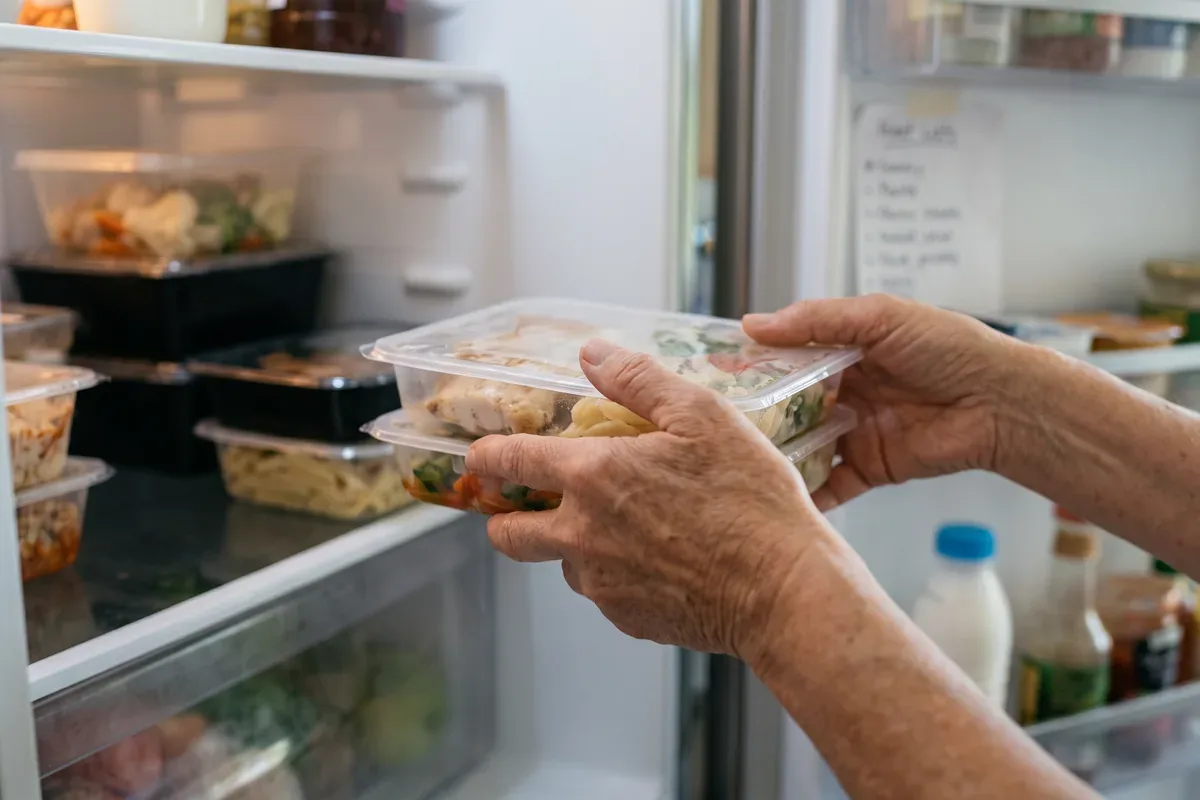
Frozen meals arrive in an insulated box and go straight into the freezer. Because they keep much longer, you can order less often. Several companies focus on frozen meals delivered to older adults, and many grocery stores deliver frozen dinners too. Freezer space is the main limit: a large delivery can fill a small freezer fast.
With both types, look at the reheating instructions before you order. Some trays go in the microwave; others need the oven. Choose what matches your kitchen.
Meal kits
Meal kits, from companies like HelloFresh and Home Chef, send a box of recipes with ingredients already measured. You still wash, chop, cook and clean up. For someone who enjoys cooking but dislikes shopping and planning, that can be a good fit.
A few things to weigh:
- Standing time. Many recipes take a while at the counter. Look for "easy" or "quick" filters.
- Serving sizes. Most kits are built for two or more. Leftovers can become tomorrow's lunch or a frozen portion.
- Packaging. Boxes, ice packs and small bags add up. Check whether the box is light enough to carry in.
If you'd rather cook simply for one, our guide to the best small air fryer compares small countertop cookers that turn a single portion into a quick dinner.
Grocery delivery
Sometimes the problem isn't cooking, it's getting to the store. Many supermarkets deliver, and apps such as Instacart shop from local stores for you. You pick every item, and you can reorder a saved list each week.
A few tips: keep a standing list of staples, check the substitution setting so you're not surprised, and ask whether your store offers a discount day for older shoppers. Our list of senior discounts explains how to find them.
Questions to ask before you sign up
The best meal delivery for seniors is the one you'll keep using without stress. Before you pay, ask:
- How do I pause or cancel? Find the steps in writing. The FTC's online shopping advice applies: know the total cost, the terms and who you're dealing with.
- Is this a subscription? Many first-box offers turn into weekly charges. Write the renewal date on your calendar.
- What's the delivery window? Can the box wait safely if you're out? Is there a signature needed?
- How is it reheated? Microwave, oven or both?
- Can I choose my meals? Look for menus you'd enjoy, not only ones that sound healthy.
- Is the menu easy to read? A large-print menu or a phone line for ordering can help.
Some companies advertise meals that are paid for through health plans. That's outside what this guide covers; ask your plan directly if you're curious.
Keeping delivered food safe
FoodSafety.gov gives simple rules for food that arrives by mail or delivery. Check that cold food arrives cold or still frozen, put it away right away and follow the label for storage times. If a box arrives warm or damaged, contact the company instead of eating it.
Stop if...
- a delivered meal smells sour or looks odd;
- a box that should be cold arrives warm;
- you can't tell how long something has been in the fridge.
When in doubt, throw it out, and let the company know.
Frequently Asked Questions
What is the best ready-made meal delivery service for seniors?
There isn't one best service for everyone. Ready-made meals come fresh in the refrigerator or frozen, from national companies and from local kitchens. The right one depends on your freezer space, how you like to reheat food, the menu choices and how easy it is to pause or cancel. Start with a short trial and read the subscription terms first.
How much do seniors pay for Meals on Wheels?
It depends on the local program. Programs funded through the Older Americans Act ask only for a voluntary contribution, sometimes with a suggested amount, and no one is meant to be turned away for being unable to pay. People who don't qualify may be offered meals at a set price. Call your local program or the Eldercare Locator to ask how it works where you live.
Is there a HelloFresh senior discount for people over 60?
This guide can't confirm one: offers change often, and what we describe comes from public descriptions, to check before you buy. Meal kit companies do run frequent promotions for new customers. Check the company's website or call its customer service to ask directly, and read the terms of any offer, because many turn into a regular subscription after the first box.
One thing to try this week
Pick up the phone or open the Eldercare Locator and ask what meal programs exist in your ZIP code, even if you don't need one yet. Write the answers on a card and keep it by the phone. Then, if you're curious about a paid service, compare it with that card in hand. Knowing your local choices first makes every other decision about meal delivery for seniors easier. For more small habits around food, movement and sleep, go back to our guide to health tips for seniors, and for company at the table, see our guide to loneliness in seniors.
General information from personal experience, not medical advice.
Sources
- Eldercare Locator, Administration for Community Living: eldercare.acl.gov
- Meals on Wheels America: mealsonwheelsamerica.org
- USDA, MyPlate: myplate.gov
- National Institute on Aging, Healthy Eating, Nutrition, and Diet: nia.nih.gov/health/healthy-eating-nutrition-and-diet
- FoodSafety.gov: foodsafety.gov
- FTC Consumer Advice, Online Shopping: consumer.ftc.gov/articles/online-shopping