The best mattress for seniors isn't a single brand or model. It's the one that feels right when you lie down, stays steady when you sit on the edge and lets you get up in the morning without a struggle. This guide compares the main types, explains firmness and edges in plain words, and lists the questions to ask before you buy. It's part of our wider guide to health tips for seniors, where sleep sits next to moving and eating well.
General information from personal experience, not medical advice. Check with your doctor before starting a new routine, and bring up any sleep worries with them.
Why your mattress matters after 60
The National Institute on Aging notes that older adults need about as much sleep as younger adults, and it lists a comfortable bedroom among the habits that may help support good rest. The CDC says much the same: a quiet, dark, comfortable room belongs in any plan for better sleep.
A mattress is a big part of that room. It also shapes small moments: sitting on the side of the bed to put on socks, getting up in the dark, rolling over without waking your partner.
This is a researched comparison: we did not try these mattresses ourselves. Brands appear only as familiar examples, not as picks.
The best mattress for seniors: main types compared
Most mattresses sold today fall into four families. Here is how they compare in everyday terms.
| Type | How it feels | Good points | Limits |
|---|---|---|---|
| Memory foam | Slow, hugging, sinks where you press | Quiet, little motion when a partner moves | Can feel warm; turning over and sitting up can take more effort |
| Innerspring | Bouncy, traditional | Often cooler; firm edges on many models | Can pass along motion; thin comfort layers may feel hard |
| Hybrid | Springs under foam or latex layers | A mix of bounce and cushioning; many have reinforced edges | Heavy; usually priced higher than basic innerspring |
| Latex | Springy, buoyant, quick to bounce back | Tends to sleep cooler than memory foam; lasts a long time | Very heavy to move; some people dislike the springy feel |
Memory foam
Memory foam molds to your body. Tempur-Pedic is one well-known example. The trade-off is that the foam responds slowly, so changing position can feel like climbing out of a dip, and some people find it holds heat.
Innerspring and hybrid
Innerspring mattresses rest on steel coils with a padded top. Hybrids add thicker foam or latex layers over the coils. Both feel more responsive, which makes rolling over and sitting up a little easier for many people. Some makers add firmer coils around the border for the edge.
Latex
Latex feels springy rather than sinking, often sleeps cooler than memory foam and wears well. It is also very heavy to rotate yourself.
Firmness: what the labels really mean
Firmness is the question older adults ask most, and the hardest to answer from a listing. Makers use words like "plush," "medium" and "firm," but there's no standard scale. One brand's "medium" can feel like another's "firm."
A few ways to think about it:
- How you sleep. Side sleepers often prefer a softer top layer. Back and stomach sleepers often like something firmer.
- How easily you move. A very soft bed can make turning over and sitting up harder. If getting out of bed already takes effort, lean toward a medium feel with a responsive top.
- Who shares the bed. Partners with different tastes can look at split models.
You learn firmness by sleeping on it. A few minutes in a showroom helps; several weeks at home tells you far more.
Edge support and bed height
This is the part most comparisons skip, and it's the one I'd put first.
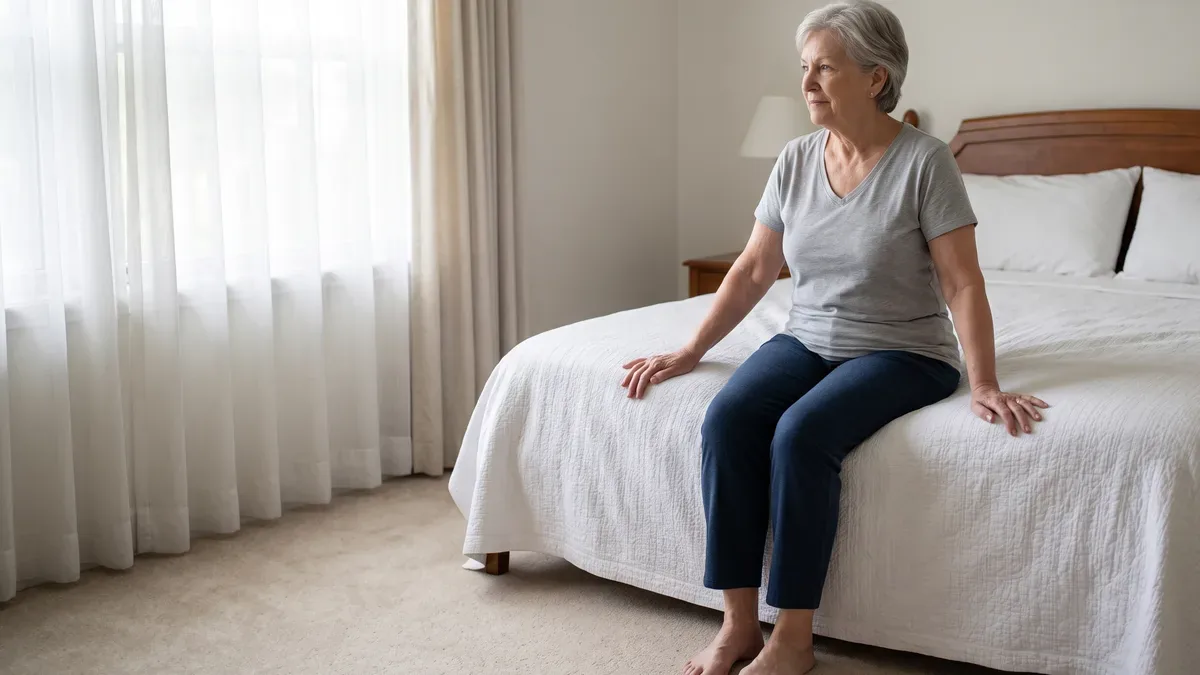
Before you lie down on any bed, sit on the edge of it, feet on the floor, and stand up again, the way your mornings start. That small test tells you more than any label.
What to check:
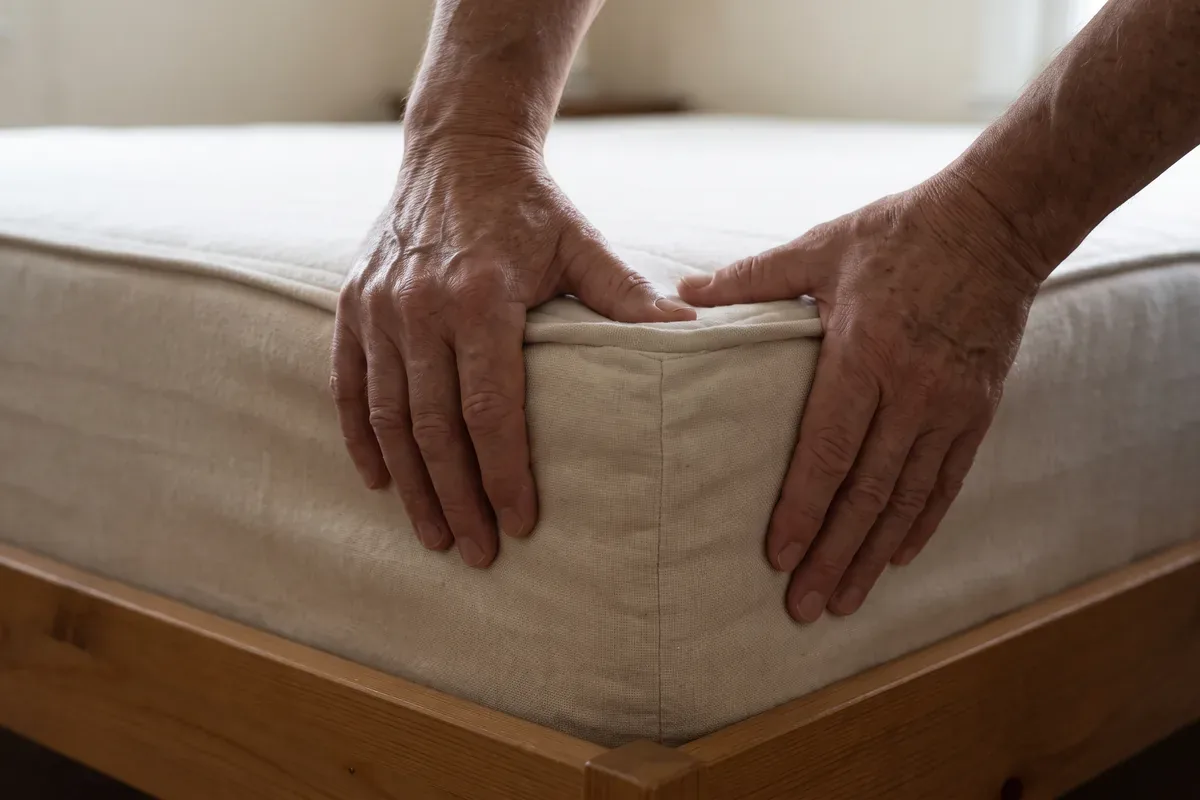
- Sit on the edge. Does it hold you, or do you slide toward the floor? A firm, reinforced edge feels steady when you sit and push up.
- Check the height. When you sit on the bed, your feet should rest flat on the floor with your knees at about a right angle. A thick mattress on a tall frame can end up too high. A low platform can be too low.
- Think about the night path. The CDC's fall prevention pages suggest good lighting and a clear path at home. A lamp within reach of the bed and a night-light on the way to the bathroom go with any mattress.
If steadiness on your feet is on your mind, our balance exercises for seniors offer a simple weekly plan to do at home, holding a counter.
Adjustable bases and toppers
Adjustable bases
An adjustable base is a motorized frame that raises the head or the feet with a remote. Before you buy, check that your mattress can bend with it (many innerspring beds can't), that the remote is easy to read and what happens in a power outage. Many bases add height, so check the sitting height again.
Adjustable bases sold for comfort are different from hospital beds or medical equipment, which are outside what this guide covers.
Mattress toppers
A topper is a thick pad that sits on top of your mattress. It can soften a bed that feels too hard or add a cooler layer. It won't fix a mattress that sags in the middle. Foam, latex and fiber-filled toppers are the common choices; if you're curious, you can browse mattress toppers to compare materials and thicknesses. Check that the topper doesn't make the edge softer or the bed too tall.
Pillows count too
The best pillow for seniors is one that keeps your head and neck comfortable the way you sleep. A pillow costs far less than a mattress, so start there if a new bed feels out of reach.
Questions to ask before you buy
The FTC's advice for online shopping applies here: know the total cost, the return policy and who you're dealing with before you pay.
- How long is the home trial? Many online brands and some stores offer a trial of several weeks or months. Find out whether there's a minimum number of nights before you can return it.
- Are returns free? Some sellers charge a pickup or restocking fee.
- Who delivers and sets it up? "White glove" delivery means the crew brings it in, sets it up and often hauls the old mattress away. Ask whether that costs extra.
- What does the warranty cover? Usually defects and deep sagging, not comfort. Read what voids it.
- Does it promise health results? Be careful with any bed marketed as fixing aches or sleep problems. A mattress is furniture, not a medical device.
Buying from a local store can make returns simpler. Buying online widens your choice. Either way, keep the receipt and the trial dates in a folder.
Sleep habits that go with any mattress
Even the best mattress for seniors works better with steady habits. The NIA and the CDC suggest getting up at about the same time every day, getting some morning daylight, keeping the bedroom cool, dark and quiet, and putting screens away a while before bed.
Summer nights in the desert taught me to take the room temperature seriously. A ceiling fan, light cotton sheets and heavy curtains do a lot, whatever mattress you sleep on.
Some people like a few slow stretches before bed. Our chair yoga for seniors routine has seated moves you can do in a quiet last half hour.
Stop if...
- you wake up with new or sharp pain after changing your mattress;
- you feel unsteady or light-headed when you get out of bed;
- poor sleep goes on for weeks.
Talk with your doctor about any of these. A mattress is only one part of good sleep.
Frequently Asked Questions
What firmness of mattress is best for seniors?
There is no single right answer, because firmness is a personal feel and each brand uses its own scale. Some people find a medium feel easier to move on, soft enough to feel comfortable on your side and firm enough to move and sit up without sinking. The surest guide is how it feels to you after several nights, which is why a home trial period matters so much.
What type of mattress is best for older adults?
Each type has trade-offs. Memory foam feels cradling but can sleep warm and make turning slower. Innerspring and hybrid beds feel bouncier and often have firmer edges. Latex is springy and tends to sleep cooler, but it is heavy. Think about how you sleep, how warm your room gets and how easily you want to get in and out of bed.
What mattress should you stay away from?
Be wary of any mattress you can't return, any seller that makes health promises, and any bed so soft that you roll toward the middle or struggle to sit up at the edge. Also skip a bed that sits so high or so low that your feet can't rest flat on the floor when you sit on it. Read the return and delivery terms before you pay.
What is the best mattress for a 70 year old?
Age alone doesn't pick the mattress. A 70 year old who sleeps hot, shares the bed and gets up at night may want something different from someone who sleeps cool and alone. Focus on a medium feel you like, a firm edge for sitting, a height that suits you and a generous trial with free returns.
One thing to try this week
Before you shop, sit on the edge of your current bed and stand up slowly, a few times. Notice whether your feet reach the floor and whether the edge holds you. Write it down. That short note will tell you more about the best mattress for seniors in your home than any store label. For more small habits around sleep, food and movement, go back to our guide to health tips for seniors, and if dinner is the harder part of your day, see our comparison of meal delivery for seniors.
General information from personal experience, not medical advice.
Sources
- National Institute on Aging, A Good Night's Sleep: nia.nih.gov/health/sleep
- CDC, Sleep: cdc.gov/sleep
- CDC, Older Adult Fall Prevention: cdc.gov/falls
- FTC Consumer Advice, Online Shopping: consumer.ftc.gov/articles/online-shopping