Balance exercises for seniors are simple moves, like standing with your feet close together or rising onto your toes, that you practice while holding a kitchen counter. This guide gives you eight balance exercises for seniors to do at home, a gentle weekly plan and an easier version of every move.
General information from personal experience, not medical advice. Check with your doctor before starting a new routine.
Balance is one piece of a bigger picture. Our guide to health tips for seniors shows how it fits with walking, chair yoga, simple meals and better sleep. Start where you are.
Why balance exercises for seniors matter
The CDC runs a public program on preventing falls among older adults. Among the things it lists that may help are exercise for strength and balance and a safer home. The CDC's STEADI materials also list weak legs and poor balance among the risk factors for falls, alongside things like home hazards and footwear.
The National Institute on Aging counts balance as one of the four types of exercise for older adults, with endurance, strength and flexibility. It also makes a point I find encouraging: balance can often be practiced during ordinary moments of the day.
So balance exercises for seniors aren't about tricks or showing off. They're about feeling steadier when you reach for a high shelf, step off a curb or turn around quickly in the kitchen. What worked for me and for my mother was keeping it short, keeping it near the counter and doing it often.
Set up a safe spot at home
Before you try these moves at home, take a few minutes to set up your space. This part matters as much as the exercises.
- Pick a solid support. A kitchen counter is ideal. A heavy, sturdy chair with no wheels, pushed against a wall, also works.
- Clear the floor. Remove throw rugs, cords and clutter from the area around you.
- Wear the right shoes. Closed shoes with flat, non-slip soles, or bare feet on a non-slip floor. No socks on smooth floors, no loose slippers.
- Have good light. Turn on the lights, even during the day, so you can see the floor.
- Keep a chair behind you. For the moves where you might want to sit down quickly.
- Don't practice alone at first. Ask someone to be home the first few times you try a new move.
Eight balance exercises for seniors at home
Stand facing the counter unless the move says otherwise. Keep your knees soft, not locked. Breathe normally. Each move has an easier version; start there if you're unsure.
1. Feet-together stand
Stand with both hands on the counter and your feet close together. Hold for a slow count of ten, rest, and repeat a few times.
Easier version: keep your feet a little apart, about hip width.
2. Side-to-side weight shift
Stand with feet hip-width apart, both hands on the counter. Slowly shift your weight onto your right foot, letting your left heel lighten. Hold for a breath, then shift to the left. Repeat about ten times.
Easier version: make the shift very small.
3. Heel raises
Hold the counter with both hands. Slowly rise onto your toes, pause, then lower your heels back down with control. Repeat about ten times.
Easier version: rise only a little, or do it sitting in a chair.
4. Heel-to-toe stand
Hold the counter. Place your right foot directly in front of your left, heel touching or nearly touching the toes. Hold for a slow count of ten, then switch feet.
Easier version: place one foot slightly in front of the other with a small gap, rather than in a straight line.
5. One-foot stand with support
Hold the counter with both hands. Lift your right foot slightly off the floor. Hold for a few seconds, lower it, then switch sides. Repeat a few times on each side.
Easier version: just lift the heel and keep your toes touching the floor.
6. Sit-to-stand
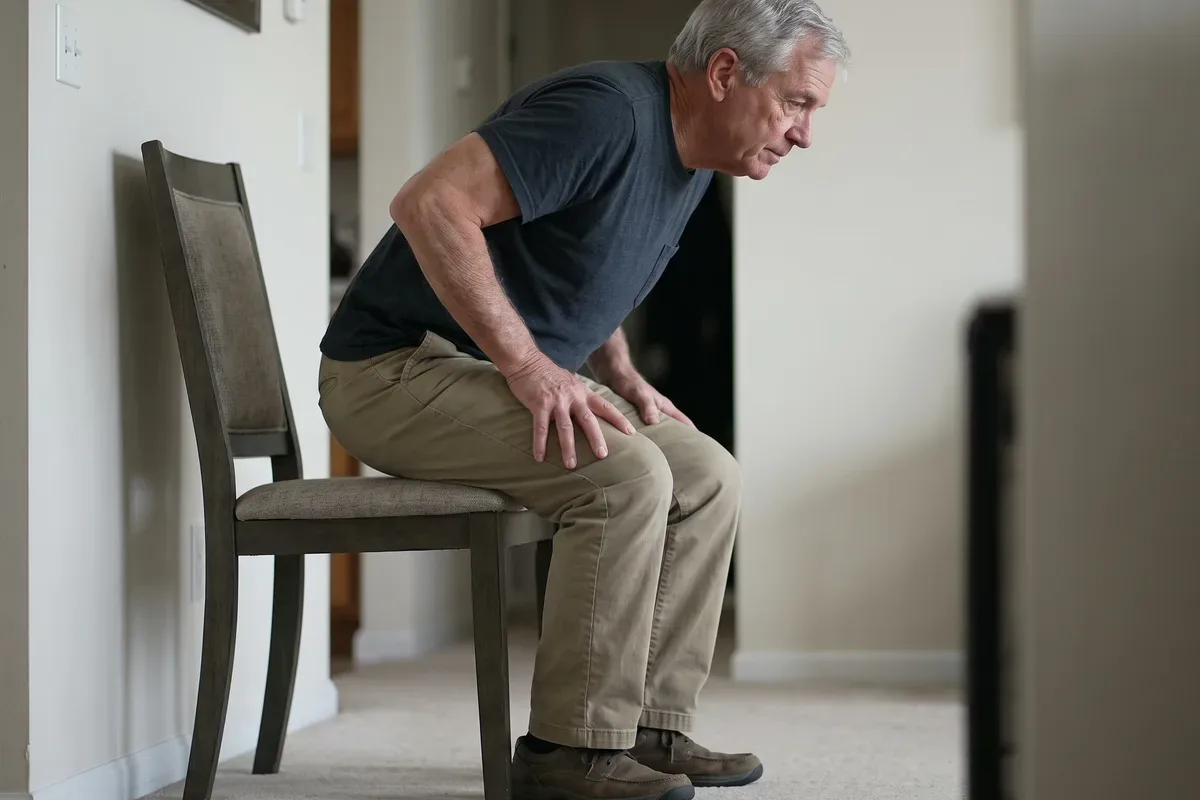
Sit toward the front of a sturdy chair placed against a wall, feet flat and hip-width apart. Lean forward slightly and stand up slowly, then sit back down with control. Repeat about five to ten times.
Easier version: use your hands on your thighs, or on the armrests if your chair has them, to push up.
7. Side and back leg raises
Stand sideways to the counter, holding it with one hand. Slowly lift your outside leg out to the side a few inches, then lower it. Then face the counter and lift one leg straight back a few inches, keeping your back straight. Repeat about ten times each way, on each side.
Easier version: make the lift very small, and hold the counter with both hands.
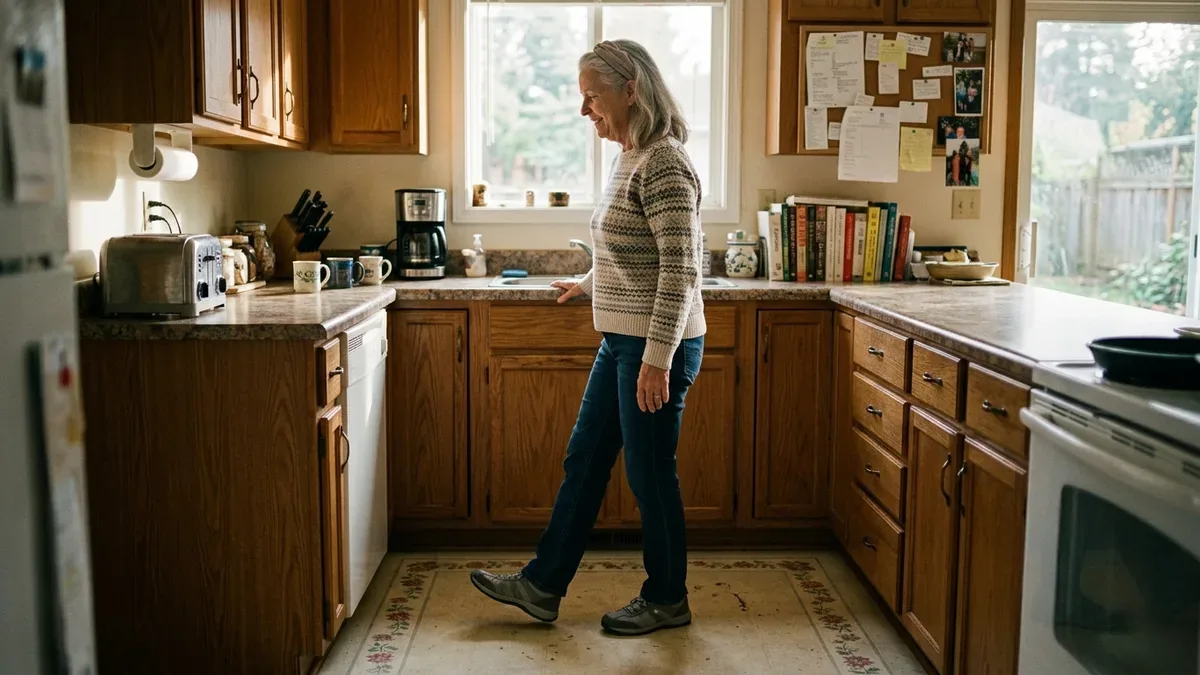
8. Heel-to-toe walk along the counter
With one hand on the counter, walk slowly along it, placing the heel of one foot just in front of the toes of the other. Take about ten steps, turn carefully, and walk back.
Easier version: take normal small steps along the counter, focusing on walking slowly and steadily.
A simple weekly plan
These balance exercises for seniors take only a few minutes each day. The plan below mixes them across the week so no single day feels long. Adjust it to fit your week.
| Day | Moves | About |
|---|---|---|
| Monday | 1, 2, 3, 6 | 8 minutes |
| Tuesday | 4, 5, 7 | 8 minutes |
| Wednesday | Short walk or chair routine, no balance moves | Light day |
| Thursday | 1, 2, 3, 6 | 8 minutes |
| Friday | 4, 5, 7, 8 | 10 minutes |
| Saturday | Your two favorite moves, plus a walk if you like | 5 minutes |
| Sunday | Rest |
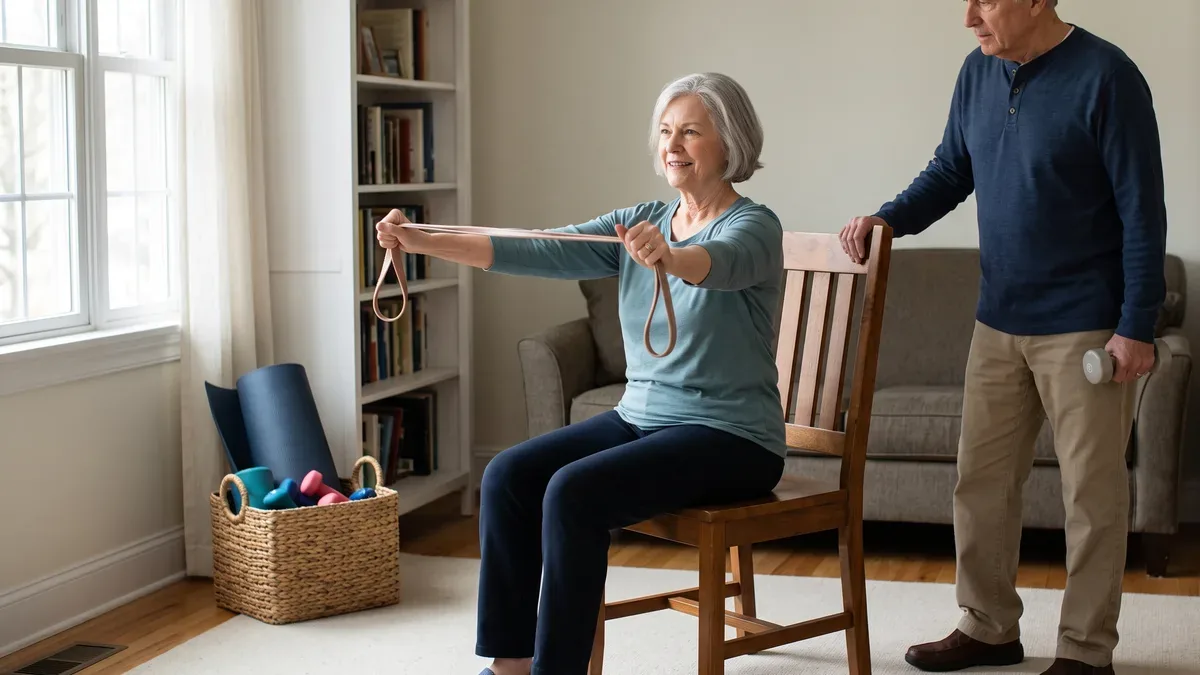
Stay on the easier versions for the first two weeks. After that, make one move a little harder at a time: hold a few seconds longer, or lighten your grip from two hands to one, then to a few fingertips. Only move on when the current step feels steady and comfortable. You don't need any equipment for this plan. Some people later add a soft balance pad or a light resistance band; our overview of exercise equipment for seniors compares those simple options and says when to hold off.
Fit balance into ordinary moments
Short bits of practice during the day add up. Try heel raises while the kettle heats, a feet-together stand while you brush your teeth at the sink, or sit-to-stands during a TV commercial break. Always keep a hand on something solid.
Pair it with other gentle movement
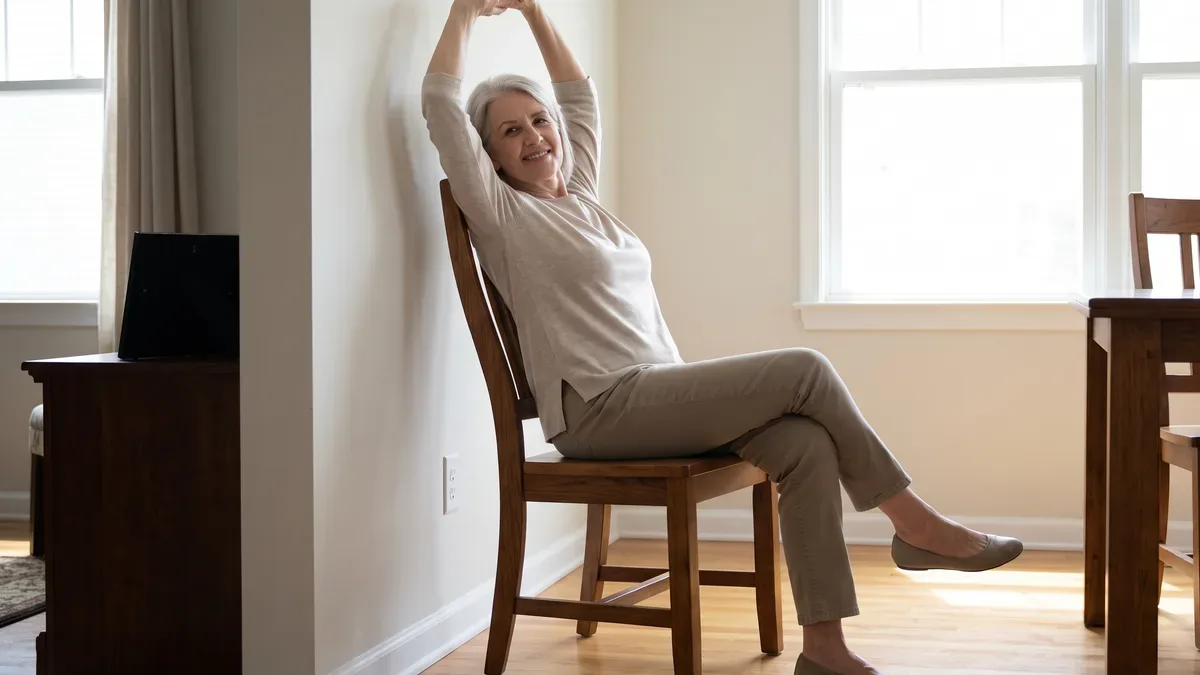
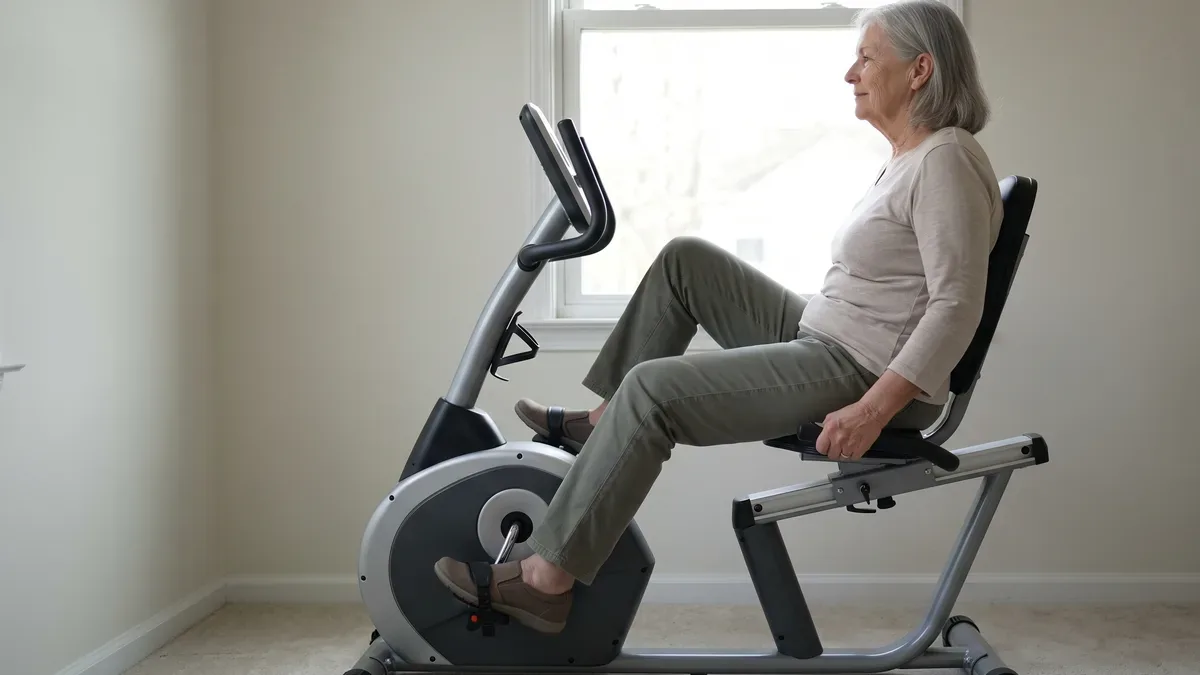
Balance exercises for seniors pair well with stretching and walking. On lighter days, a seated stretch session is a good fit: our guide to chair yoga for seniors has a ten-minute routine you can print. A regular walk, in good shoes, keeps your legs working too; our guide to the best walking shoes for seniors explains what to look for. When it's too hot or icy to walk outside, seated pedaling is another option, and our comparison of the exercise bike for seniors explains the main types.
Many senior centers, community centers and YMCAs also offer balance or fall prevention classes. A class has two benefits: a teacher can check your form, and the other people in the room make it easier to keep showing up.
Safety: when to stop
These balance exercises for seniors are gentle, but always put safety first. The goal is to feel a little challenged, never to wobble so much that you might fall.
Stop if...
- you feel dizzy, light-headed or unusually short of breath;
- you feel sharp, sudden or new pain;
- you feel unsteady and can't get a firm grip on the counter;
- you feel very tired.
Sit down in the chair behind you, rest, and call for help if the feeling doesn't pass. Check with your doctor before starting a new routine, especially if you've had a fall or feel unsteady on your feet day to day.
Frequently Asked Questions
What is the number one exercise to increase balance in seniors?
There isn't one single best move for everyone. Many beginner plans start with standing at a counter with feet close together, then move on to weight shifts and standing heel to toe. The sit-to-stand from a chair is also a favorite because it works the legs you rely on for balance. The best exercise is the one you'll do safely, most days.
What are 5 balance exercises?
Five simple ones to try at the kitchen counter are: standing with feet together, side-to-side weight shifts, heel raises, standing heel to toe and standing on one foot while holding on. Add sit-to-stands from a sturdy chair for leg strength. Always keep at least one hand on the counter until a move feels easy, and stop if you feel unsteady.
What are some good 10 minute balance exercises for seniors?
A ten-minute session could be: one minute of marching in place at the counter, then about a minute each of feet-together standing, weight shifts, heel raises, heel-to-toe standing, one-foot standing with support, sit-to-stands and side leg raises, finishing with a slow heel-to-toe walk along the counter. Keep one hand on something solid throughout.
How often should I do balance exercises?
A few minutes on most days tends to work better than one long session a week. The weekly plan on this page spreads short sessions across the week, with a lighter day and a rest day. Public guidance for older adults includes balance activities as part of staying active. Go at your own pace and check with your doctor before starting.
One thing to try this week
Tomorrow morning, while your coffee or tea is brewing, stand at the counter with both hands on it and do the feet-together stand and ten heel raises. That's about two minutes. Repeat it every morning this week. Next week, add one more move from the plan. For more small daily habits, see our guide to health tips for seniors.
General information from personal experience, not medical advice.
Sources
- CDC, Older Adult Fall Prevention: cdc.gov/falls
- CDC, STEADI (risk factors for falls): cdc.gov/steadi
- National Institute on Aging, Exercise and Physical Activity: nia.nih.gov/health/exercise-and-physical-activity
- CDC, Physical Activity Basics: cdc.gov/physical-activity-basics