Exercise equipment for seniors doesn't have to mean a home gym. For most of us it's a sturdy chair, a resistance band or two, a pair of light weights and maybe a non-slip mat. This guide compares those simple home options, plus balance pads and small machines, so you can see what each one does, who it suits and when to wait.
General information from personal experience, not medical advice. Check with your doctor before starting a new routine.
Simple equipment is one part of the gentle habits in our guide to health tips for seniors. Start where you are.
Why simple exercise equipment for seniors is enough
The National Institute on Aging describes four types of exercise for older adults: endurance, strength, balance and flexibility. The CDC's guidance for older adults also includes activities that work the muscles and activities that improve balance. Its fall prevention materials, known as STEADI, list weak legs and poor balance among the risk factors for falls. None of that asks for expensive machines.
The first "equipment" my mother and I used was a kitchen chair and two cans of beans from the pantry. The NIA itself suggests household items like soup cans as starter weights. Learn a routine that way, and buy gear once you know what you reach for.
The main options compared
Every type of exercise equipment for seniors below carries our Researched label: the comparisons come from public product descriptions and public guidance, with no ranking. We did not try these items, so check the details before you buy.
A sturdy chair (free)
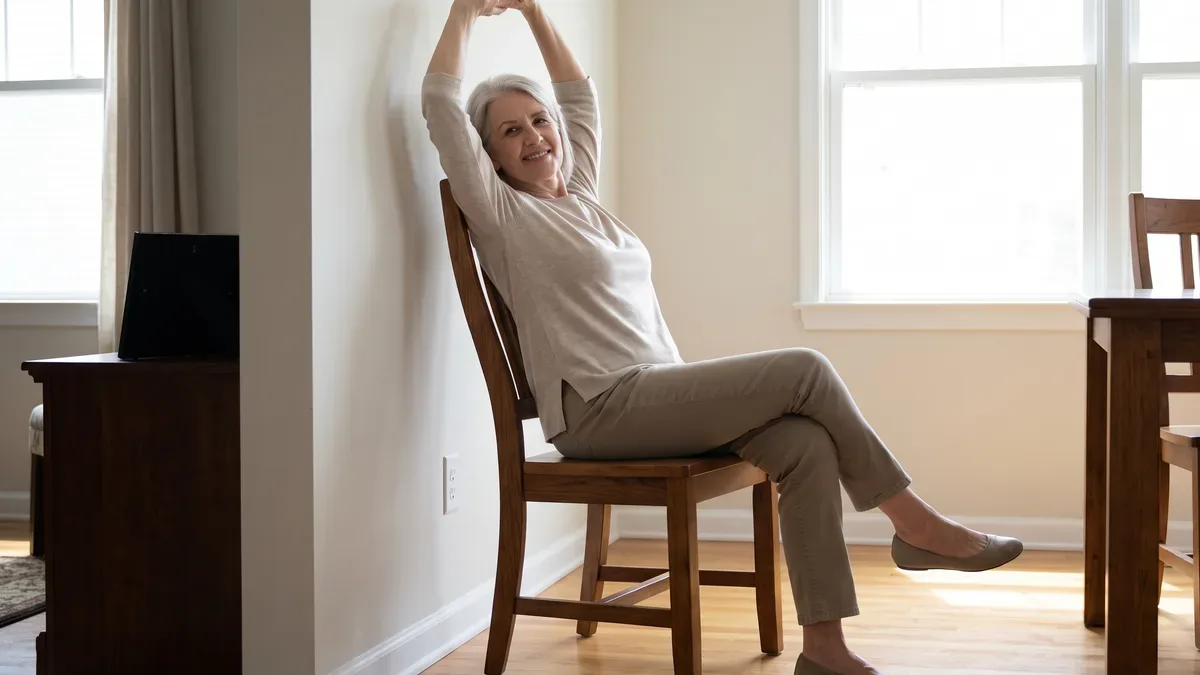
Before anything else, a solid dining or kitchen chair with no wheels, pushed against a wall, is the base of most home routines. You sit on it for seated moves and hold its back for standing ones. Our ten-minute chair yoga for seniors routine needs nothing else.
Resistance bands (Researched)
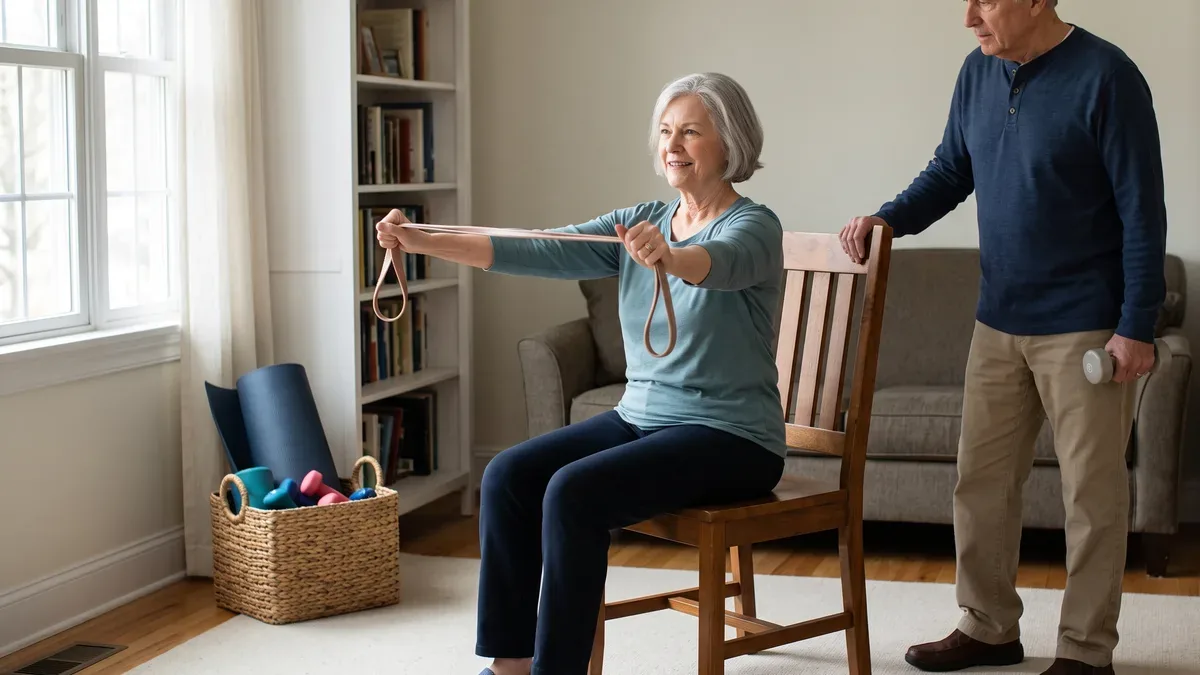
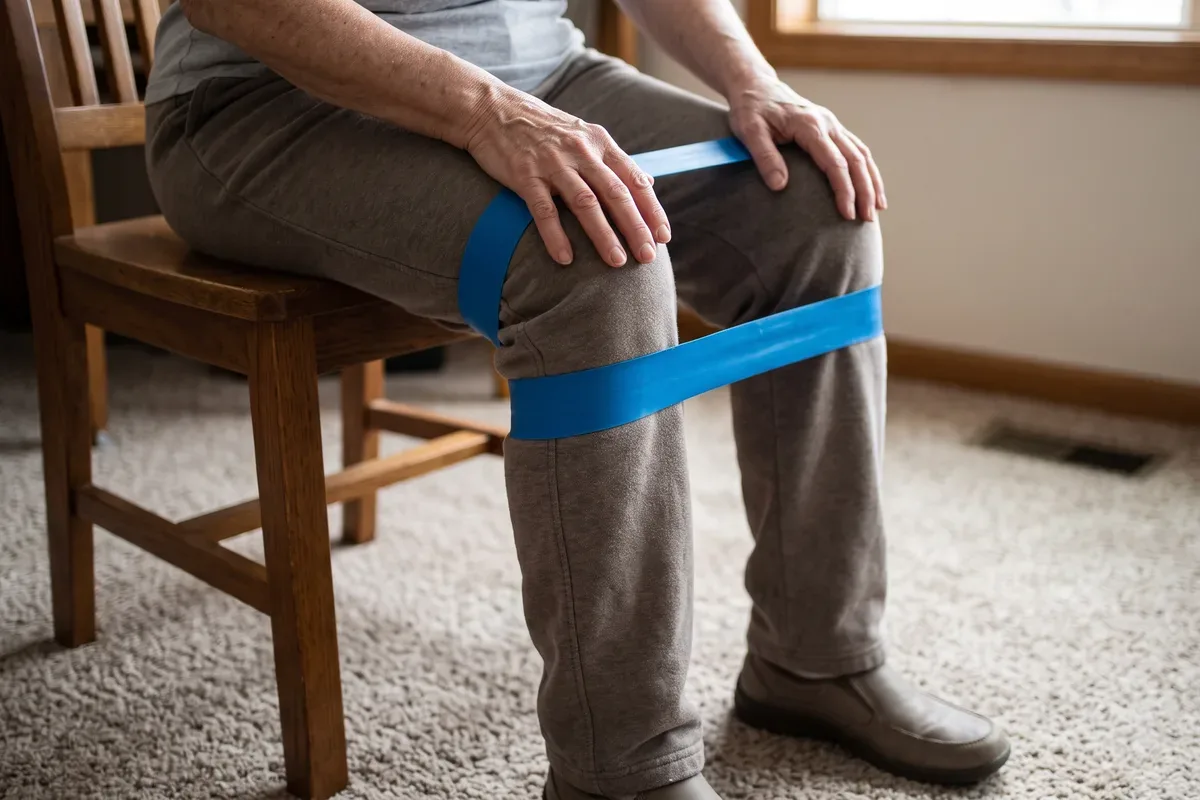
Resistance bands are stretchy strips or tubes of rubber or fabric. You pull against them to work your arms, shoulders and legs. They come as flat bands, tubes with handles and closed loops.
- Good for: gentle strength work, seated or standing, in small homes.
- Limits: latex bands can snap with age, and flat bands can roll or pinch. Some people find thin handles hard to grip.
- Who it suits: almost anyone starting strength work at home.
What to look at: a set with colors from light to firm, soft-grip handles if your hands are stiff, and a latex-free option if you prefer. Start with the lightest color. Resistance bands often come in color-coded sets.
Light dumbbells and wrist weights (Researched)
Hand weights, or dumbbells, are the classic strength tool. Wrist weights strap on instead.
- Good for: slow arm and shoulder moves, seated or standing at the counter.
- Limits: it's easy to pick weights that are too heavy. A dropped weight can hurt a foot.
- Who it suits: people who like something simple and solid in their hands, or, with wrist weights, people who find gripping tiring.
What to look at: a coated finish that doesn't slip, a shape that won't roll off a table and a weight you can lift slowly, several times, with good control.
Non-slip exercise mat (Researched)
A mat gives you grip under your feet or the chair legs.
- Good for: slick floors, and anyone who wants a set spot for their routine.
- Limits: a thick mat can make standing moves less steady, and edges can catch your toes.
- Who it suits: most people, especially on tile or wood.
What to look at: a thin mat with real grip on both sides, edges that lie flat, and a color that stands out from your floor so you can see it.
Balance pad and balance board (Researched)
A balance pad is a thick foam cushion you stand on so the surface feels slightly soft and unsteady. A balance board, or wobble board, tips in one or more directions and asks much more of you.
- Good for: people whose balance routine already feels easy.
- Limits: both add wobble on purpose. A balance board in particular is not a beginner tool.
- Who it suits: people who already practice balance regularly, always next to a counter or a sturdy chair, ideally after asking a class teacher or their doctor.
Our weekly plan of balance exercises for seniors needs no equipment at all. I'd stay with it for a good while before adding a pad. If you do add one, keep both hands on the counter and someone at home the first few times.
Exercise ball (Researched)
A large inflatable ball is used for sitting and gentle core moves; small soft balls are sold for squeezing.
- Good for: hand and grip work, with the small squeeze balls.
- Limits: a large ball rolls. Sitting on one takes balance, and getting up from it can be awkward.
- Who it suits: for the large ball, people who are already steady. For most of us, a chair does the job more safely.
Compact elliptical (Researched)
A compact elliptical is a small machine you pedal in a gliding, oval motion, either seated in front of your chair or standing.
- Good for: gentle leg movement indoors, on hot, cold or dark days.
- Limits: standing models ask for good balance and have little to hold. Seated ones can slide without a mat.
- Who it suits: people who want something to do while watching TV, seated in a chair that doesn't roll.
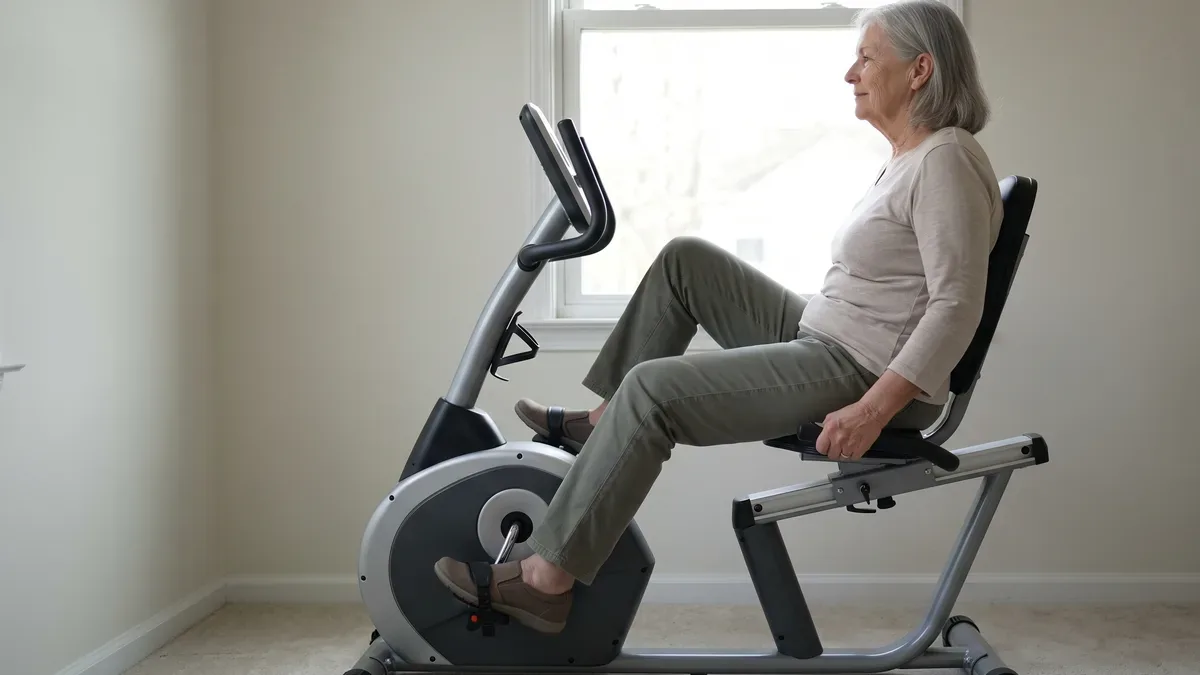
For bigger machines, our comparison of the exercise bike for seniors covers recumbent bikes, upright bikes and pedal exercisers in detail.
Quick comparison
| Option | Space | Used for | Wait if |
|---|---|---|---|
| Sturdy chair | Already there | Base of every routine | Never |
| Resistance bands | A drawer | Gentle strength work | Your hands can't hold a band yet |
| Light weights | A shelf | Simple strength work | You can't lift them slowly |
| Non-slip mat | Rolls up | Grip on slick floors | It's too thick to stand on steadily |
| Balance pad | Small | Balance once it feels easy | Your balance routine isn't easy yet |
| Exercise ball | Large | Squeeze ball for hands | You feel unsteady sitting on it |
| Compact elliptical | Medium | Seated leg movement | You'd need to stand on it without support |
How to choose exercise equipment for seniors
A few questions sort out most choices:
- What will I actually use? Buy for the routine you do now, not the one you hope to do.
- Can my hands manage it? Check grips, clasps and straps. Soft handles and hook-and-loop straps help stiff fingers.
- Where will it live? Equipment in a basket by the TV gets used. Equipment in a closet mostly doesn't.
- Is it steady? Anything that slides, rolls or wobbles needs a plan: a mat, a wall or a counter.
- Can I start light? Sets that go from light to firm let you begin gently.
- What are the return terms? Especially for anything heavy.
In summer, my garage in Tucson is far too hot to use, so my bands live in a basket next to the couch. That one change made more difference than any new purchase.
A simple starter week
Easier version of everything: do it seated.
| Day | What to do | About |
|---|---|---|
| Monday | Chair and band: arm pulls, seated leg presses | 10 minutes |
| Tuesday | Balance moves at the counter, no equipment | 8 minutes |
| Wednesday | Walk or chair yoga | Light day |
| Thursday | Chair and light weights: slow arm raises | 10 minutes |
| Friday | Balance moves at the counter | 8 minutes |
| Weekend | One favorite, plus rest |
Move slowly, breathe normally and never hold your breath while you pull or lift.
Safety: when to stop
Stop if...
- you feel dizzy, light-headed or unusually short of breath;
- you feel sharp, sudden or new pain anywhere;
- a band tears, a weight slips or the chair moves;
- you feel unsteady and can't get a firm hold on the counter.
Sit down, rest, and call for help if the feeling doesn't pass. Check with your doctor before starting a new routine.
Check bands for small cracks before each use, store weights low and clear the floor of rugs and cords. Good exercise equipment for seniors is only as safe as the space around it.
Frequently Asked Questions
What is the best exercise equipment for seniors?
The best piece is the one you'll use safely and often, and for many people that starts with a sturdy chair they already own. Resistance bands are light, easy to store and come in gentle strengths. Light hand weights suit people who like something solid in the hand. Balance pads and larger machines make more sense once a routine feels easy.
What is the best exercise machine for 70-year-olds?
There's no single best machine, and many people in their seventies do well with no machine at all. A compact seated elliptical takes little space and works from your own chair. For bikes, our separate comparison of the exercise bike for seniors explains the main types. Try any machine at a community center first, and check with your doctor before starting.
What is the best gym equipment for seniors?
In a gym, many older adults like recumbent bikes, seated machines with a back pad and cable machines where the weight moves smoothly. At home, the simpler versions of the same ideas work: a chair, bands and light weights. The National Institute on Aging publishes free exercise ideas you can do with this kind of basic gear, and many gyms offer an introduction session so someone can show you each machine.
One thing to try this week
Before you buy any exercise equipment for seniors, try the free version. Put a sturdy chair against a wall, take two cans from the pantry and try three slow arm raises while seated, a few times this week. If you like it, you'll know what kind of strength work suits you. For more small habits to build on, see our guide to health tips for seniors.
General information from personal experience, not medical advice.
Sources
- National Institute on Aging, Exercise and Physical Activity: nia.nih.gov/health/exercise-and-physical-activity
- CDC, Physical Activity Basics: cdc.gov/physical-activity-basics
- CDC, Older Adult Fall Prevention: cdc.gov/falls
- CDC, STEADI (risk factors for falls): cdc.gov/steadi