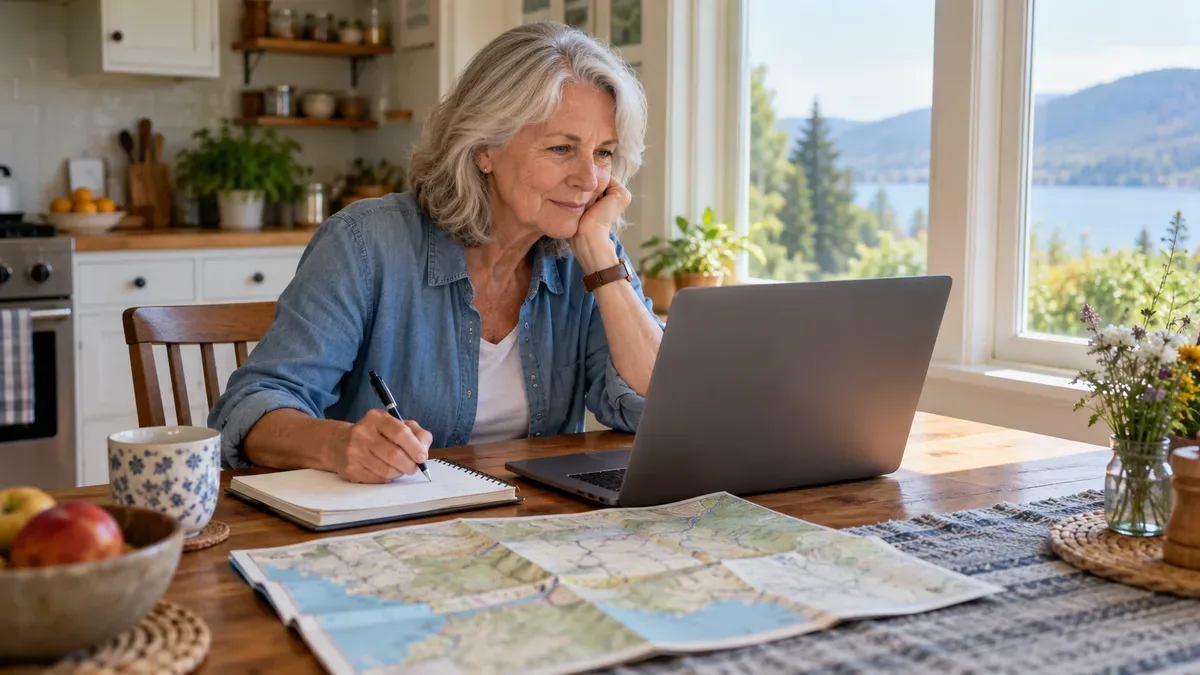
The best health tips for seniors are usually the plainest ones: move a little every day, eat real food you enjoy, and give your evenings a calm, steady shape. This guide gathers those habits in one place, with a short section for each and a link to a full guide, including comparisons of the equipment, beds, cookers and meal services that can make them easier.
General information from personal experience, not medical advice. Check with your doctor before starting a new routine.
Why small daily habits matter after 60
The CDC and the National Institute on Aging say much the same thing in plain language: staying active, eating well and sleeping well may help support your independence and your ability to do the things you enjoy as you get older. Neither agency asks for anything dramatic. They talk about regular movement, a variety of foods and steady routines.
That's good news, because dramatic plans are hard to keep. I spent years at a desk, and when I decided to move more at 50, I didn't join a gym. I walked to the corner and back before work. The next week I walked a little farther. It wasn't exciting, and that was the point: one small thing, done on most days, until it stopped feeling like effort.
So these health tips for seniors are built around habits, not goals. No numbers to hit: just simple things to do, an easier version for harder days and a clear signal for when to stop.
Here is how the pieces fit together:
- Move: a daily walk, chair yoga, balance moves and simple equipment.
- Rest: a steady sleep schedule and a bed that's easy to get out of.
- Eat: meals cooked once and eaten twice, and help when you need it.
- Connect: time with other people, which makes every other habit easier to keep.
Start where you are. If all you do this month is walk to the mailbox and back each morning, that counts.
Walking: the easiest place to start
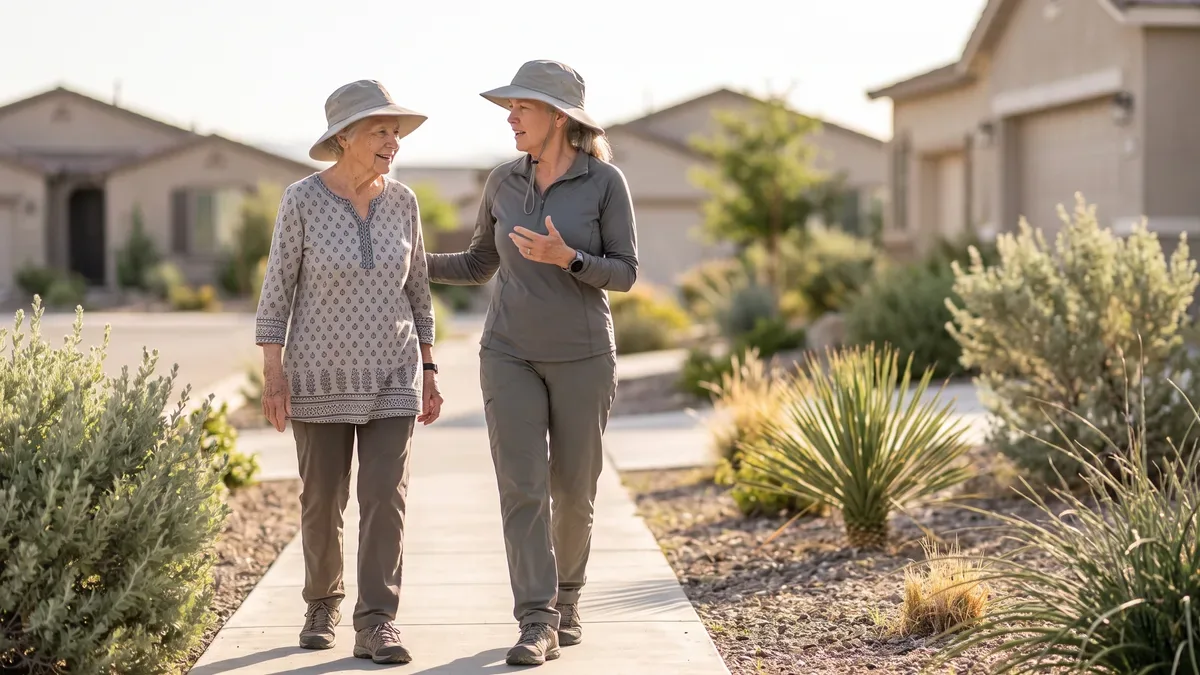
If I could keep only one habit, it would be the walk. It needs no equipment beyond good shoes, it gets you outside, and it gives the day a shape. The CDC gives brisk walking as an example of moderate activity for older adults, and it's free.
Begin with a distance that feels easy, even if that's only to the end of the block. Walk at a pace where you can still talk in full sentences. Repeat it most days for a couple of weeks before you add a few more minutes.
A few things make walking easier to keep:
- Pick a fixed time. Right after breakfast hooks onto something you already do.
- Choose a safe route. Flat sidewalks or a park loop. Uneven ground can wait.
- Wear shoes that fit. A cushioned, closed shoe with a grippy sole matters more than any brand. Our guide to the best walking shoes for seniors explains what to compare.
- Walk with someone. A neighbor or a friend turns exercise into a visit.
In hot weather, go out early, bring water and turn back sooner if you feel too warm. In icy weather, an indoor loop at a mall is a sensible swap.
Easier version: if a walk outside isn't possible today, march in place for a few minutes while holding the back of a sturdy chair.
Chair yoga for seniors: a gentle place to start
Chair yoga is yoga done while seated, or while standing with one hand on a chair. You stretch, breathe and move your arms, spine and legs without ever getting down on the floor. For many people it's the friendliest way back into movement after a long break.
The National Institute on Aging includes flexibility among the four types of exercise it describes for older adults, alongside endurance, strength and balance. Gentle stretching like this may help support easy movement in daily life, such as reaching a high shelf or turning to look behind you.
Our full guide, Chair Yoga for Seniors: A Gentle 10-Minute Routine, walks you through a timed routine you can print and keep by your chair, with an easier version of every move.
Balance exercises for seniors: a few minutes at the counter
Balance is the part of fitness most of us ignore until we notice it. The CDC runs a public program on preventing falls in older adults, and among the things it lists that may help are exercise for strength and balance and a safer home. Balance practice can be very short and safe when you do it next to a counter.
The idea behind most beginner balance work is simple:
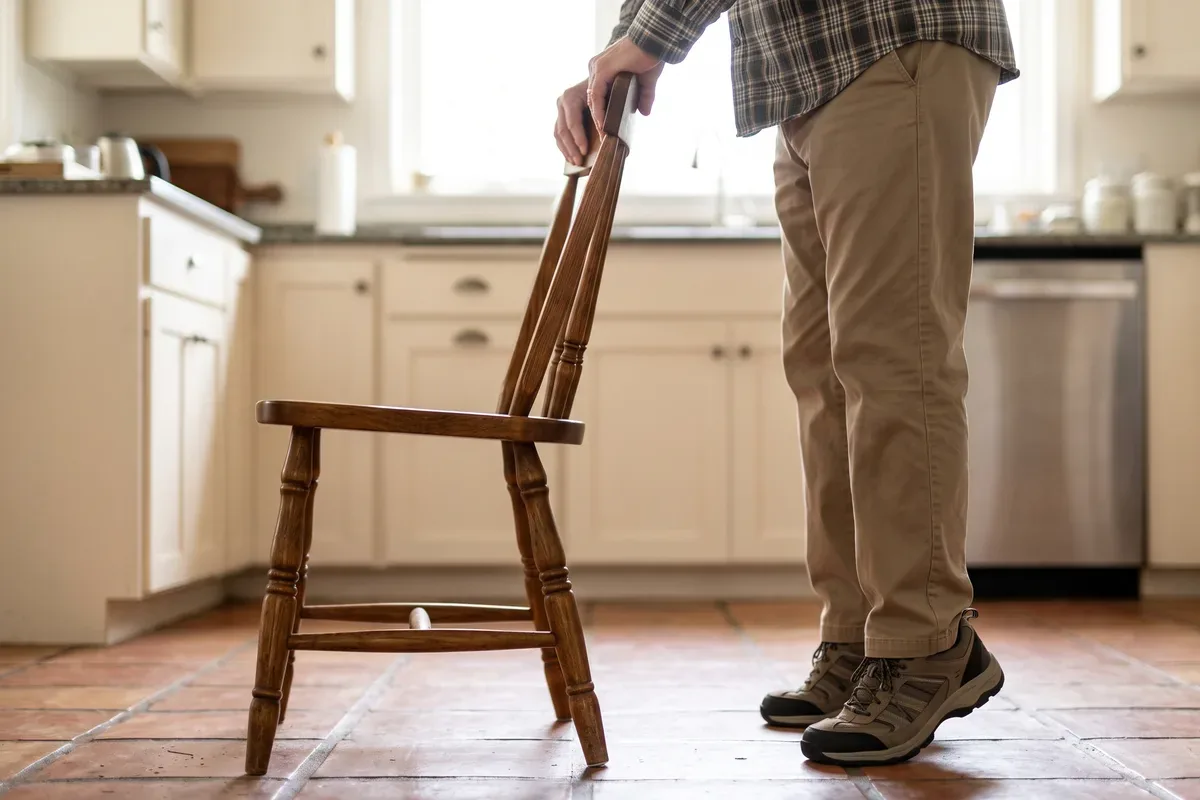
- Always hold on at first. Stand at a kitchen counter with both hands resting on it.
- Make the base a little narrower. Feet closer together, then one foot slightly in front of the other.
- Shift your weight slowly. Lean gently from side to side, or rise onto your toes and lower down.
- Take one hand away only when it feels easy. Then one finger. Then, much later, maybe none.
A few minutes while the kettle heats is easier to keep than a long session once a week. Our guide Balance Exercises for Seniors: A Simple Weekly Plan to Do at Home turns this into a day-by-day plan with a safety checklist.
Exercise bike for seniors: moving when you can't go out
Some days the walk just won't happen. An exercise bike keeps the habit going indoors. The NIA lists activities like biking among the endurance exercises that get your heart and breathing up a little, and pedaling is easy to do at your own pace.
There are three main kinds:
- Recumbent bikes have a wide seat with a backrest and the pedals out in front. Many have a step-through frame, so you don't swing a leg over.
- Upright bikes look like a regular bicycle. They take less floor space but ask more of your balance when you get on and off.
- Pedal exercisers are small pedal units you use from a sturdy chair. They're light and easy to put away.
What matters most is getting on and off, a seat that adjusts easily and a display you can read. If you can, sit on one at a community center first.
Our comparison, Exercise Bike for Seniors: Recumbent, Upright and Pedal Options Compared, sets the types side by side and lists the questions to ask before you bring one home.
Exercise equipment for seniors: a short list for home
You don't need a home gym. The NIA describes strength exercises that use your own body weight, a sturdy chair or light household items, and suggests starting light. That's why the first piece of equipment is usually one you already own: a steady chair without wheels, placed against a wall.
After that, a few simple items cover most routines:
- Resistance bands are light, cheap and easy to store. They come in different strengths, often marked by color, so you can start gently and move up later.
- Light hand weights can replace the soup cans once you know you'll use them.
- Small machines, such as a pedal exerciser or a compact seated elliptical, suit people who like a machine but don't have much room.
The best choice is the one you'll reach for. Keep it where you'll see it, not in the garage.
Our guide, Exercise Equipment for Seniors: Simple Home Options Compared, compares these options in plain words, with a simple starter week and clear signs for when to stop.
Best mattress for seniors and a calmer bedtime
Sleep often changes as we get older. The National Institute on Aging notes that older adults need about as much sleep as younger adults, even if they tend to go to bed and wake up earlier. "Sleep hygiene" is simply a set of daytime and evening habits that may help support better rest:
- Keep the same schedule. Go to bed and get up at about the same time every day, weekends included.
- Get daylight. A morning walk or coffee by a bright window may help your body keep its daily rhythm.
- Make an evening routine. Dim the lights, put screens away a while before bed and do something quiet.
- Keep the bedroom cool, dark and quiet.
The bed itself matters too. A good one lets you roll over easily, sit steadily on the edge and stand up with your feet flat on the floor. Firmness is personal and brands measure it differently, so a home trial with free returns matters as much as the foam. Memory foam, hybrid, innerspring and latex each have trade-offs.
Our comparison, Best Mattress for Seniors: How to Compare Firmness, Edges and Materials, explains each type, the edge and height checks to do in the store and the questions to ask before you buy. If poor sleep goes on for weeks, bring it up with your doctor.
Best small air fryer and simple meals for one
Cooking for one can feel like more trouble than it's worth. The simplest fix is to cook a normal batch, eat one portion and freeze the rest in single servings, labeled with the name and date. FoodSafety.gov, run by the federal government, explains how to cool, store and reheat leftovers safely.
My daughter and grandson come for dinner some Sundays, and that's when I make one of the family recipes I grew up with in El Paso. Whatever's left goes into small containers for the week. It feels less like cooking for one and more like cooking ahead.
A small countertop cooker can make weeknights easier. A compact air fryer crisps a single piece of fish without warming the whole kitchen; a toaster oven with an air fry setting does double duty on a crowded counter. Check the weight of the basket, how easy the controls are to read and whether the parts go in the dishwasher.
Our comparison, Best Small Air Fryer for Cooking for One: Sizes and Features Compared, explains the sizes, the space checks for a small kitchen and a few easy meals to start with.
Meal delivery for seniors when cooking feels like too much
Some weeks, shopping or cooking is simply too much. There are more kinds of help than most people expect.
- Local meal programs, such as Meals on Wheels, bring a ready meal to the door. Many ask only for a voluntary contribution. The Eldercare Locator, a free public service, can point you to programs in your area.
- Prepared meals arrive fresh or frozen, ready to reheat.
- Meal kits send measured ingredients and recipes, so you still cook but skip the shopping.
- Grocery delivery brings your usual list to the door.
Before you sign up for anything paid, read how to cancel.
Whatever you eat, USDA's MyPlate shows the basic idea with a picture of a plate: fruits and vegetables, grains, protein foods and dairy or fortified alternatives, in a mix that suits you. And the NIA notes that some older adults feel less thirsty than they used to, so it can help to keep a glass of water on the table with every meal.
Our comparison, Meal Delivery for Seniors: Prepared Meals, Meal Kits and Local Programs Compared, sets these options side by side and lists the questions to ask first.
Staying connected is part of staying well
The National Institute on Aging counts social connection as part of healthy aging. These habits are easier to keep with company. A walking partner makes you show up. A class gives the week a rhythm. A shared meal makes cooking feel worth it.
A few easy ways to fold people into your routine:
- join a chair yoga or balance class at a senior center, library or community center;
- invite a friend or neighbor on your morning walk;
- swap frozen portions with a friend who also cooks for one;
- start a weekly game afternoon; our guide to board games for seniors has ideas.
If you live alone and the days feel long, our guide to loneliness in seniors has more ideas for building a life you enjoy.
A simple day built from these health tips for seniors
It helps to see how the habits fit into one ordinary day. Use this as an example to borrow from, not a schedule to follow to the minute.
| Time of day | Small habit |
|---|---|
| Morning | Get up at your usual time, open the curtains, drink a glass of water, walk while it's cool |
| Late morning | Ten minutes of chair yoga, or a few balance moves at the counter |
| Lunch | A simple meal at the table, with a glass of water |
| Afternoon | A short early nap if you need one, a call or a visit, a few minutes of pedaling |
| Dinner | Reheat a frozen portion or cook a batch and freeze the extras |
| Evening | Lights down, screens off a while before bed, something quiet, same bedtime |
On harder days, keep just one thing: a short walk, a few minutes of stretching or your usual bedtime. Missing a day doesn't undo anything. You just pick it up again tomorrow.
Safety first: stop if something feels wrong
Everything in this guide is meant to be gentle. Still, your body gets the final say.
Stop if...
- you feel dizzy, light-headed or unusually short of breath;
- you feel any sharp, sudden or new pain;
- you feel unsteady and can't get a firm hold on something solid.
Sit down, rest, and call for help if the feeling doesn't pass. Check with your doctor before starting a new routine, and tell them about any changes you plan to make.
A few simple precautions make home routines safer. Use a sturdy chair without wheels, placed against a wall. Clear rugs and clutter from the space where you move. Keep a phone within reach. And do balance work only when someone else is home until you feel confident.
Frequently Asked Questions
What should a 70 year old do every day?
A little movement, real meals and a steady sleep routine cover a lot of ground. A short walk or a gentle chair routine, a glass of water with each meal, a few minutes of balance practice near the kitchen counter and a regular bedtime are all easy to fit in. Add one conversation with someone you like. Start where you are and build slowly.
What are the healthiest habits to start after 60?
The CDC and the National Institute on Aging point to the same everyday basics: moving on most days, including some balance and strength work, eating a variety of foods you enjoy, keeping a steady sleep schedule and spending time with people. None of it needs to start big. Pick one habit, keep it small and add the next once it feels normal.
How can I stay healthy as I age without a gym?
Most of what public health agencies suggest can happen at home or outside your front door. Walking, chair routines, simple balance work at the counter, cooking simple meals and keeping a steady sleep schedule need no membership. The CDC and the National Institute on Aging both publish free guidance on staying active. Check with your doctor before starting a new routine.
Which habit should I start with first?
Pick the one that feels easiest, not the one that feels most important. For many people that is a short daily walk or a ten-minute chair routine, because it needs no shopping and no planning. Once it feels normal, usually after a few weeks, add a second habit such as a set bedtime or cooking one extra portion to freeze.
One thing to try this week
Choose one of these health tips for seniors and tie it to something you already do every day. Walk around the block right after breakfast, or do two minutes of chair stretches after the evening news. Write it on the calendar and put a check mark each day you do it. At the end of the week, count the checks. Then keep going.
General information from personal experience, not medical advice.
Sources
- CDC, Physical Activity Basics: cdc.gov/physical-activity-basics
- CDC, Older Adult Fall Prevention: cdc.gov/falls
- National Institute on Aging, Exercise and Physical Activity: nia.nih.gov/health/exercise-and-physical-activity
- National Institute on Aging, Healthy Eating, Nutrition, and Diet: nia.nih.gov/health/healthy-eating-nutrition-and-diet
- National Institute on Aging, Sleep: nia.nih.gov/health/sleep
- USDA, MyPlate: myplate.gov
- FoodSafety.gov: foodsafety.gov
- Eldercare Locator, Administration for Community Living: eldercare.acl.gov