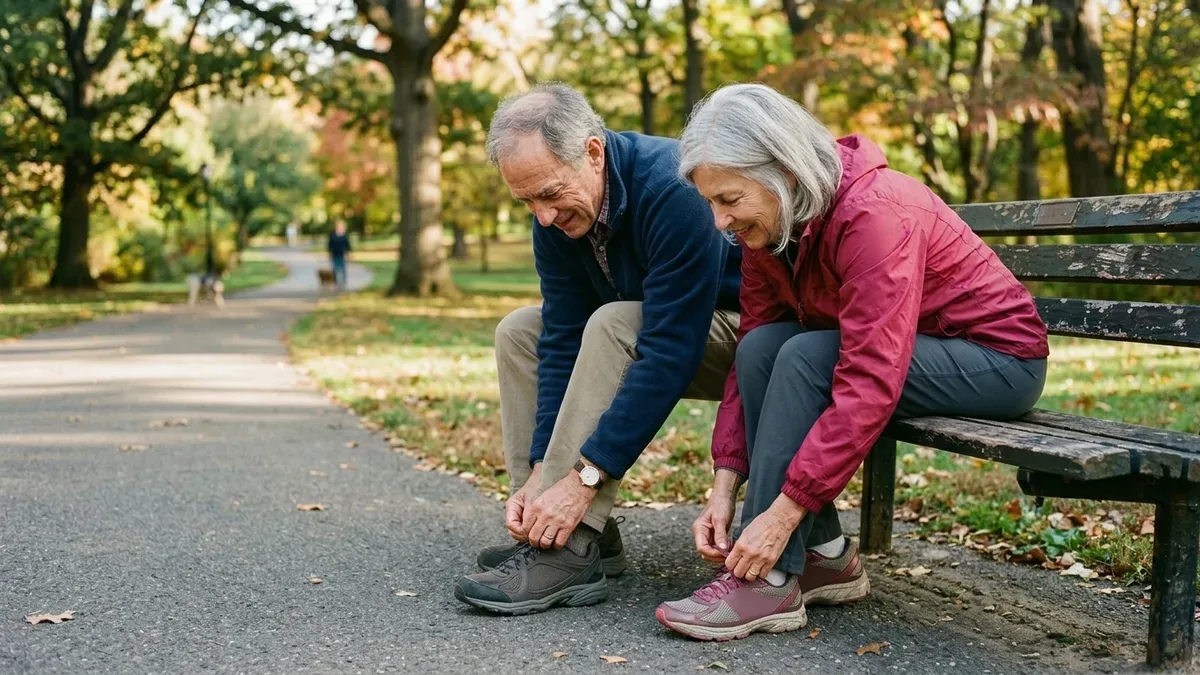
The best walking shoes for seniors are the ones that fit your feet, hold your heel steady and grip the ground, and they should feel good the first time you put them on. There's no single winning brand, so instead of a ranked list, this guide compares the main types of walking shoes and the fit checks that matter most, for him and for her.
After 60, I stopped buying shoes for how they looked in the box and started buying them for how they felt at the end of a long walk. Comfort first, always. This comparison is part of our bigger style over 60 guide, which covers clothes, skin and shoes together.
Why the right walking shoes matter after 60
Walking is one of the easiest ways to stay active, and shoes are the only gear you really need. If you're building a walking habit, our health tips for seniors have ideas for making it part of your week.
Shoes also play a part in feeling steady. The National Institute on Aging lists sturdy, well-fitting shoes with non-skid soles among its everyday tips for lowering the chance of a fall, and suggests skipping floppy slippers and socks-only walking at home. The CDC's fall prevention pages point the same way: small, practical changes add up.
No shoe can promise anything. But a heel that slips, a slick sole or a toe that pinches can make an ordinary walk harder than it needs to be. For simple moves that may help support steadiness, see our balance exercises for seniors.
Best walking shoes for seniors: the main types compared
Each type below carries our Researched label. We haven't tried these shoes ourselves; we compared the types from what they are designed to do. Brand details below come from public descriptions, so check them before you buy. No prices, no lab scores, no rankings.
| Type | What it is | Often suits | Keep in mind |
|---|---|---|---|
| Cushioned | Thick, soft sole | Long walks on pavement, people who like a soft feel | Tall soles can feel tippy for some |
| Stable | Firm heel, firmer middle, wider base | People who want less wobble | Can feel stiffer at first |
| Hook-and-loop straps | Closes with fabric straps | Stiff fingers, feet that swell during the day | Check the straps reach with room to spare |
| Hands-free slip-on | Step in without bending or using hands | Anyone who finds bending down a bother | Heel must still hold firm while walking |
| Wide width | Same shoe, cut wider | Wide feet, or feet that feel squeezed at the widest part | Not every model comes in widths |
Cushioned walking shoes
These have a thick, soft layer under the foot. Many people love the feel on sidewalks and long walks. Others feel a bit perched up. Brands like Hoka are known for this style. Stand on one foot in the store for a few seconds: if you wobble more than in your old shoes, try a lower model.
Stable walking shoes
A stable shoe has a firm heel cup, a sole that doesn't twist easily and a wider base. It can feel a little stiffer at first, but many walkers like the steady, planted feeling on uneven paths.
Shoes with hook-and-loop straps
Straps are quick and easy on stiff fingers, and you can loosen them if your feet swell later in the day. Check that they're long enough to close over your instep with room to spare.
Hands-free slip-ons
A newer style lets you step in without bending down or using your hands. Skechers and Kizik are two well-known brands that have sold hands-free styles; check current models before you order. A slip-on is only a good walking shoe if the heel stays put when you walk. Mules and backless styles are fine for an errand, not for a long walk.
Wide-width walking shoes
If shoes usually feel tight across the ball of your foot, look for a maker that sells widths. New Balance and Brooks, for example, are known for offering widths; check the product page for the model you want. A deep toe box, a removable insole and a soft upper also help.
What the best walking shoes for seniors have in common
Whatever the type, here is what I look for in the best walking shoes for seniors:
- A heel that stays put. Press the back of the shoe, just above the sole. It should feel firm, not squashy. That cup is the heel counter, and your heel shouldn't lift out of it when you walk.
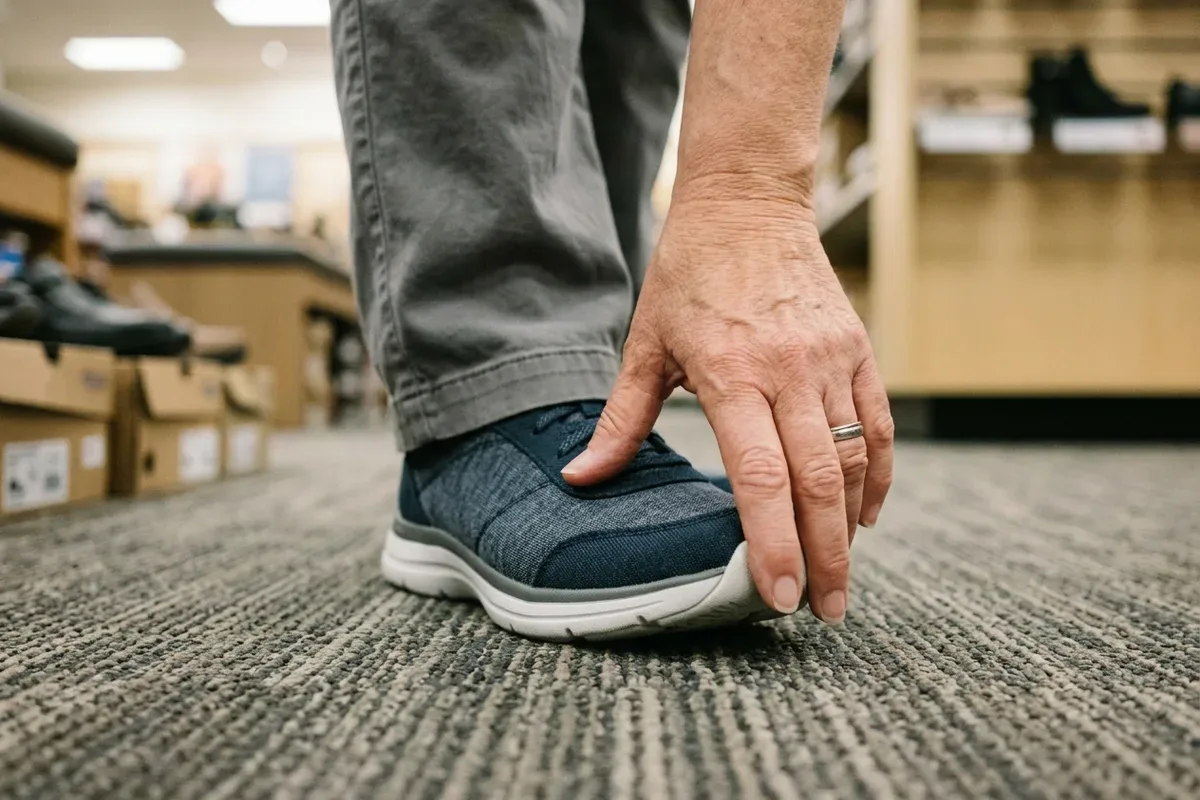
- Room for your toes. A rounded toe box where your toes can wiggle, and about a thumb's width between your longest toe and the end of the shoe. Feet often get a little longer and wider over the years, so don't assume your old size.
- A sole that bends in the right place. Hold the shoe by the heel and the toe. It should flex at the ball of the foot and stay firm through the middle.
- Grip you can trust. A rubber sole with a clear tread grips better on wet pavement than a flat, hard sole. Very sticky treads can catch on carpet, so think about where you walk most.
- Light enough to lift. Pick up each shoe. If one feels like a brick, set it back.
How to get the right fit in the store
Even the best walking shoes for seniors won't work if the size is off. These habits help:
- Shop in the afternoon. Feet tend to swell a little over the day, so a shoe that fits at 4 p.m. will fit on your walk.
- Bring your walking socks, and your own inserts if you use them.
- Have both feet measured. Most people have one foot a bit larger. Fit the bigger one.
- Walk, don't just stand. Walk on a hard floor, not only the carpet.
- Trust day one. Walking shoes shouldn't need "breaking in." If a pair rubs in the store, it will rub on the sidewalk.
- Ask about returns. Many stores and online sellers take back shoes worn only indoors. Check the policy first.
If you'd like to compare styles from home, walking shoes by width and closure are easy to filter online. Order with a clear return window, and try them on a clean indoor floor.
For her and for him
The checklist for the best walking shoes for women over 60 and the best walking shoes for men over 60 is the same. Men's and women's shoes are built on different shapes, though, so if a men's shoe fits a woman better, or the other way around, wear the one that fits. Nobody is checking the label.
My husband and I shop for shoes together now, on a weekday afternoon, and we both walk a lap of the store before we decide. One of our sons laughed at us the first time. Then he started doing the same.
What that APMA seal really means
You'll see the APMA Seal of Acceptance on some shoe boxes and web pages. APMA stands for the American Podiatric Medical Association. The seal is a program manufacturers choose to apply to and pay a fee to join; products are reviewed by the association before they can carry it.
So here is how I read it: the seal tells you a maker submitted that shoe and it was accepted. It doesn't tell you it's the right shoe for your feet, and a shoe without the seal isn't a worse shoe. Plenty of good brands simply don't take part. Words like "comfort technology" on a label are marketing, not a standard. Your own feet are the test.
When to replace your walking shoes
Even the best walking shoes for seniors wear out. The foam inside the sole compresses over time, and you won't always see it. Check for these signs:
- The tread on the bottom is worn smooth, especially at the heel.
- The shoe tilts to one side when you set it on a table.
- The upper is stretched and your foot slides around.
- Your feet or legs feel tired sooner on your usual walk.
Keep the old pair for gardening, and save the new pair for real walks.
Frequently Asked Questions
What are the most comfortable shoes for seniors?
The most comfortable shoe is the one that fits your own feet. Look for a roomy toe box, a heel that doesn't slip, a sole that bends at the ball of the foot and a closure you can manage easily. Try shoes on late in the day, wear your usual socks and walk around the store on a hard floor before you buy.
Should seniors wear Hoka shoes?
Hoka is known for thick, cushioned soles, and many people like how they feel. A tall sole isn't right for everyone, though, so judge any pair the same way: steady heel, good grip, enough toe room and no wobble when you stand on one foot. If a shoe feels tippy, pick a lower model or another brand.
What shoes do podiatrists recommend for seniors?
There's no single shoe. You'll often see the APMA Seal of Acceptance mentioned; it comes from the American Podiatric Medical Association, and it's a program shoe makers apply to and pay for. It can be a starting point, but many good shoes never go through it. If your feet hurt often, a podiatrist can look at your own feet.
How often should you replace walking shoes?
There's no set date. Replace them when the tread is worn smooth, the heel leans to one side when the shoe sits on a table, the cushioning feels flat or your feet start to feel tired sooner than they used to. If you walk most days, take a close look at your shoes every few months.
One thing to try this week
Set your current walking shoes on the kitchen table and look at them from behind. Then turn them over and check the tread. If they lean or the grip is worn smooth, plan a shoe fitting for an afternoon this week, and bring your walking socks. For clothes and the rest of the routine, head back to our style over 60 guide, and if you walk in the sun, see our comparison of the best sunscreen for older skin.
Sources
- National Institute on Aging, Falls and falls prevention
- Centers for Disease Control and Prevention, Older adult fall prevention
- American Podiatric Medical Association, Seal of Acceptance program