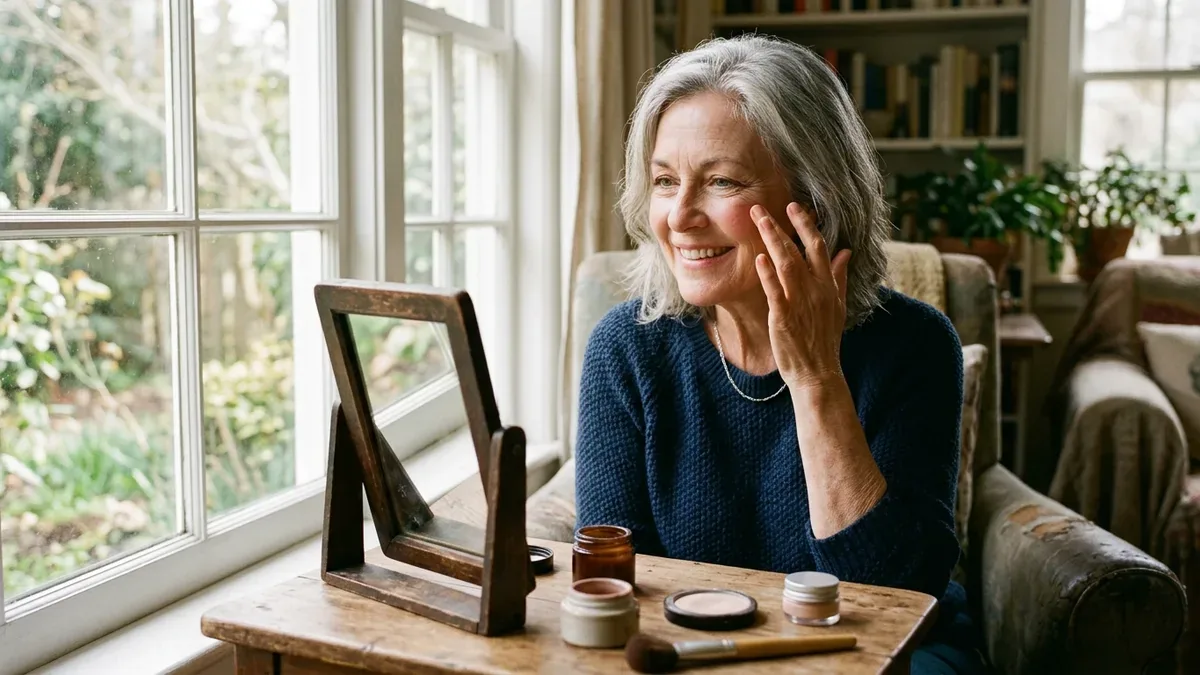
The best makeup for mature skin is light, creamy and comfortable: a sheer base, a cream blush, a brow pencil, mascara and a lip color you enjoy, blended with your fingers in about five minutes. You do not need ten products. This guide compares the main types, from foundation to mascara, and shows how they fit into five easy steps.
When I simplified my routine a few years back, I cut my own makeup bag down to those basics, and I've never missed the rest. This comparison belongs to our larger style over 60 guide, which pulls together clothes, shoes and skin care.
Why the best makeup for mature skin feels different after 60
Skin changes over the years, and so does what feels good on it. Many women find their skin feels drier than it used to, so products that were fine at 40 can start to feel tight or look dusty. That's the main reason the best makeup for mature skin leans toward creams and sheer textures.
It's about feeling put together and comfortable, for lunch with friends, a video call with the grandkids or just a Tuesday. A little color can make you feel more like yourself, and that's reason enough.
Before any makeup, start with clean, moisturized skin and sunscreen. Our comparison of the best sunscreen for older skin explains how to choose one; it goes on right after moisturizer.
Foundation for mature skin: the main bases compared
Each type on this page carries our Researched label. We haven't tried these products ourselves; we compared the types from what they're made to do, with FDA and AAD safety advice. No prices, no rankings.
| Base | Coverage | Feels like | Often suits |
|---|---|---|---|
| Tinted moisturizer or skin tint | Sheer | Like a light cream | Everyday wear, dry skin, a very natural look |
| Liquid foundation | Light to medium | Smooth, blends with fingers or a sponge | Special occasions, more even color |
| Cream or stick foundation | Medium | Rich, easy to dab on | Spot coverage, stiff fingers (sticks) |
| Powder foundation | Medium | Dry, matte | Oily skin; can feel dusty on dry skin |
| Primer | None | A smooth layer under the base | Makeup that needs to last a long day |
Tinted moisturizer or skin tint
For most days, this is where I'd start. A skin tint gives a little color and glow while your skin still looks like skin. Dot a pea-sized amount on the center of your face and blend outward with your fingers, leaving the edges sheer.
Liquid foundation
The best foundation for mature skin is often a light liquid with a satin or dewy finish, rather than a thick, matte one. Build it in thin layers only where you want more evenness. If you wear it daily, look for a shade range wide enough to find a true match.
Primer: needed or not?
A primer goes on after moisturizer and before foundation, to help makeup stay comfortable over a long day. For everyday wear, a good moisturizer often does the same job. A hydrating primer is worth it for a wedding or a long evening out; otherwise, skip it and save the money.
How to pick your shade
Test on your jawline, in daylight, by a window. The right shade seems to disappear. Store lighting can fool you, so walk to the door if you need to. A tint with SPF is handy, but most people don't apply enough makeup to count on it as their only sun protection, so keep your sunscreen underneath.
The five steps, one product at a time
Here is each step of the best makeup for mature skin, and how to use it.
Step 1: A light base
Your tint or foundation, from the section above. Add a creamy concealer with your ring finger only where you'd like a bit more coverage, and pat it in. Thick, dry formulas tend to feel heavy on the skin.
Step 2: Cream blush
If you only use one color product, make it blush. A cream blush blends into the skin and gives a soft flush that powder often can't match on drier skin. Smile, tap a little on the round part of your cheek, then blend up and out toward your temple. Soft rose, peach or berry suit most people. Many cream blushes double as a lip tint. If you'd like to browse, cream blushes are easy to compare by shade.
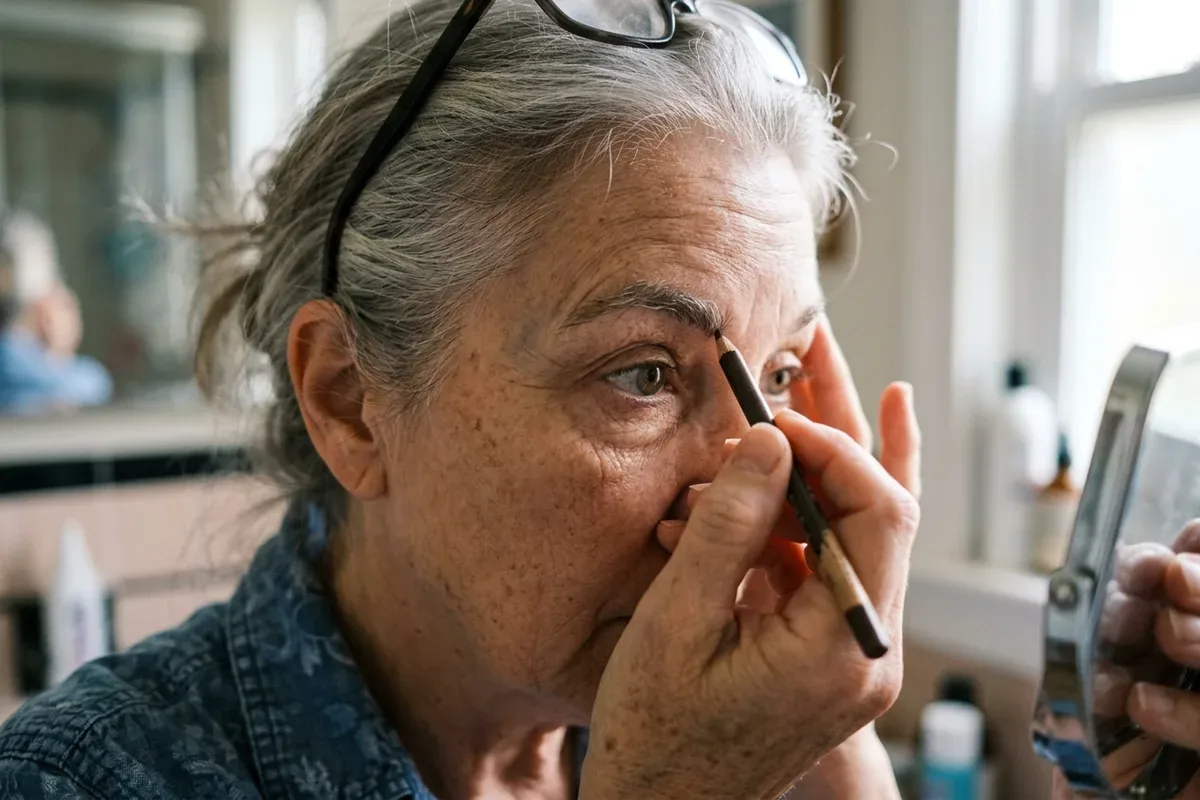
Step 3: Brows
Brows often get lighter and sparser over time, and filling them in is one of the quickest ways to feel put together. A fine brow pencil or a tinted brow gel works well, in a shade close to your hair color, or one shade lighter if your hair is gray or silver. Brush brows up, fill gaps with short, light strokes like little hairs, then brush through again.
Step 4: Mascara
A coat on the upper lashes is often all the eye makeup you need. When I look for the best mascara for older women, I think about removal first. "Tubing" formulas wrap each lash in tiny tubes that slide off with warm water and gentle pressure, without heavy rubbing. Brown or brown-black often looks softer than jet black. Skip the lower lashes if mascara tends to smudge there.
If you like eyeshadow, one matte or satin shade a little deeper than your skin, swept on with a finger, is plenty. Heavy shimmer can look dry on the lid.
Step 5: Lip color
Lips often feel drier with age. Start with a thin layer of lip balm and let it sit while you do the rest. Then choose a creamy lipstick, a tinted balm or a sheer gloss in a shade close to, or a little deeper than, your natural lip color. A clear or nude lip liner traced along the edge helps color stay in place.
Makeup safety: what the FDA suggests
Makeup should be comfortable and safe, and a few habits help. The FDA's cosmetics pages offer practical tips for any age:
- Don't share makeup, especially eye products. Use a fresh disposable applicator on store testers.
- Keep containers closed when you're not using them.
- Don't add water or saliva to thin a product that has dried out.
- Throw out products that change color, smell or texture.
- Don't apply eye makeup in a moving car, and stop using any product that bothers your eyes.
The FDA also notes that U.S. law doesn't require cosmetics to carry an expiration date. Writing the date you opened a product on a small sticker is an easy habit, and eye products are the ones to replace first.
Before you use a new product all over your face, try it on a small patch of skin first. The American Academy of Dermatology's skin care basics pages explain how; follow their steps for where and how long to test.
Stop if...
Stop using any product that stings, itches or makes your skin or eyes red. Wash it off and keep the box, so you know which ingredients to skip next time.
Best makeup for older women on a budget
You don't need expensive makeup. Drugstore and department store brands both make creamy, easy formulas. Here's what I look for when I shop:
- Texture over name. Creamy, sheer and buildable beats matte and heavy.
- Easy packaging. Sticks, pots and pumps are simpler for stiff fingers than tiny brushes.
- Returns. Some stores accept returns on opened makeup. Ask first, and keep the receipt.
- Samples. Ask for one, or try a travel size before a full one.
When a friend asks me about the best makeup for older women, that's what I tell her: the best makeup is the kind you'll actually wear. And if the man in your life wants a routine too, our comparison of the best face moisturizer for men keeps his to three steps.
Frequently Asked Questions
What brand of makeup is best for older skin?
There's no single best brand. The formula matters more than the name on the tube. Look for creamy textures, sheer coverage you can build, shades you can test in daylight and packaging that's easy to open. Drugstore and department store brands both make good options, so shop with a short checklist instead of a brand name.
What is the #1 foundation for mature skin?
No foundation is number one for everyone, because skin tone, texture and taste differ. Many women over 60 prefer a light liquid foundation or a tinted moisturizer with a satin or dewy finish, blended with the fingers. Test the shade on your jawline, in daylight, before you buy. A ranking online can't do that part for you.
What is the best makeup look for mature skin?
A fresh, natural look that feels like you. For most people, that means a sheer base, a touch of cream blush, filled-in brows, one coat of mascara and a comfortable lip color. Five products and about five minutes are plenty. Anything more is a choice, not a rule, and it's fine to skip makeup entirely on most days.
What is the best mascara for older women?
The one that's easy to put on and easy to take off. Many women like brown or brown-black, which looks softer than jet black. Tubing mascaras wrap each lash and slide off with warm water and gentle pressure, without heavy rubbing. The FDA advises never sharing mascara and replacing eye products if they change smell, color or texture.
One thing to try this week
Empty your makeup bag onto a towel. Keep only what you've used in the last month, and throw out anything that smells off or has changed texture. Then do the five steps once, by a window, and see how it feels. For clothes and shoes that feel as good as your makeup, visit our style over 60 guide, and for your next walk, our comparison of the best walking shoes for seniors.
Sources
- U.S. Food and Drug Administration, Cosmetics
- U.S. Food and Drug Administration, Eye cosmetic safety
- American Academy of Dermatology, Skin care basics