The best sunscreen for older skin says broad spectrum, has an SPF of 30 or higher, is water resistant, and feels comfortable enough that you'll wear it every day. That's the public advice of the American Academy of Dermatology (AAD), and it's the same for men and for women. After that, the choice is about type and texture: mineral or chemical, tinted or clear, lotion, stick or spray.
This comparison is part of our bigger guide to style over 60, where sunscreen is the one step I'd never skip. Here, we look at the main options, who each one suits, and how to use enough of it.
General information from personal experience, not medical advice.
Why I wear sunscreen every day now
I grew up in Savannah, where summer starts early and stays late. I spent those afternoons outside with no sunscreen at all, and the habit came much later. Today there's a bottle by my front door in Charlotte, next to my keys, and it goes on every morning before I leave, rain or shine.
The AAD points out that the sun's rays reach you on cloudy days too. So the best sunscreen for older skin isn't a beach product. It's for gardening, golf and a long drive.
What the best sunscreen for older skin says on the label
In the United States, the Food and Drug Administration (FDA) regulates sunscreen as an over-the-counter drug. Every bottle carries a "Drug Facts" box with the same kind of information in the same place. Check it in this order:
- "Broad spectrum." According to the FDA, this means the product passed a test for protection against both UVA and UVB rays. SPF alone mainly tells you about UVB, the rays behind sunburn.
- SPF 30 or higher. The AAD recommends at least 30. The FDA allows only broad-spectrum sunscreens with SPF 15 or higher to say they help lower the risk of skin cancer and early skin aging, but 30 is the number to remember.
- "Water resistant (40 minutes)" or "(80 minutes)." The FDA limits water resistance claims to those two times. No sunscreen is waterproof, and words like "waterproof," "sweatproof" or "sunblock" aren't allowed on labels.
- The expiration date. The FDA requires an expiration date unless the maker has shown the product stays stable for at least three years. If there's no date, write the purchase date on the bottle with a marker.
Price doesn't show up on that list. A store-brand bottle that meets these points does the same job as a department store tube.
Mineral, chemical and tinted: the main options compared
Each option below carries our Researched label. We haven't tried these products ourselves; we compared the types using the AAD's and the FDA's public advice. No prices, no rankings.
| Type | How it feels | Often suits | Keep in mind |
|---|---|---|---|
| Mineral | Thicker, sits on top of the skin | Sensitive skin, people who dislike stinging | Can leave a white or gray cast |
| Chemical | Light, rubs in clear | Everyday face use, people who dislike a cast | Switch if it stings the eyes or skin |
| Tinted | Light color, blends in | Deeper skin tones, women who want a light, even look | Shade range varies by brand |
| Moisturizer with SPF | Like a regular face cream | Men and women who want one morning step | Use a separate sunscreen for long days outside |
| Stick or spray | Quick, no rubbing between fingers | Touch-ups, ears, stiff hands, large areas | Sprays make it easy to miss spots |
Mineral sunscreen
Mineral sunscreens use zinc oxide, titanium dioxide or both as active ingredients. The AAD notes they're an option for people with sensitive skin. They can leave a white or gray tint, especially on deeper skin tones, though newer formulas rub in better. If you're shopping for the best mineral sunscreen for face, look for one that's fragrance-free and comes in a lotion or cream if your skin runs dry.
Chemical sunscreen
Chemical sunscreens use other active ingredients, listed in the Drug Facts box, that absorb UV rays. They tend to rub in clear and feel light, which many people like on the face. If one stings your eyes or your skin, try a mineral formula instead.
Tinted sunscreen
A tinted sunscreen adds a little color, so the cast of a mineral formula blends in. For her, it can stand in for a light foundation on a casual day.
Moisturizer with SPF
For daily errands, a moisturizer with broad-spectrum SPF 30 or higher handles two steps at once. It's the easiest option for men who want the shortest possible routine; our comparison of the best face moisturizer for men covers it in detail. For a long day outside, switch to a dedicated sunscreen and reapply it.
Stick or spray
A stick is easy to hold and to control around the eyes, the ears and the nose, and it fits in a pocket or a purse. A spray is quick for arms and legs, but the AAD advises against spraying it on your face: spray it into your hands, then apply. Don't inhale it, and use it away from wind.
For many older adults, the best sunscreen for older skin is simply the one that doesn't sting, doesn't feel greasy and doesn't leave a cast you dislike. If you'd like to browse, broad-spectrum SPF 30 sunscreens are easy to compare by type and texture.
Best sunscreen for older skin: choosing a texture
Skin tends to get drier with age, so texture matters more than it used to. Here is what I look for in sunscreen for mature skin:
- Lotion or cream: usually the most comfortable for dry skin, and easy to spread over arms and legs.
- Gel: lighter, and good for hairy areas like the chest or a scalp with thinning hair.
- Pump bottle: easier on stiff fingers than a squeeze tube or a small screw cap.
How to apply sunscreen the right way
Even the best sunscreen for older skin only works if you use enough of it. Most people use far too little. The AAD's public advice:
- Put it on about 15 minutes before you go out, so it has time to settle on the skin.
- Use enough. About 1 ounce, the amount that fills a shot glass, for the whole body.
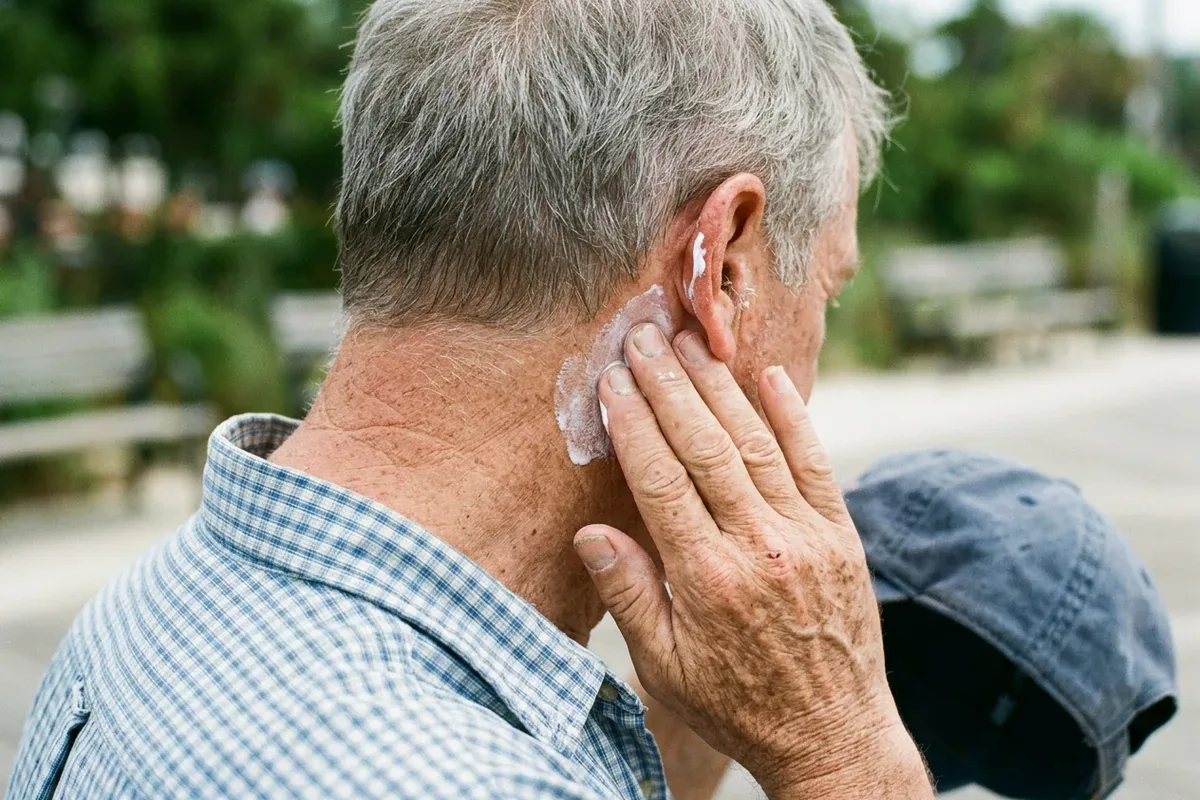
- Cover every exposed spot. The ones people forget: ears, the back of the neck, the part in your hair, the tops of the feet and the backs of the hands.
- Protect your lips with a lip balm that has SPF 30 or higher.
- Reapply at least every two hours outside, and right after swimming or sweating, even if the label says water resistant.
If reaching your back has become harder, a long-handled lotion applicator helps, and so does trading backs with your partner before a walk.
Beyond the bottle: shade, hats and clothing
Sunscreen is one layer of protection, not the only one. The FDA suggests limiting time in the sun between 10 a.m. and 2 p.m., when the rays are strongest, and both the FDA and the AAD recommend a few extras:
- A wide-brimmed hat that shades your face, ears and the back of your neck. A baseball cap leaves the ears out.
- Sunglasses that block UV rays.
- Clothing that covers your arms and legs. Some carries a UPF label, which tells you how much UV the fabric blocks.
A hat and a small tube of sunscreen pair well with comfortable shoes. Our guide to the best walking shoes for seniors covers the rest from the ground up.
For her and for him: sunscreen with makeup and shaving
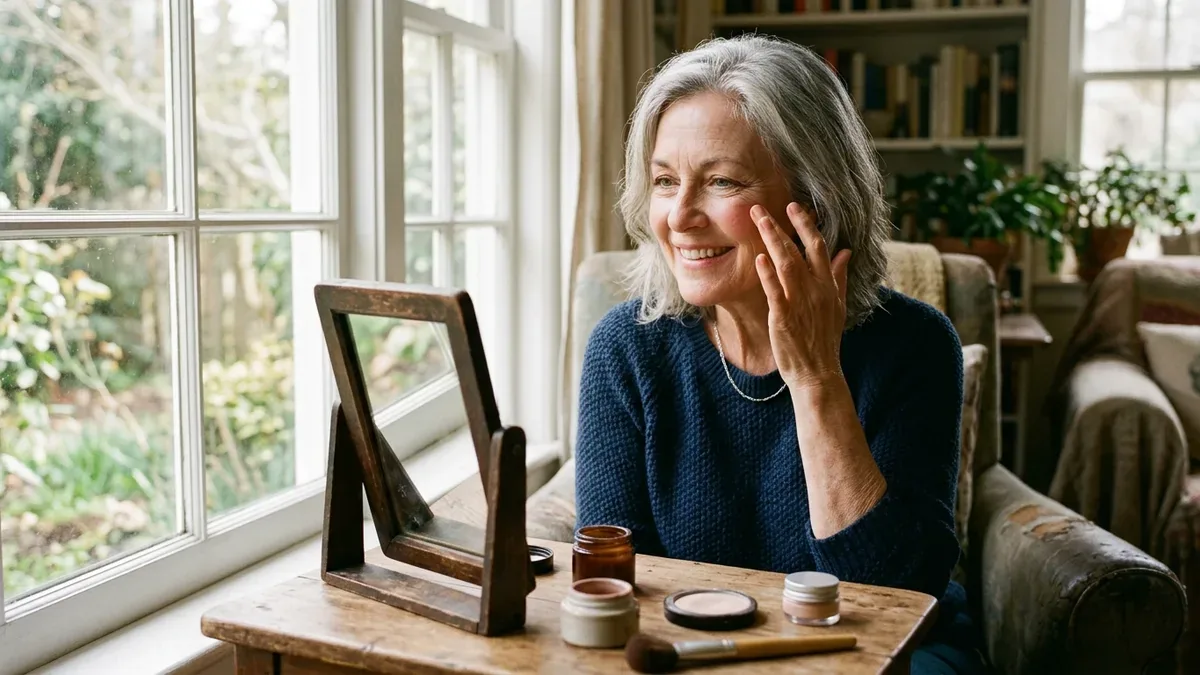
For her: Put sunscreen on first, let it settle for a few minutes, then add makeup as usual. Makeup with SPF is a nice bonus, but most of us wear too thin a layer to count on it alone. Our comparison of the best makeup for mature skin shows where sunscreen fits.
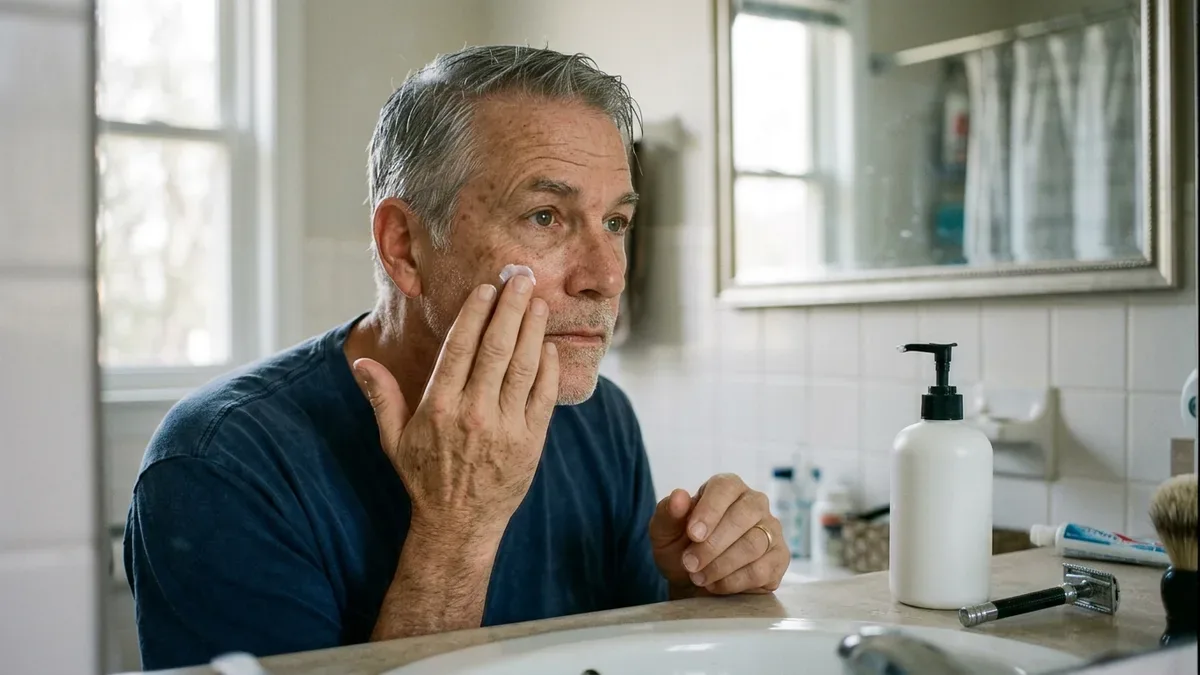
For him: Put sunscreen on after shaving and after moisturizer, or use a moisturizer with broad-spectrum SPF 30 or higher.
Stop if...
Stop using a sunscreen that stings, burns, itches or leaves your skin red. Try a different formula, such as a fragrance-free mineral sunscreen. Check with your doctor before starting a new routine.
Frequently Asked Questions
What is the best sunscreen for seniors with mature skin?
The best one is a sunscreen you'll use every day that meets three points from the American Academy of Dermatology: broad spectrum, SPF 30 or higher, and water resistant. Beyond that, pick the type that feels good. Many people with dry skin like a lotion or cream, and the AAD notes that mineral formulas with zinc oxide or titanium dioxide are an option for sensitive skin.
What is the best SPF for older skin?
The American Academy of Dermatology suggests SPF 30 or higher for everyone, whatever their age. The FDA allows only broad-spectrum sunscreens with SPF 15 or higher to say they help lower the risk of skin cancer and early skin aging. A higher number doesn't let you skip reapplying: both groups advise putting it on again at least every two hours outdoors, and after swimming or sweating.
What is the number one dermatologist recommended sunscreen?
There isn't one. The American Academy of Dermatology doesn't name a single brand in its public advice. It gives criteria instead: broad spectrum, SPF 30 or higher and water resistant, used in the right amount. A store brand that meets those points does the job. Be wary of ads that claim a number one ranking without saying who ranked it.
Is mineral or chemical sunscreen better for mature skin?
Both protect well when they're broad spectrum, SPF 30 or higher and used correctly. The difference is mostly comfort. Mineral sunscreens use zinc oxide or titanium dioxide and are often suggested for sensitive skin, but can leave a white cast. Chemical sunscreens usually rub in clear and feel lighter. Try a small bottle of each and keep the one you like.
One thing to try this week
Check the sunscreen you already own. Look for broad spectrum, SPF 30 or higher and a date. If it passes, put it by the front door and use it every morning this week, ears and neck included. If it doesn't, replace it with one that does. For clothes, shoes and the rest of your routine, visit our guide to style over 60.
Sources
- American Academy of Dermatology, Sun protection
- American Academy of Dermatology, Skin care basics
- U.S. Food and Drug Administration, Sunscreen: How to help protect your skin from the sun