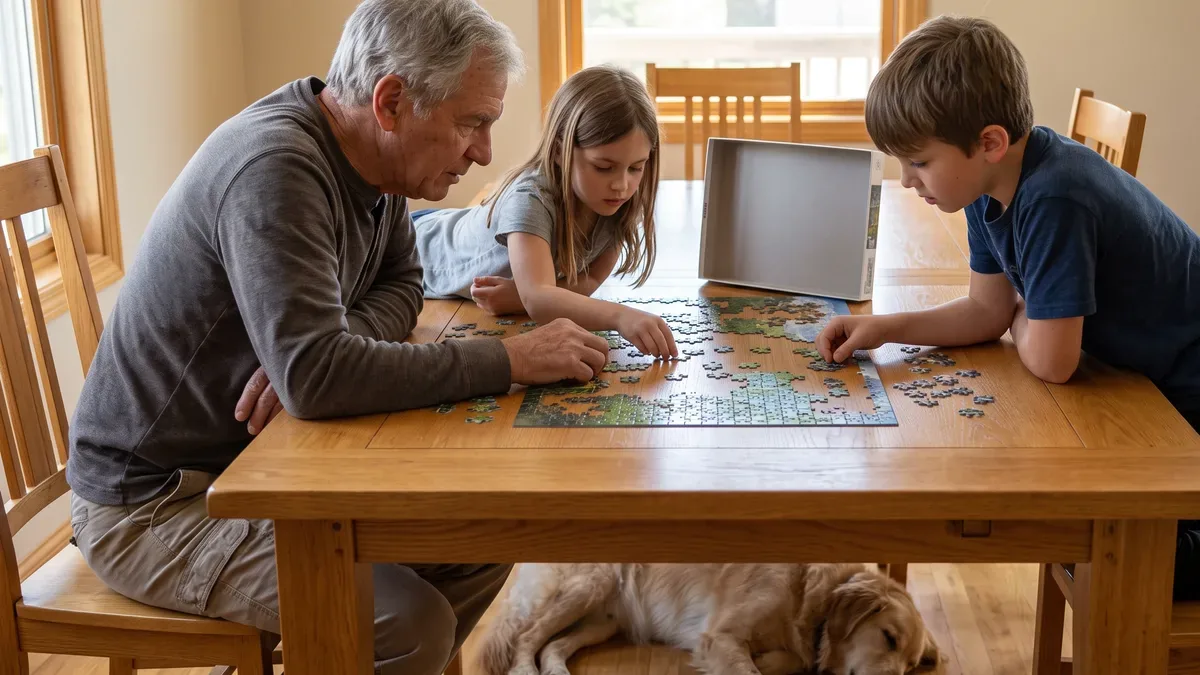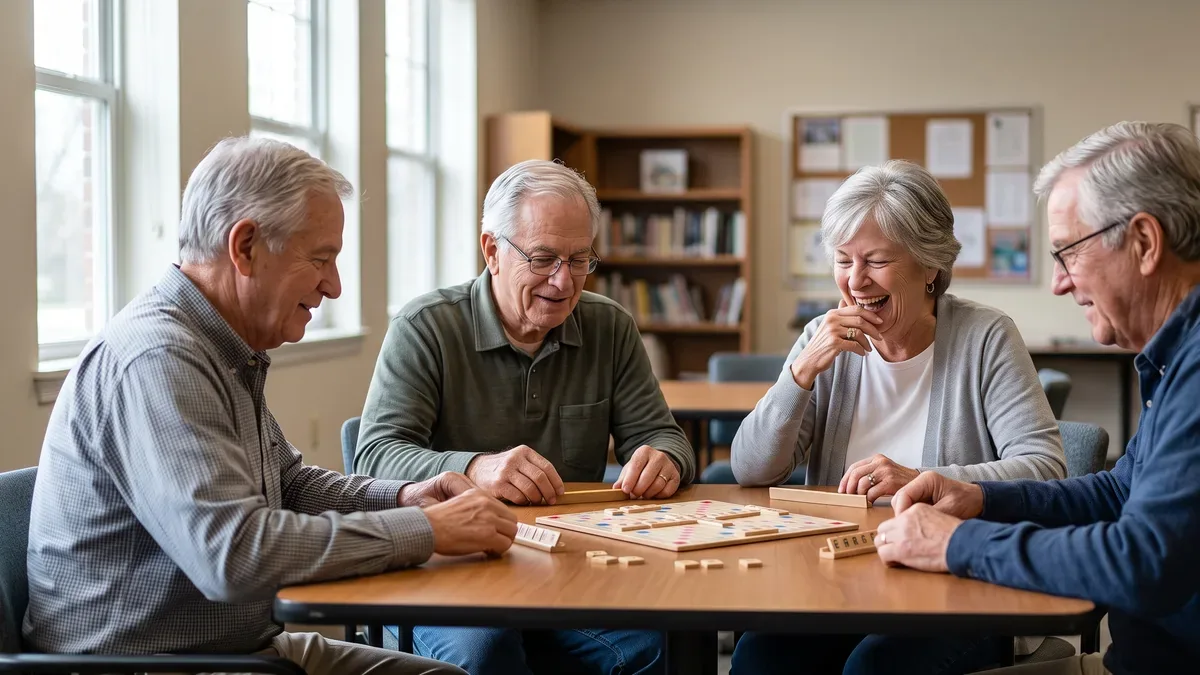
Board games for seniors don't need to be special games at all. The best board games for seniors are simply the ones with rules you can explain over one cup of coffee, pieces you can see and pick up without a fuss, and a table full of people who want a rematch.
This guide compares the main types, what to look for on the box, and where to find players. It's part of our bigger guide to loneliness in seniors and living alone, because in my experience a game is mostly an excuse to sit with other people for an afternoon. A very good excuse.
Every item on this page is labeled Researched: we compared the types from what they are designed to do. No prices, no scores, no ranking.
What makes good board games for seniors
When my wife passed, the Tuesday cribbage group at our library was one of the things I said yes to. I wasn't there for the cards, really. Four people expected me at one o'clock, and somebody always brought doughnuts. The game gave us something to do with our hands while we got to know each other.
That's the real job of board games for seniors. Here's what helps a game do it well:
- Rules you can learn in one sitting. If the rulebook looks like a tax form, the game will live in the closet.
- Readable print. Numbers, letters and colors big enough to read across the table, in the light you actually have.
- Pieces that are easy to grip. Thick tiles, chunky pegs and cards that don't stick together.
- The right length and player count. A quick game for two suits a neighbor. A table of six needs something else.
- Room for grandkids. A game a 10-year-old and an 80-year-old can play on equal terms is worth a lot.
No pressure to find the perfect one. Most groups settle on a couple of favorites.
Word games: board games for seniors who love crosswords
Word games suit people who like crosswords or read a lot. Scrabble is the classic. Others in the family: Boggle, with letter cubes and a timer, Upwords, where you stack letters on old words, and Bananagrams, with no board at all.
Good for: readers, retired teachers, anyone who enjoys a friendly argument over whether a word is real.
Limits: small letter tiles can be hard to read and pick up, and timers can feel rushed. Word games can also turn into a duel between the two best spellers.
What to look for: a board that doesn't slide (some deluxe editions turn on a lazy Susan base), clear lettering, and house rules agreed ahead of time, like allowing a dictionary.
Tile and dice games for seniors
Among board games for seniors, tile and dice games show up in almost every senior center game room. They're easy to learn, and nobody needs to be good with words.
- Number tile games like Rummikub play like rummy with tiles instead of cards. The tiles sit on racks, so nothing falls out of your hand.
- Dominoes come in many versions. Mexican Train is a favorite for bigger groups, and a basic double-six dominoes set covers the classic games.
- Shape and color tile games like Qwirkle ask you to match colors or shapes. No reading, no math beyond counting.
- Dice games like Yahtzee are fast, noisy and easy to play with grandkids.
Good for: mixed groups and anyone who wants to talk while they play.
Limits: tiles can be small, and some colors are hard to tell apart in dim light. Dice games are mostly luck, which some players love and others find dull.
What to look for: large-number editions where they exist, steady racks, and a felt mat so dice stay on the table.
Card games for seniors
A deck of cards may be the cheapest ticket to a regular social life there is.
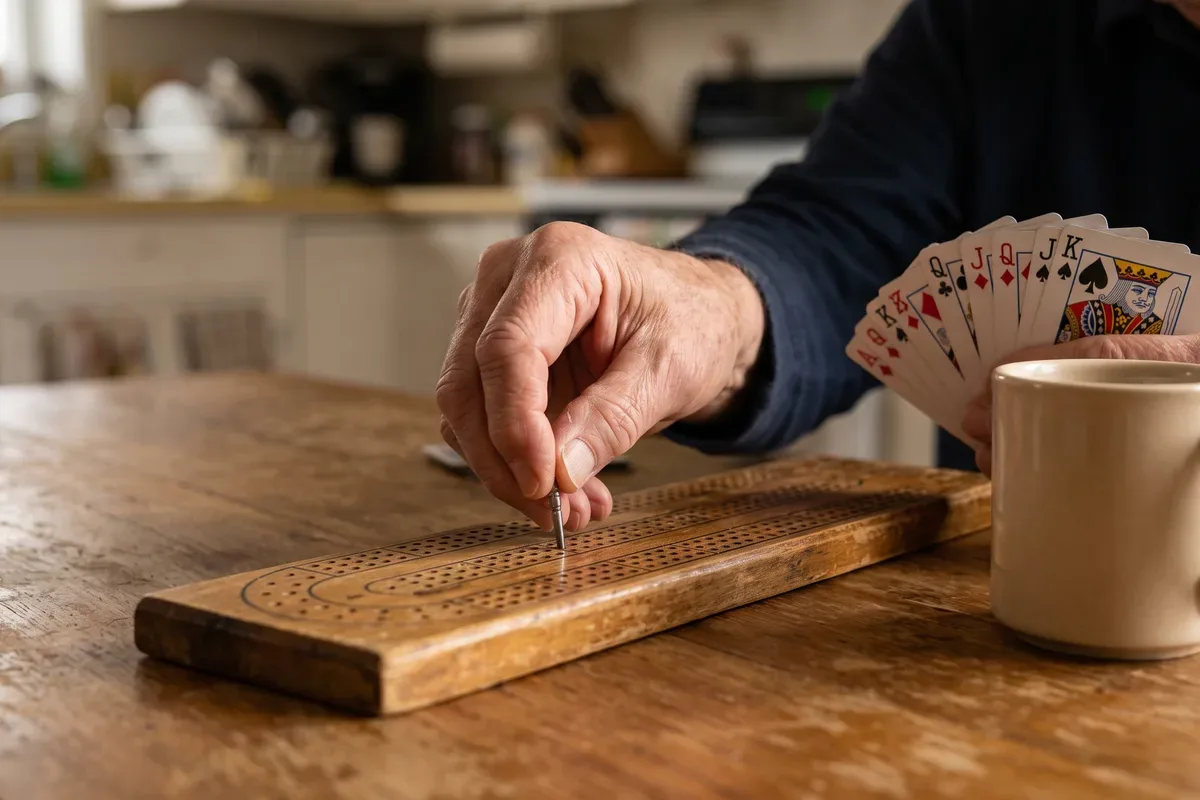
The old favorites are still going strong: rummy and gin rummy, hearts, spades, euchre, pinochle, canasta, bridge and, in my part of Maine, cribbage. Newer family card games like Uno, Skip-Bo and Phase 10 are easy to teach to grandkids.
Two small helps make card games for seniors easier to keep playing:
- Large-print playing cards. Bigger numbers and suits in the corners. A pack of large-print playing cards is easy to keep in the drawer for company.
- A card holder. If your hands tire or cards keep slipping, a playing card holder holds them on the table for you.
Good for: almost everyone, from two players to a full table.
Limits: bridge and pinochle take time to learn, and partnership games can get heated. That's half the fun.
Easy family strategy games
Newer family games can be easy to learn and still interesting for adults, which makes them good board games for seniors who play with grandkids. A few that often come up:
- Ticket to Ride: collect train cards and claim railroad routes on a map.
- Carcassonne: lay tiles to build roads, cities and fields. Calm and pretty.
- Sequence: cards and a board, played in teams. Good for pairing a grandparent with a grandkid.
- Codenames: a team word game with clues. Lots of laughing, lots of groaning.
Good for: families and grandparents who want a game the teenagers won't roll their eyes at.
Limits: more pieces and rules than the classics, and the first game goes slowly. Some boxes have small cards and fine print.
What to look for: a game someone already knows and can teach. People beat rulebooks every time.
Two-player games for a neighbor or a grandkid
Not all board games for seniors need a crowd. Some of the best afternoons happen with one other person and a board between you.
- Chess and checkers: cheap and everywhere. Library chess clubs welcome beginners more than you'd think.
- Backgammon: fast, part luck, part skill, and easy to learn in an evening.
- Cribbage: two players (or more), a pegboard and a deck of cards. A wooden cribbage board on the coffee table is an open invitation.
Two-player games work long distance too. My grandkids live in other states, and on video calls one of them sometimes sets up a checkerboard on her end while I set up mine. We call out the moves. It's slow and silly, and I love it. If you'd rather play on a screen, most classic games have app versions, and our guide to tablets for seniors explains how the easier tablets compare.
Large print, easy grip and a word on "brain" claims
Plenty of games are sold with big promises about memory or "keeping your brain young." We don't make those claims, and we'd be wary of any box that does. We treat board games for seniors as fun and company. That's plenty.
What does help is plain design: large print, high contrast like black numbers on white tiles, bigger pieces, and a non-slip surface, even just a dish towel under the board.
If grandkids under 3 visit, keep small tiles, pegs and dice out of reach. The U.S. Consumer Product Safety Commission warns that small parts are a choking hazard for young children.
Where to find people to play with
Board games for seniors are only as good as the people across the table. Here's where to look, sorted by energy:
| Where | Energy | Budget | What to expect |
|---|---|---|---|
| Your own kitchen table | Low | Very low | Invite one neighbor for cards and coffee |
| Public library game days | Low | Free | Card, chess and board game groups, often weekday afternoons |
| Senior and community centers | Low | Free to low | Regular card games, bingo, dominoes, tournaments |
| Board game cafes and game stores | Medium | Low to medium | Open game nights, staff who teach new games |
To find a senior center near you, the Eldercare Locator, a free service from the U.S. Administration for Community Living, can connect you with your local Area Agency on Aging. The National Institute on Aging also lists taking part in activities you enjoy with other people as one way to stay connected.
Churches, VFW and American Legion posts often host long-running card games too. Bring a friend the first time if you're nervous. It gets easier by the third visit. If puzzles appeal more than games, our guide to jigsaw puzzles for seniors compares large-piece, classic and app options, and for something that gets you outdoors, see our look at golf clubs for seniors.
Frequently Asked Questions
What is the best game for seniors?
There isn't one best game. The right pick is the one your group will actually play again next week. For most tables that means rules you can explain in a few minutes, pieces that are easy to see and pick up, and games that aren't too long. Rummy-style tile games, dominoes, word games and classic card games like cribbage fit a lot of groups.
What are some good table games for older adults?
Good table games for older adults include dominoes, Rummikub-style number tiles, Yahtzee and other dice games, Scrabble and other word games, and card games like rummy, hearts, euchre and cribbage. For a mixed group with grandkids, newer family games such as Ticket to Ride or Sequence are easy to learn. Check the box for print size and piece size before you buy.
What are some fun games for 80-year-olds?
Many people in their 80s enjoy the games they already know, so start there: cribbage, gin rummy, checkers, dominoes or a word game. Look for large-print cards, big tiles and boards that don't slide around. Short games work well, and so do team games where you can play with a partner. Library and senior center game afternoons are a friendly place to try something new.
What are the top 10 board games for adults?
We don't publish a top 10, because no one has measured which game is best for every table. What we can say is which types work well for adult groups: word games, tile games, dice games, card games, two-player classics and light family strategy games. Pick one type your friends already like, then try one new game in that family.
One thing to try this week
Board games for seniors work best on a schedule. This week, pick one game you already own, even if it's just a deck of cards, and invite one person over for a set day and time. Put it on the calendar in pen. If it goes well, make it a standing date. For more ways to fill your week with good company, head back to our guide to loneliness in seniors.
Sources
- National Institute on Aging, Loneliness and social isolation: tips for staying connected
- U.S. Administration for Community Living, Eldercare Locator
- U.S. Consumer Product Safety Commission, product safety and recalls