Jigsaw puzzles for seniors come in more shapes than the old 1,000-piece box in the hall closet: big-piece puzzles, classic ones, large-print word search books and puzzle apps. The best jigsaw puzzles for seniors are simply the ones you'll enjoy finishing, and this guide compares the main kinds so you can pick without wasting a trip to the store.
The first winter after my wife died, the evenings were the long part. My daughter mailed me a puzzle of a Maine lighthouse, with a note that said "Call me when you find the foghorn." I didn't find a foghorn. I did find that a puzzle on the dining table gave the house a small job to do, and that people who stopped by would sit down and try a piece before they took their coat off. For more ways to fill the week and keep good company, see our main guide to loneliness in seniors and building a life you love when you live alone.
Jigsaw puzzles for seniors: the main options compared
Every option below is labeled Researched: we looked at what each type offers and what people ask about it. We didn't test products, and we don't rank them.
Large-piece puzzles (100 to 300 pieces)
These use bigger, often thicker pieces that are easier to pick up and turn over. A large-format puzzle can cover as much table as a classic one, so check the finished size on the box.
- Good for: a first puzzle in years, tired eyes, stiff fingers, doing it with young grandkids.
- Watch out for: designs that look like they were made for toddlers. Plenty of large-piece puzzles have grown-up pictures: harbors, old diners, quilts, bird feeders.
If you'd like to browse, here's a range of large-piece puzzles with adult pictures.
Classic puzzles (500 to 1,000 pieces)
The standard box you'll see from well-known makers such as Ravensburger, Buffalo Games and Springbok. Pieces are smaller, the project lasts longer and the choice of pictures is huge.
- Good for: people who already love puzzles and want something that lasts a week or two.
- Watch out for: a finished size too big for your table, and thin pieces that bend.
Large-print word search and crossword books
Not jigsaws, but they scratch the same itch, fit in a chair by the window and cost little.
- Good for: a small space, a quiet half hour, something to take to a waiting room.
- Watch out for: spiral binding versus glued spine. Spiral books lie flat, which is easier on the hands. You can find large-print word search books at most bookstores and online.
Puzzle apps and free puzzle websites
Jigsaw apps let you pick the number of pieces and zoom in. Free websites such as Jigsaw Planet run in a web browser, so there's no app to install.
- Good for: no table space, hands that tire, late nights.
- Watch out for: ads and in-app purchases. More on that below.
Puzzle mats and boards
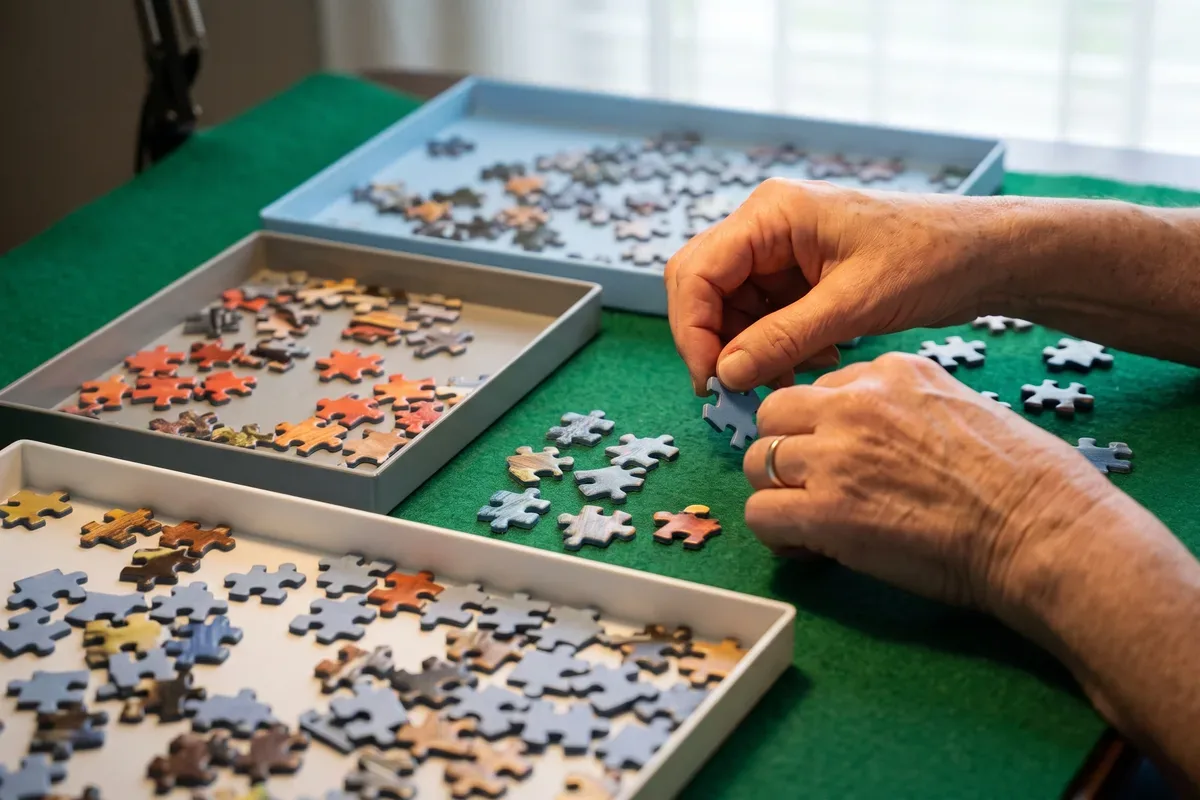
A roll-up felt mat or a board with sorting trays lets you put a half-done puzzle away and bring it back tomorrow.
- Good for: anyone who eats at the same table they puzzle on.
- Watch out for: a mat smaller than your puzzle's finished size. Check both numbers. A basic roll-up puzzle mat is enough for most people.
How to pick the right puzzle, picture first
People fuss over piece count, but the picture decides whether a puzzle gets finished.
Pick pictures with distinct zones. A general store with signs, a garden with different flowers, a harbor with red boats and blue water. Each area gives you a small, winnable job.
Skip big stretches of one color at first. Open sky, snow and ocean are the parts people leave until last and then grumble about.
Look at the finish. A matte or linen finish cuts down on glare from a lamp. Glossy pieces can shine too much.
Check the fit. Well-cut pieces click together and stay put when you slide a section.
Read the box. Look for the finished size and whether a poster of the picture is inside, so you can prop it up.
Some puzzles are sold with promises about memory or the mind. We don't make those promises, and you can skip any box that does. Buy the one with the picture you like.
How many pieces for your eyes, hands and patience
There's no age chart for this. The oldest player at our Tuesday cribbage table does the big thousand-piece boxes under a magnifying lamp, and I know people much younger who stop at the small ones. It depends on your eyes, your hands, your table and how long you like a project to last.
A simple way to decide:
- Start with a large-piece puzzle of 300 pieces or fewer. Finish it in a few sittings.
- If it felt easy, try 500 regular pieces.
- If 500 went well, try 1,000.
- If a puzzle drags on for weeks and feels like a chore, drop back a step. Nobody's grading you. The point is the pleasure of finishing.
Ideas by budget and by energy
Here's how I'd sort jigsaw puzzles for seniors by wallet and by the kind of day you're having.
Free or nearly free
- A puzzle swap. Many libraries, senior centers and churches keep a shelf of donated puzzles. Take one, bring one back. Ask at the front desk; if there isn't one, offer to start it.
- Build your own board. A scrap of plywood with thin strips glued around the edge keeps pieces from sliding off. A basement shop afternoon, or a large piece of cardboard, does the job.
A small spend
A new puzzle with a picture you love, a roll-up mat, or a brighter lamp over the table. Good light helps more than people expect.
Low energy days
A small puzzle on a tablet in your favorite chair, or ten minutes on the one already on the table: just the edges, just the red boat. You don't have to finish anything today.
Social days
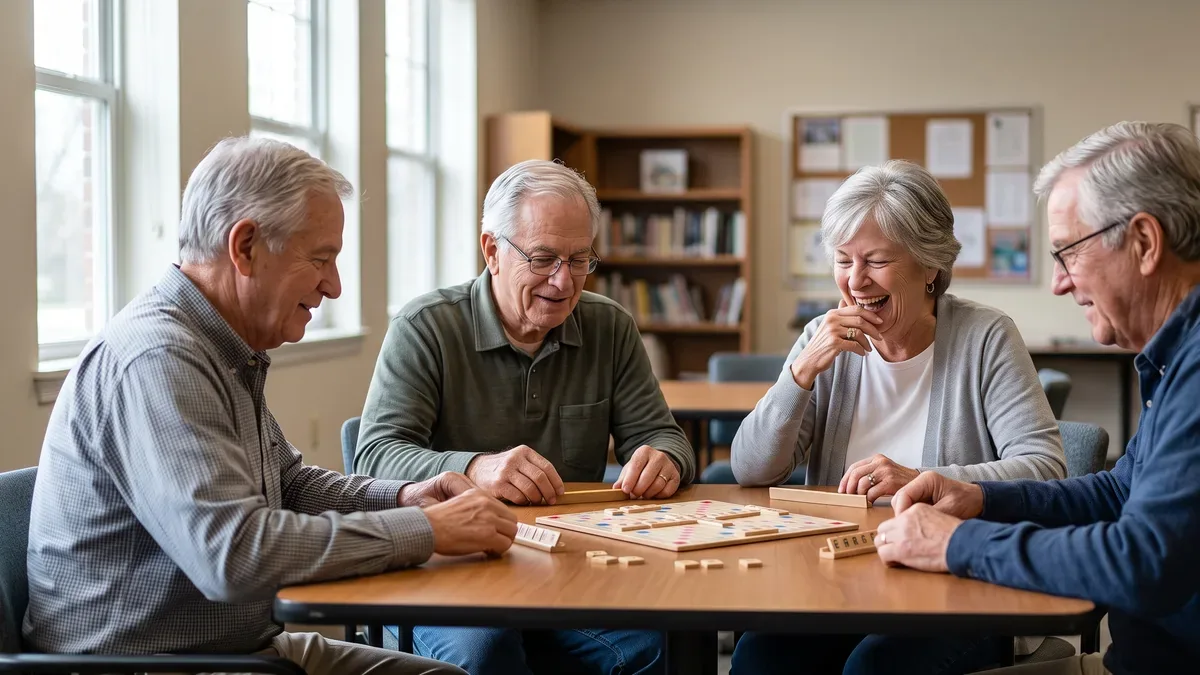
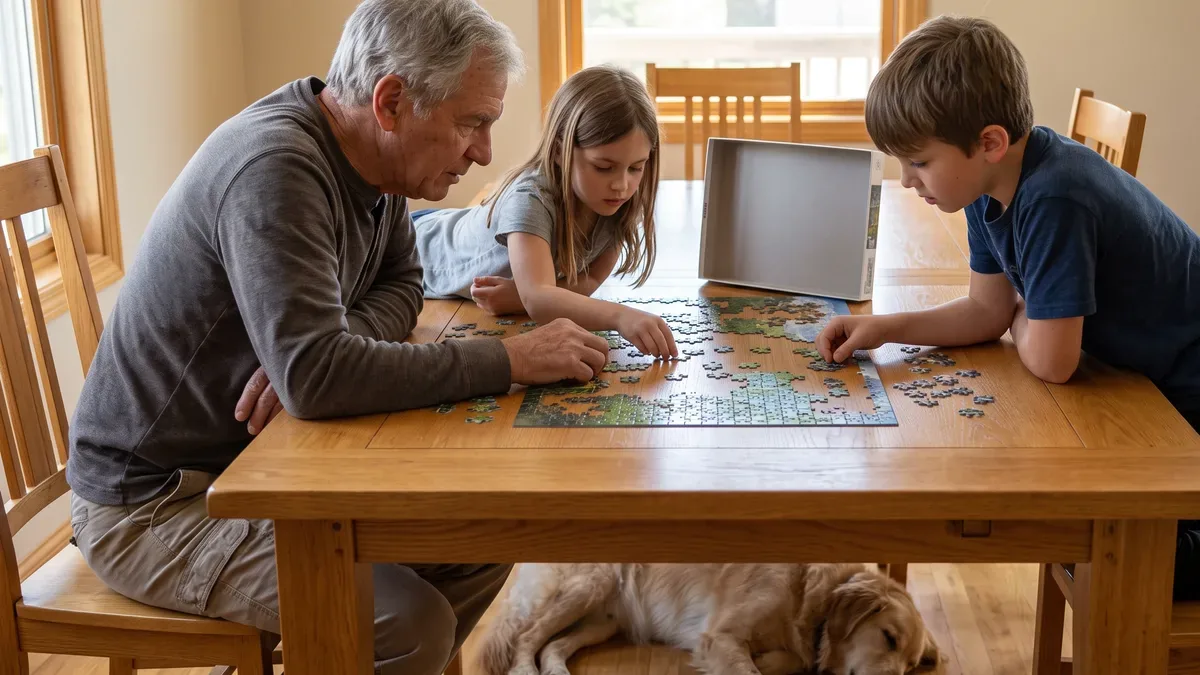
Leave a puzzle out when company is coming. It gives everyone's hands something to do while they talk. Grandkids of almost any age can find edge pieces. And if you like a game with a winner, our guide to board games for seniors has plenty of ideas for the table.
Puzzle apps and free sites: staying safe
Free puzzle sites and apps run on ads, and a few ads aren't your friend. The FTC warns about pop-ups that claim your computer has a virus and give you a phone number to call. That's a tech support scam. Close the page and never call the number.
A few more simple rules:
- Get apps only from the App Store or Google Play, never from a pop-up.
- Don't download "players" or "cleaners" to play a puzzle. The FTC's advice on avoiding malware is to get software only from sources you trust.
- Watch for in-app purchases. Many free apps sell extra puzzles or remove ads for a fee. Turn on a password or fingerprint check for purchases in your phone's settings, especially if grandkids borrow the tablet. Apple Support and Google Play Help explain how.
- Make the screen easier to read. Our guide to making text bigger on iPhone and Android walks you through it, and if you're choosing a device for puzzles, see our comparison of tablets for seniors.
Make puzzles a way to see people
The National Institute on Aging encourages older adults to keep doing activities they enjoy, and to do some of them with other people. Jigsaw puzzles for seniors make an easy excuse for company.
A few ways to do it:
- Photo puzzles for family. Several services turn a family photo into a jigsaw. Last summer's cookout makes a fine one. If your photos mostly live on a phone, our guide to the best digital picture frame shows another way to keep them in view.
- Video-call puzzle night. Send the same puzzle to a grandkid in another state and compare progress on Sunday calls. It gets easier to talk when you're both hunting the same missing corner.
Two people on one puzzle is a visit.
Frequently Asked Questions
What are the best jigsaw puzzles for older adults?
The best one is the puzzle you'll want to come back to. For most people that means a picture you love, pieces big enough to handle easily and a matte finish that doesn't bounce the lamp light back at you. Large-piece puzzles of 100 to 300 pieces are a relaxed start. Classic 500 to 1,000 piece puzzles suit people who want a longer project.
How many pieces should a puzzle have for an 80-year-old?
There's no rule tied to age. It depends on the person's eyesight, hands, patience and table space. A good start is a large-piece puzzle of 300 pieces or fewer, finished in a few sittings. If that feels easy, move up to 500 regular pieces. If it drags, drop back down. Finishing is more fun than struggling.
What kind of puzzle is right for an 80-year-old?
Look for bigger pieces, a clear picture with distinct areas of color, and a sturdy, matte finish. Scenes with a story, like a harbor, a general store or a garden, are easier than a sky or a field of one color. If hands or eyes tire quickly, a puzzle app on a tablet lets you zoom in and needs no table.
What is the best free jigsaw puzzle site for adults?
One free site is Jigsaw Planet, which runs in a web browser, offers puzzles made by its users and lets you choose the number of pieces. Other free sites and apps exist too. Most show ads to pay the bills. Never click an ad that says you've won something or that your computer has a problem, and never call a number from a pop-up.
One thing to try this week
Find a puzzle with a picture you'd happily look at for a while, 300 large pieces or 500 regular ones, and set it up where you walk past it every day. Do the edges first. Then invite one person over to help with the middle, or ask at your library whether they'd like a puzzle table. Give it a try. The worst that happens is a good story. For more ideas on filling your days and keeping good company, head back to our guide on loneliness in seniors.
Sources
- National Institute on Aging: Participating in Activities You Enjoy As You Age
- Federal Trade Commission, Consumer Advice: How To Spot, Avoid, and Report Tech Support Scams
- Federal Trade Commission, Consumer Advice: Malware: How To Protect Against, Detect, and Remove It
- Apple Support and Google Play Help for purchase settings