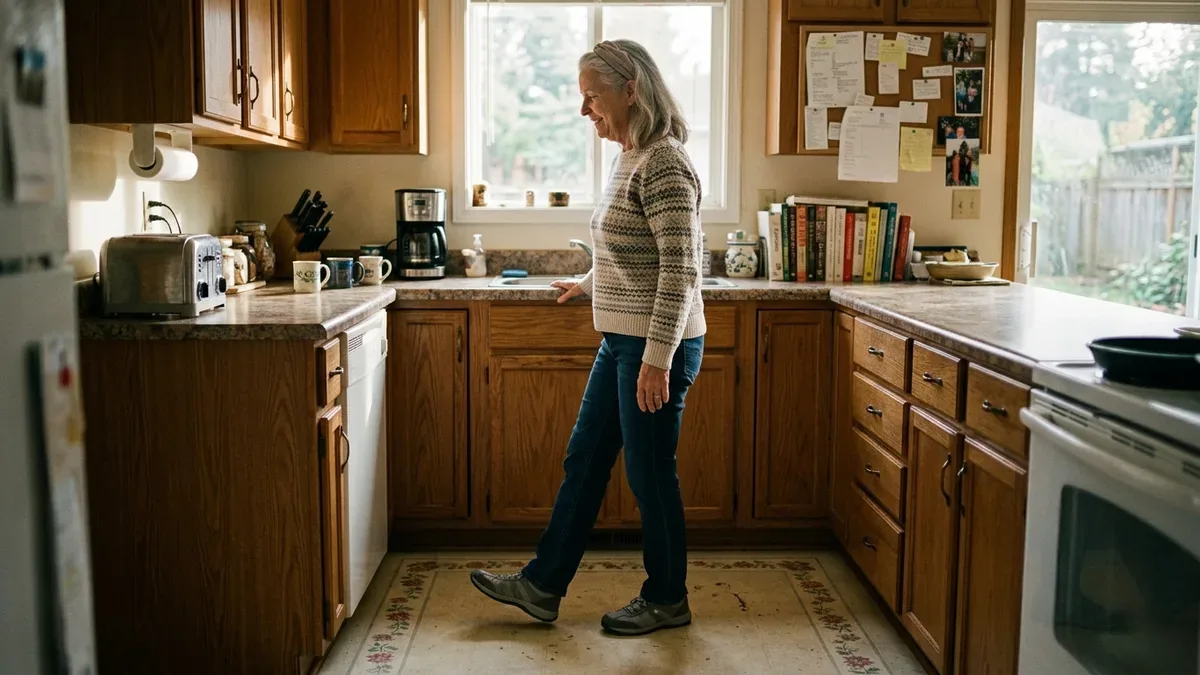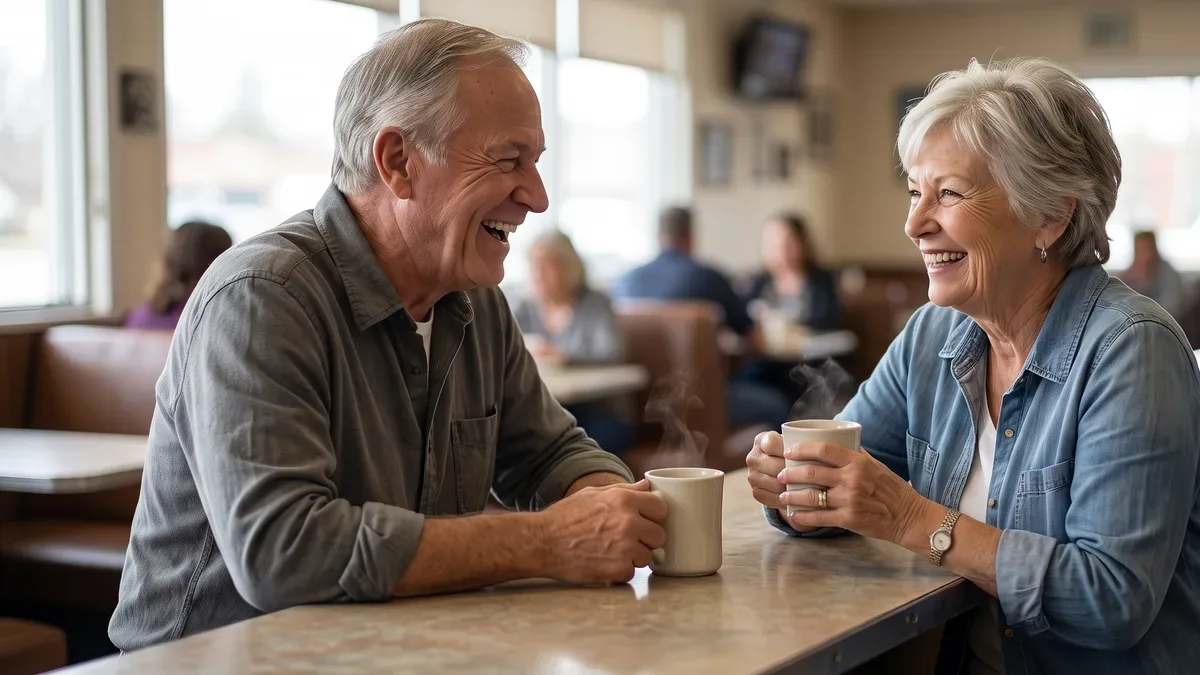
Loneliness in seniors is common, and it says nothing bad about you. If you live alone after 60 and some evenings feel long, you're in good company, and the fix is usually less dramatic than people think: a few regular places to be, a few people who expect to see you, and one or two projects that get you out of the chair.
This guide looks at loneliness in seniors from a practical angle: how to build that kind of week. It's written for men and women who live alone by choice, by circumstance, or a bit of both. No pressure, no lectures. Just ideas you can try, from easy to a little braver.
General information from personal experience, not medical advice.
What loneliness in seniors really looks like
Loneliness is the feeling that you don't have the connection you want. Social isolation is the fact of having few people around. The National Institute on Aging treats them as related but separate. Some people see others every day and still feel lonely; others spend long stretches alone and feel fine.
For a lot of us, it shows up after a change. A spouse dies. Friends move south or into assisted living. Retirement takes away the coffee pot at work and the people standing next to it. Kids and grandkids live three states away. None of that is anyone's fault, and all of it can leave a gap in the week.
Loneliness in seniors rarely looks like sadness in a movie. More often it looks like this:
- Days go by without a real conversation, only the TV and the cashier.
- You stop bothering with things you used to enjoy because "what's the point, alone?"
- Weekends stretch out with nothing on the calendar.
- You aren't sure who you'd call if the furnace quit at 10 p.m.
If a couple of those sound familiar, that's useful information, not a verdict. It tells you where to start.
Seniors living alone: a good life is possible
The U.S. Census Bureau tracks how Americans live, and its reports on living arrangements show that plenty of older adults live on their own. Seniors living alone are not some unusual case. It's one of the normal ways to live in this country.
Living alone has real advantages. The thermostat is yours, and nobody complains about your sawdust. The goal isn't to give those freedoms up. It's to keep them while adding back what a household used to give you for free: someone to talk to at breakfast, someone who notices if you don't show up, someone to split a pie with.
A few tips for living alone:
- Set up a daily check-in. Pick one person, a neighbor, a friend or a family member, and trade a short text or call every day at about the same time. If one of you misses it, the other calls.
- Keep a short list of numbers by the phone. Neighbor, family, the plumber, the nonemergency police line. Old school, and it works.
- Know your Area Agency on Aging. These local offices know about meal programs, rides, senior centers and volunteer jobs. You can find yours through the Eldercare Locator, a free service from the federal Administration for Community Living.
- Give a spare key to someone you trust. A small thing that makes help easier if you ever need it.
None of this is about expecting the worst. It's about not being on your own if something goes sideways.
Build a weekly rhythm with a few fixed dates
When it comes to loneliness in seniors, a steady rhythm beats a big effort. One dinner party a year won't do much. Coffee with the same two people every Thursday will.
Try building your week around anchors. An anchor is anything that happens on the same day, at the same time, with more or less the same people: a card game at the library, church or temple, a walking group at the mall, a volunteer shift at the food pantry, a standing video call with a grandkid after school.
Two or three anchors are plenty to start against loneliness in seniors. They give each week a shape, and they put you in front of the same faces often enough that small talk turns into real talk. The first visit is awkward, the third one is easier, and by the tenth someone saves you a chair.
Between anchors, keep it low effort: eat lunch where people are around, or sit on the porch when the neighbors walk their dogs. A wave and a "how's the knee?" add up.
Making friends after 60, even in a new city
Of all the answers to loneliness in seniors, friends close by are the most reliable. Friendship after 60 works a lot like friendship at 14. You show up, you say something a little awkward, and you come back next week. What's different is that nobody puts you in a homeroom anymore, so you have to pick the room yourself.
After my wife died, I sat in the truck outside the woodworking club for a good while before I went in. Nobody made a speech. A fellow handed me a piece of pine and asked if I knew how to use a card scraper. I didn't. I went back the next week anyway, and the week after that.
Places where people 60 and over tend to find each other:
- Senior centers and community centers, with card games, classes, lunches and trips, many free or close to it.
- Libraries, with book clubs, talks, craft groups and technology help. Warm in winter, too.
- Clubs built around one interest, like a garden club, a woodworking guild or a choir, so you have something to talk about besides the weather.
- Faith communities and classes, which put you next to the same people week after week.
If you've just moved, say yes to almost everything for the first few months, then keep what you like. Become a regular at one diner or coffee shop. Ask neighbors for a recommendation; "Where do you get your hair cut?" still opens doors. Choose one group, go at least three times, and then decide. Give it a try. The worst that happens is a good story.
Board games for seniors: an easy way to share a table
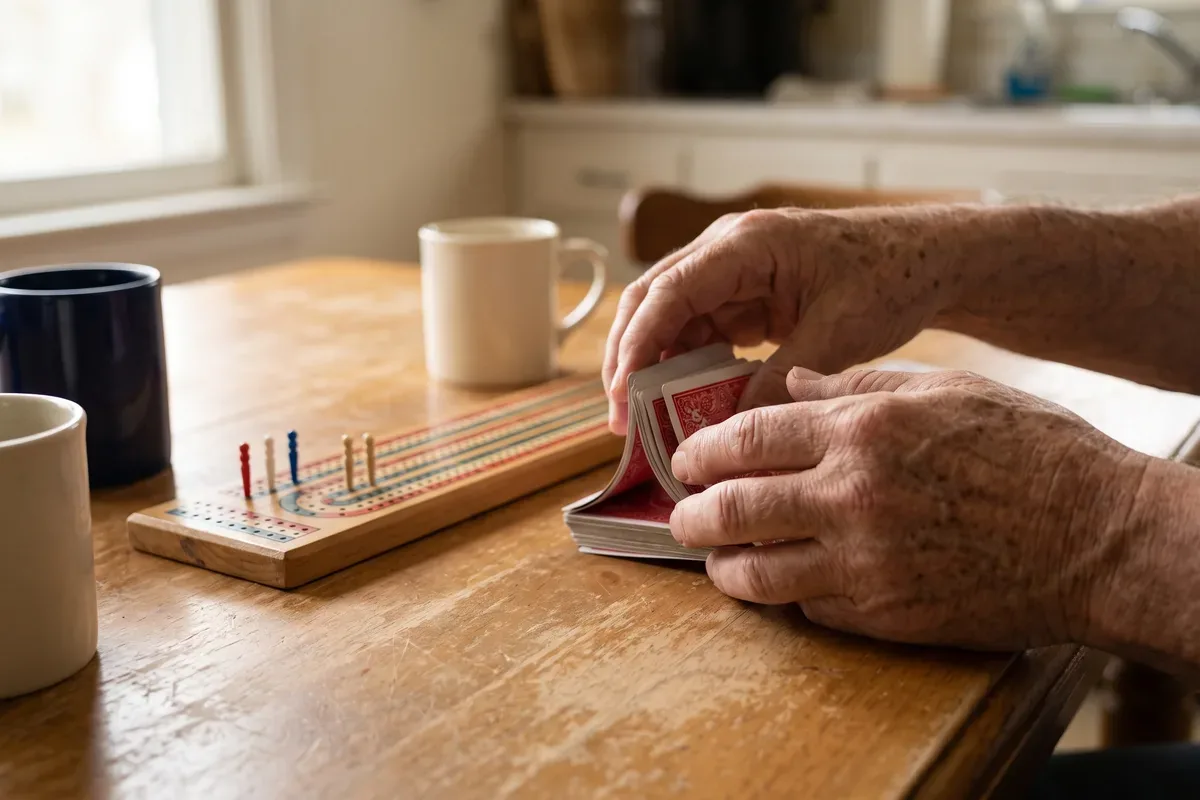
When people ask how to deal with loneliness, games rarely come up, yet they're one of the easiest ways to be with people without making conversation from scratch.
Our guide to board games for seniors compares the main types and what makes each one easy or hard to play:
- Word games like Scrabble or Boggle suit readers and crossword fans.
- Tile and dice games like dominoes, Rummikub-style number tiles or Yahtzee are quick to learn and mix well with grandkids.
- Card games like cribbage, rummy, euchre and hearts need nothing more than a deck and a table.
- Easy family strategy games give a mixed-age group something new to learn together.
The guide also covers large-print cards and tiles that are easier to see and grip, and it makes no promise about memory or the brain. We treat games as fun and company. Libraries, senior centers and game cafes host regular game afternoons, so you don't need to own a single box to start. Bring a friend the first time.
Best golf clubs for seniors, and other hobbies with a crowd
Many men made most of their friends through work or through their wives, and when both go away, the phone can get quiet. What tends to work is friendship shoulder to shoulder: you're both looking at a fishing line, a piece of walnut or a golf ball, and the talking happens on the side.
Golf is a good example because it comes with a built-in structure: leagues, nine-hole groups and weekday foursomes that are always looking for a fourth. Our guide to the best golf clubs for seniors compares lighter complete sets, hybrids in place of long irons, drivers with more loft and senior-flex shafts, and explains why a short fitting or a rental set beats buying blind.
Plenty of other hobbies come with a crowd: woodworking guilds with shared shops, fishing clubs, model railroad clubs, garden clubs and repair cafes. Same rule for all of them: find the group first, borrow before you buy, and go a few times before you judge it. A hobby with a club attached gives you a reason to leave the house on a Tuesday, and when loneliness in seniors is the problem, a reason to go out is a good place to start.
Jigsaw puzzles for seniors: a quiet project to share
Not every good afternoon needs a crowd. A puzzle on the dining room table is a project you can pick up for ten minutes or two hours, and it has a way of pulling in whoever walks by. Visiting grandkids can't resist finding "just one more piece."
Our guide to jigsaw puzzles for seniors compares the main options:
- Large-piece puzzles, with bigger pieces that are easier to see and pick up.
- Classic puzzles with more, smaller pieces, for longer projects.
- Large-print word search and crossword books for the easy chair.
- Puzzle apps, handy on a tablet when your eyes want a bigger picture or the table is busy.
As with games, we present puzzles as a pastime, not as a treatment for anything.
To make puzzles social, try a puzzle swap with friends or at the library, or keep one going on a card table when family visits.
Best digital picture frame: keeping family photos close
Many of us have grandchildren spread across the map. One simple help is a frame on the kitchen counter that fills up with new family photos while you sleep.
Our guide to the best digital picture frame compares the main types:
- Wi-Fi frames with an app, where family members send photos from their phones.
- Frames that take photos by email, simple for relatives who don't want another app.
- Frames with local storage, loaded from a memory card or USB stick, with no internet at all.
- Touchscreen frames, and frames that work without a monthly subscription.
The guide explains what to ask before choosing, including who can send photos to the frame and where your pictures are stored online. My daughters send pictures of the grandkids' soccer games, and I look forward to every one.
Staying close to family who live far away
A frame is a nice extra, but a regular call matters more. "Sunday at 4, Grandpa's call" happens. "Let's talk soon" often doesn't. Video calls are worth learning if you haven't already; grandkids are happy to show you their dog, their homework or the inside of their nose.
Some other ideas that help:
- Share something ongoing. Read the same book as a teenage grandkid, or play one move a day in an online chess game.
- Plan the next visit before the last one ends. A date on the calendar gives everybody something to look forward to.
- Ask for help with tech, then use it. Our guide to phones for seniors explains how to set one up so it's easier to see and use.
Family calls work best as one part of your week, not the whole thing. Your kids will feel better knowing you've got a Tuesday card game too.
Dating after 60: spotting romance scams
Some people who live alone decide to date again. Good for them. It's also where scammers go fishing, because a quiet evening can make a kind message feel very welcome.
The FTC and the FBI describe the same red flags again and again:
- The person can never meet in person or on a live video call. There's always an excuse.
- They move fast: talk of love or a future together within days or weeks.
- They ask you to move the chat off the site to a private messaging app.
- Sooner or later there's an emergency, and they need money, a gift card, a wire transfer or cryptocurrency.
One rule protects you from almost all of it: never send money or gift cards to someone you haven't met in person. Talk it over with a friend first. Scammers count on secrecy. If something already went wrong, report it to the FTC at ReportFraud.ftc.gov and to the FBI's Internet Crime Complaint Center. Our guide to senior scams covers the other common tricks and where to report them.
Volunteer, walk and eat with people
Some of the best answers for people aging alone don't look like "social activities" at all.
Volunteering gives you a job and coworkers without the paycheck or the boss. Food pantries, libraries and animal shelters all need help. AmeriCorps Seniors, a federal program, connects people 55 and older with volunteer roles such as tutoring kids. Reading to children at the library is a favorite of mine.
Walking with others may help support both your health and your social life. Many towns have mall-walking groups in the morning, and parks departments run group walks. Our guide to health tips for seniors has more on simple daily habits. Check with your doctor before starting a new routine.
Eating with people turns a chore into a visit. Senior centers often serve group lunches, and many churches run community suppers. If cooking for one feels like a lot of effort, our guide to meal delivery for seniors compares prepared meals, meal kits and local programs. Or invite a neighbor over for soup. Make too much on purpose.
Getting out of town now and then helps too. Our guide to travel for seniors covers how to plan trips you'll enjoy.
On the hard days: where to find help
Loneliness in seniors has its seasons. Everybody has rough days, especially around anniversaries, holidays and long Maine winters. Honest talk: this site shares everyday ideas, not medical or psychological advice. If the low feeling hangs on, gets heavier, or starts to affect how you eat, sleep or take care of yourself, please talk to someone who can help.
Free, official places to start:
- Your doctor. Mentioning how you've been feeling at your next visit is a perfectly normal thing to do.
- The Eldercare Locator (eldercare.acl.gov) connects you with your local Area Agency on Aging and its services.
- The 988 Suicide and Crisis Lifeline. Call or text 988, any time, day or night, if you're in crisis or worried about someone else.
- The National Institute on Aging has plain-language pages on loneliness and social isolation, with tips for staying connected.
There's no shame in using any of them. That's what they're there for.
Frequently Asked Questions
What can lonely seniors do?
Start small and put it on a calendar. Pick one thing that repeats every week, like a library program, a card game, a walking group or a volunteer shift, and go three or four times before you judge it. Add a regular phone or video call with family. The local Area Agency on Aging, found through the Eldercare Locator, can point you to programs near you.
Should a 70 year old live alone?
Many people in their 70s live alone and like it. The questions to ask are practical ones: Can you handle the house, the stairs, the groceries and the driving? Does someone check in with you most days? Do you know who to call for help? If the honest answers are yes, living alone can work well. If not, talk it over with family.
What are the signs of social isolation?
The National Institute on Aging describes social isolation as having few social contacts and few people to interact with regularly. In daily life that can look like days going by without a real conversation, skipping activities you used to enjoy, or not knowing who you would call in an emergency. Noticing it in yourself or a friend is a good reason to reach out.
One thing to try this week
Loneliness in seniors doesn't have to be the whole story of living alone. Pick one activity that happens every week in your town, a card game, a club meeting, a volunteer shift or a group walk, and write the next date on your calendar in pen. Then go. Tell one person you're going, so someone asks you how it went. It gets easier the second time.
Sources
- National Institute on Aging, Loneliness and social isolation: tips for staying connected
- Centers for Disease Control and Prevention, Social connection
- U.S. Census Bureau, Families and living arrangements
- U.S. Administration for Community Living, Eldercare Locator
- AmeriCorps, AmeriCorps Seniors
- Federal Trade Commission, What to know about romance scams
- Federal Trade Commission, ReportFraud
- FBI, Internet Crime Complaint Center
- 988 Suicide and Crisis Lifeline