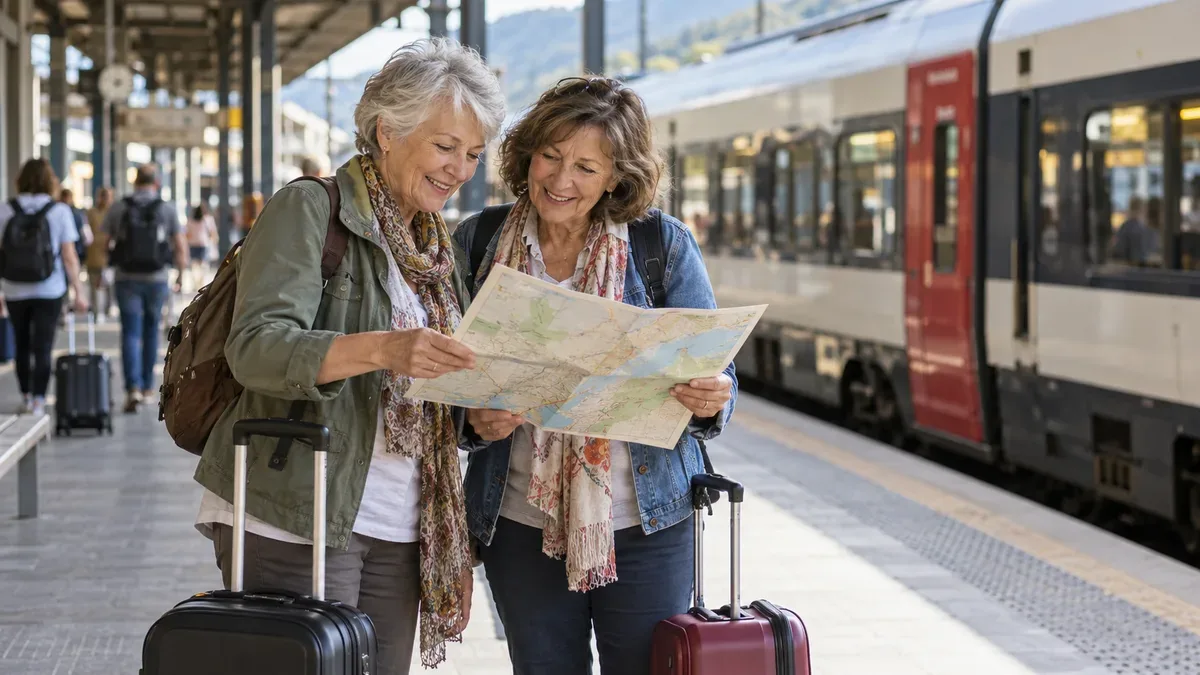
Travel for seniors works best when the plan fits your pace, not the other way around. This guide covers the planning side of travel for seniors: choosing the kind of trip, sorting the paperwork, setting a budget, getting help at the airport and keeping your energy for the good parts.
My first rule is simple: plan ahead, then leave room in the plan. My second you'll hear often on this site: always ask for the senior rate.
Travel for seniors starts with the right kind of trip
Before you pick a destination, pick a travel style. The same country can feel easy or exhausting depending on how you move through it. A trip with one hotel base and day outings asks much less of you than a new city every night.
Ask yourself three honest questions. How many hours a day do you enjoy walking? How do you feel about carrying your own bag up stairs? Do you want company, or do you want your own schedule? Your answers point to the right format.
| Trip style | Often a good fit if you | Watch out for |
|---|---|---|
| Road trip | like your own schedule and can share the driving | long driving days; plan short legs |
| Train trip | enjoy scenery and dislike airports | stairs at older stations; ask about assistance |
| City stay, one base | want museums, food and transit | hotels far from a stop; check the map |
| Cruise | want to unpack once | busy port days and long walks at terminals |
| Small-group tour | want logistics handled and company | activity level and pace set by the group |
There's no wrong answer in travel for seniors. Plenty of trips mix two styles, like a train ride to a city where you stay put for a week. The point is to choose on purpose.
Set a budget and a date before you book anything
A budget keeps a good trip from turning into a worry when the card statement arrives. Write down the fixed costs first: transportation, lodging and any tour or pass. Then add a daily amount for meals, local transit and admission fees, and a cushion for surprises.
Timing changes the price more than almost anything else. Many destinations are quieter and easier outside school holidays, and retirement gives you the freedom to travel then. Check the dates of local festivals too, because they can fill hotels months ahead.
Now the habit that pays for itself in travel for seniors: ask about a senior rate at every booking. Hotels, trains, museums and parks often have one, and it's not always on the website. Then compare it with the regular online price or a member rate, since the senior rate isn't always the lowest. Write down what you were quoted and the date you checked.
Book the pieces that sell out first, usually lodging in busy seasons and any timed-entry tickets. Leave the rest flexible. And read the cancellation terms before you pay, not after.
Passports, ID and paperwork to start early
Paperwork is the part of travel for seniors that punishes last-minute planning. Start here, even before you book flights.
- Check your passport. Look at the expiration date now. Some countries require your passport to be valid for several months beyond your travel dates, and each country page on travel.state.gov lists that rule along with visa and entry requirements.
- Check your ID for domestic flights. Since May 2025, the TSA requires a REAL ID-compliant license or another accepted ID, such as a passport, at airport security checkpoints. A REAL ID card usually has a star in the upper corner. The TSA REAL ID page lists what counts.
- Read the country page. The State Department's international travel pages show entry rules, safety information and the local emergency numbers for each country.
- Enroll in STEP. The Smart Traveler Enrollment Program is a free State Department service that lets the nearest U.S. embassy reach you in an emergency. It takes a few minutes online.
- Make copies. Keep a photo of your passport and ID on your phone and a paper copy in a separate bag from the originals.
Passport processing times change during the year, so check the current times on the State Department passport page before you commit to dates.
Travel for seniors with less strain: airports, trains and parks
You don't have to prove anything at the airport. U.S. airlines must provide help to passengers with disabilities under federal rules, including help getting through the terminal and onto the plane. Request it when you book or as early as you can, and ask again at check-in. The Department of Transportation's air travel consumer pages explain your rights and how to file a complaint.
TSA Cares is a helpline for travelers with disabilities or medical conditions who want to know what to expect at security. TSA suggests calling before your trip, so put it on your checklist a few days out.
A few choices make long travel days easier:
- Pick connections with breathing room. A tight connection saves an hour on paper and costs a lot of stress in real life.
- Choose your seat early. An aisle seat makes it easier to stand up and stretch.
- Travel on the least crowded days you can. Midweek flights and trains are often calmer.
- Keep daily essentials in your carry-on. Checked bags sometimes arrive a day late.
For national parks, the National Park Service offers a Senior Pass for U.S. citizens and permanent residents 62 and older, and a free Access Pass for U.S. citizens and permanent residents with a permanent disability. Details are on the NPS passes page.
If your balance is on your mind before a trip with lots of walking, our balance exercises for seniors show a simple routine you can do at home in the weeks before you go.
Best tour companies for seniors: when a small-group tour makes sense
Some travelers want every detail handled. Others want company without having to organize it. That's where tour companies come in: they plan the route, hotels, transportation and guides, and put you with a group of people at a similar stage of life.
A tour can be a good choice when you're visiting a country for the first time, when you don't want to drive, or when you'd rather not travel alone. The tradeoff is freedom. The group sets the wake-up time, the pace and the stops.
Tour companies come in a few broad styles: learning trips like those run by the nonprofit Road Scholar, escorted coach tours, small-group tours with more walking, river cruises and soft adventure trips. Each suits a different pace. The details matter more than the brochure photos: the activity level in plain words, the maximum group size, the number of hotel changes, what's included and the cancellation terms. Solo travelers should ask about the single supplement early.
Our guide to the best tour companies for seniors compares these styles side by side, names well-known examples of each and gives you eight questions to ask before you send a deposit.
Senior travel discounts: where to ask before you book
Discounts can take a real bite out of the cost of travel for seniors, but only if you ask. Some are official and stable, like the National Park Service Senior Pass at 62 and reduced off-peak transit fares at 65. Others depend on the company, the property or the date, and they change without much notice.
The places to ask are hotels, trains, local transit, parks, museums and cruise lines. Amtrak has long offered a discount for passengers 65 and older on many trains. Airlines are the weak spot: most big U.S. carriers don't show a senior fare in their regular online search, so search the normal fare first, then call and ask.
Two habits make discounts work. First, carry ID. Second, compare. A senior rate at a hotel is sometimes higher than a member rate or a sale price online. Write down what you found and the date, because offers change.
Our guide to senior travel discounts compares airlines, hotels, trains, buses, car rentals, cruises and parks, with a checklist for each booking. For everyday offers at stores, restaurants and theaters, see our senior discounts list by age. We plan to review both every quarter, and every entry is marked "check before you go."
AI travel planner tools: a faster first draft, not the final word
AI tools can save you hours at the start of planning. You describe the trip you want, including your pace, your budget and how much walking you enjoy, and the tool writes a draft itinerary you can adjust. There are several kinds: general chat assistants like ChatGPT, Gemini and Copilot, websites built only for trip planning, AI helpers inside booking sites, itinerary organizer apps, and human travel agents who use the same tools for you.
All of them share one weakness: facts that change. They can be wrong about opening hours, prices, train schedules and entry rules, and they sometimes state a wrong answer with total confidence. Treat every detail as a lead to check on an official website, and check entry rules on travel.state.gov. There's no need to type your passport number, date of birth or card details into any of them.
Our guide to the AI travel planner options compares these types, shows how to write a request that asks for a slower pace and rest days, and walks you through checking the answers before you book.
Solo travel for seniors: going on your own
You don't need to be adventurous to enjoy solo travel for seniors. Going alone means you choose the pace, the meals and the museum you want to spend three hours in.
A few habits make solo trips feel safe and easy:
- Share your plan. Send your itinerary and hotel details to one person at home, and agree on a simple daily check-in.
- Choose lodging with people around. A hotel with a staffed front desk or a well-reviewed guesthouse gives you someone to ask for help.
- Arrive in daylight. Finding a new place is easier when you can see it.
- Enroll in STEP for trips abroad. It's free and takes minutes.
- Plan one social thing a day. A walking tour, a class or a group meal gives you conversation without a full tour.
Many hotels and tours price rooms for two, so ask about single rates; our tour companies guide explains the single supplement.
If going fully alone feels like too much for a first trip, try a middle path: travel alone to a place where you can join day tours, or take a small-group tour and add a few days on your own at the end. And if you're looking for new travel companions closer to home, our guide to loneliness in seniors has ideas for meeting people.
Pack light and leave gaps in your days
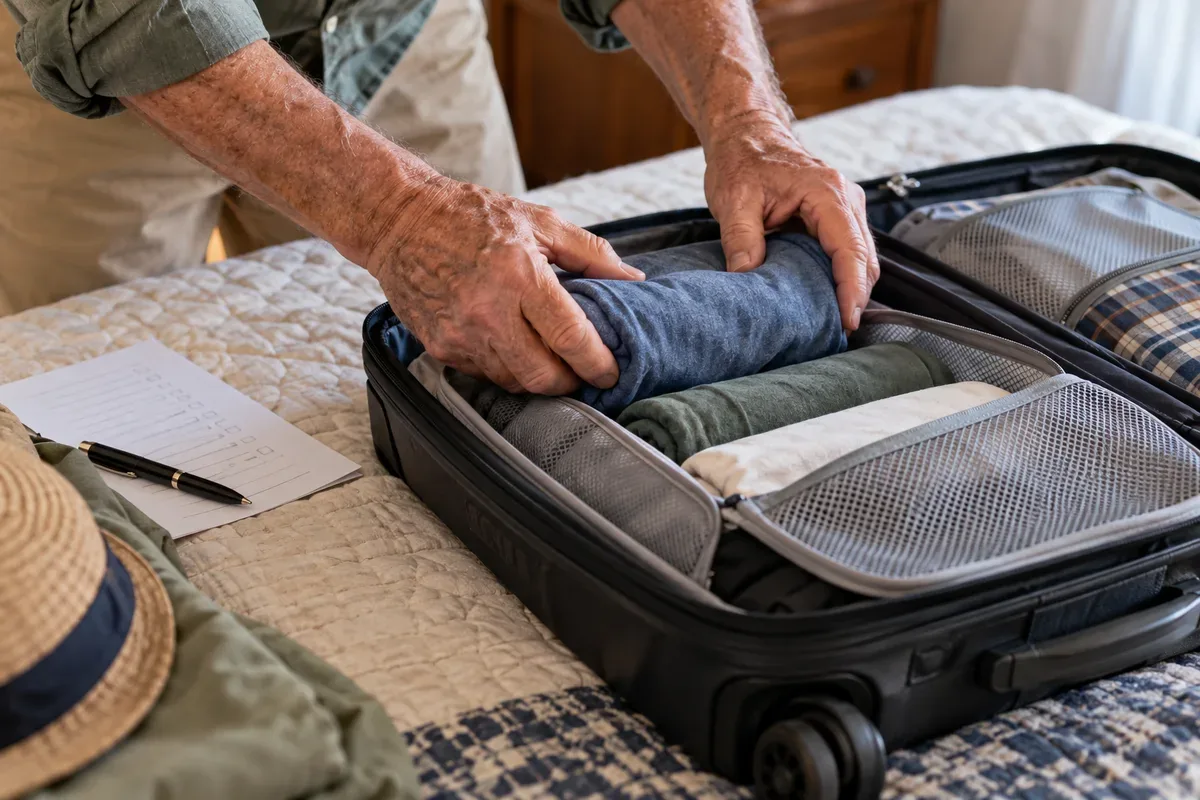
A lighter bag makes every part of a trip easier: stairs, train platforms, curbs, hotel rooms without elevators. Lay out everything you plan to bring, then put back a third of it. You can do laundry or buy what you forgot.
A lightweight carry-on suitcase with four wheels rolls beside you instead of pulling on your shoulder, and packing cubes keep clothes sorted so you don't unpack the whole bag to find one shirt. Both carry our Researched label: we haven't tried them. Before you buy a suitcase, check your airline's carry-on size rules and lift the bag yourself when it's empty.
Shoes deserve special attention because you'll walk more than you expect. Wear any new pair on a few walks before you leave, so you know they're comfortable. Our guide to the best walking shoes for seniors has a simple checklist.
Then plan your days with gaps in them. One big outing per day, a real lunch break and a free afternoon every few days go a long way. Pace yourself: rest days are part of the trip.
What I would do differently
My first solo trip came right after I retired, and I made two classic mistakes. I packed a suitcase I could barely lift onto a train rack, and I filled every day from breakfast to dinner. By midweek I was skipping things I'd looked forward to, just to sit down.
If I planned that trip again, I'd pack half the clothes and plan one main outing a day, with a free afternoon every few days. Those are the habits I still use.
Staying safe from travel scams
Travel is a favorite topic for scammers. A common version goes like this: a call or message says you've "won" a free vacation, and you just need to pay taxes or fees up front. Real prizes don't ask for payment. The FTC's consumer advice pages describe this and other travel scams.
Other traps to watch for include fake booking websites that look like a real hotel's, vacation rental listings copied from real properties, and anyone who asks you to pay by gift card or wire transfer. Book through the official site or a company you know, and be wary of any deal that's only good if you pay today.
Our guide to senior scams covers the warning signs in more detail and what to do if something goes wrong.
Where to go: trip ideas for older travelers
The best vacations for seniors are the ones that match your energy and your interests. Good travel for seniors doesn't have to mean far away. Here are some ideas that tend to work well:
- A national park with a scenic drive. Many parks have overlooks close to parking and short paved trails. Check the park's accessibility page first.
- A city with good transit. Stay near a subway or bus stop and you can go out in the morning and rest in the afternoon.
- A train trip. You can move around, watch the landscape and skip airport security.
- A river cruise. You unpack once and the scenery changes daily. Ask about gangways and walking distances in port.
- A long visit to family or old friends. Book your own room nearby so everyone gets a break.
For limited mobility, choose one base, ask about step-free access and elevators before you book, and pick places where a taxi or rideshare is easy to find.
Frequently Asked Questions
What is the best trip for seniors with limited mobility?
Trips with little packing and unpacking tend to work well: a single hotel base in a city with good public transit, a scenic train ride, a river cruise or a road trip with short driving days. Ask about elevators, walking distances and step-free access before you book, and request airport wheelchair help when you buy your ticket.
Can an 80 year old fly internationally?
Yes. There's no upper age limit for flying. What matters is planning: a valid passport, the entry rules of the country you're visiting, enough time between connecting flights and any airport assistance you'd like. U.S. airlines must offer help to passengers with disabilities, so ask for it when you book rather than at the gate.
Where should an 80 year old go on vacation?
Pick a place that matches your energy, not someone else's list. Good options include a national park with scenic drives and short paved trails, a city you can explore by transit, a train trip, a river cruise or a long visit to family. Choose one base, plan rest days and keep travel days short.
One thing to try this week
Find your passport and your driver's license and check both expiration dates. Write them on a sticky note on your calendar. If your passport expires within a year, or your license doesn't have the REAL ID star, start the renewal now, before you've booked anything.
Sources
- U.S. Department of State, Passports
- U.S. Department of State, International Travel (country information and STEP)
- Transportation Security Administration, REAL ID
- U.S. Department of Transportation, Aviation Consumer Protection
- National Park Service, Entrance Passes
- Federal Trade Commission, Consumer Advice