
The best tour companies for seniors are the ones whose pace, group size and fine print match the way you like to travel. There's no single winner. This guide compares the main kinds of tour companies, from learning trips and escorted coach tours to small groups and river cruises, and gives you the questions to ask before you pay a deposit.
It's part of our main guide to travel for seniors. If you're still deciding what kind of trip you want, or need help with passports, start there.
A note on companies: we haven't traveled with these companies for this guide, and we don't rank them. The names below are well-known examples of each style. The checklist works with any of them.
Why choose a tour company at all?
A tour takes away the parts of travel that wear people out. You don't drive in a new country or haul bags between stations. A guide knows the language, the route and where the restrooms are. And there's company at dinner.
The tradeoff is freedom. The group sets the wake-up time, the stops and the pace, and you'll share a bus with people you didn't choose. For many travelers after 60, especially on a first visit to a country, that trade is worth it.
Senior travel groups are not always "senior tours," either. Some companies design trips for older travelers. Others welcome all ages but draw many retirees because of when and how they travel. Neither is better. What matters is the fit.
How the best tour companies for seniors compare by style
Here's how the five broad styles compare. Every company describes itself a little differently, so use this as a starting point.
| Style | What it usually looks like | Often suits you if | Worth asking |
|---|---|---|---|
| Learning trips | Lectures, local experts, museum visits, often older travelers | You like to understand a place, not just see it | How many hours a day are spent standing? |
| Escorted coach tours | Bus between cities, hotels and many meals included | You want every detail handled | How many hotel changes? How long are bus days? |
| Small-group tours | Smaller groups, local transport, more walking | You want more contact with the place | What's the maximum group size? |
| River cruises | Unpack once, a new town most days | You want scenery without packing | How far from the dock to the sights? |
| Soft adventure | Easy hikes, bike paths, rural stays | You're active and like the outdoors | What's the daily distance and terrain? |
Some companies also run solo-friendly departures, with reduced or waived single supplements on certain dates. Ask directly, since it changes by trip.
Well-known tour companies for seniors, by style
These names come up often when people search for the best tour companies for seniors. They're examples, not recommendations.
Learning trips. Road Scholar is a nonprofit that runs educational trips aimed at older adults, in the U.S. and abroad. Trips range from very gentle to quite active, so read the activity rating on each one.
Escorted coach tours. Trafalgar and Insight Vacations run guided tours by coach with hotels and many meals included. Coach tours can cover a lot of ground, which also means more early mornings and hotel changes.
Small-group tours. Overseas Adventure Travel is known for small groups. Rick Steves' Europe runs guided tours in Europe with a lot of walking. EF Go Ahead Tours runs guided tours for all ages.
River cruises. Several cruise lines, Viking and AmaWaterways among them, run river cruises in Europe and elsewhere. You unpack once, but some towns involve gangways, stairs and long walks from the dock.
Soft adventure. Many small-group companies offer "active" or "moderate" trips with easy hikes or bike paths. Ask for the daily distance in miles, not a rating.
I learned that last point on my first small-group tour after I retired. The trip was rated "moderate," and I pictured flat museum days. It turned out to be cobblestones and hills every single day. I loved the trip, but now I ask for plain words: how many hours on my feet, and how steep.
Escorted tours for seniors: 8 questions to ask before you book
Ask every company the same questions, by phone or email, and write down the answers with the date. That's how you compare fairly.
- What is the activity level, in plain words? Hours of walking per day, stairs, cobblestones, hills.
- What is the maximum group size on my departure? "Small group" means different things to different companies.
- How many hotel changes are there? Two or three nights in each place is gentler than one.
- How much free time is built in? Look for afternoons with nothing scheduled. Pace yourself: rest days are part of the trip.
- What's included, exactly? Meals, tips, entrance fees, airport transfers and flights may or may not be in the price.
- What does a solo traveler pay? Ask about the single supplement and roommate matching.
- What happens if I cancel, or they do? Get the cancellation schedule and refund policy in writing.
- Can they help with mobility needs? Luggage handling, hotel elevators and shorter options on long walking days.
Ask about a senior rate, a repeat-traveler offer or an early-booking offer too. Then compare it with the price on the website, because the phone quote isn't always lower. Our guide to senior travel discounts explains where else to ask.
Reading the fine print
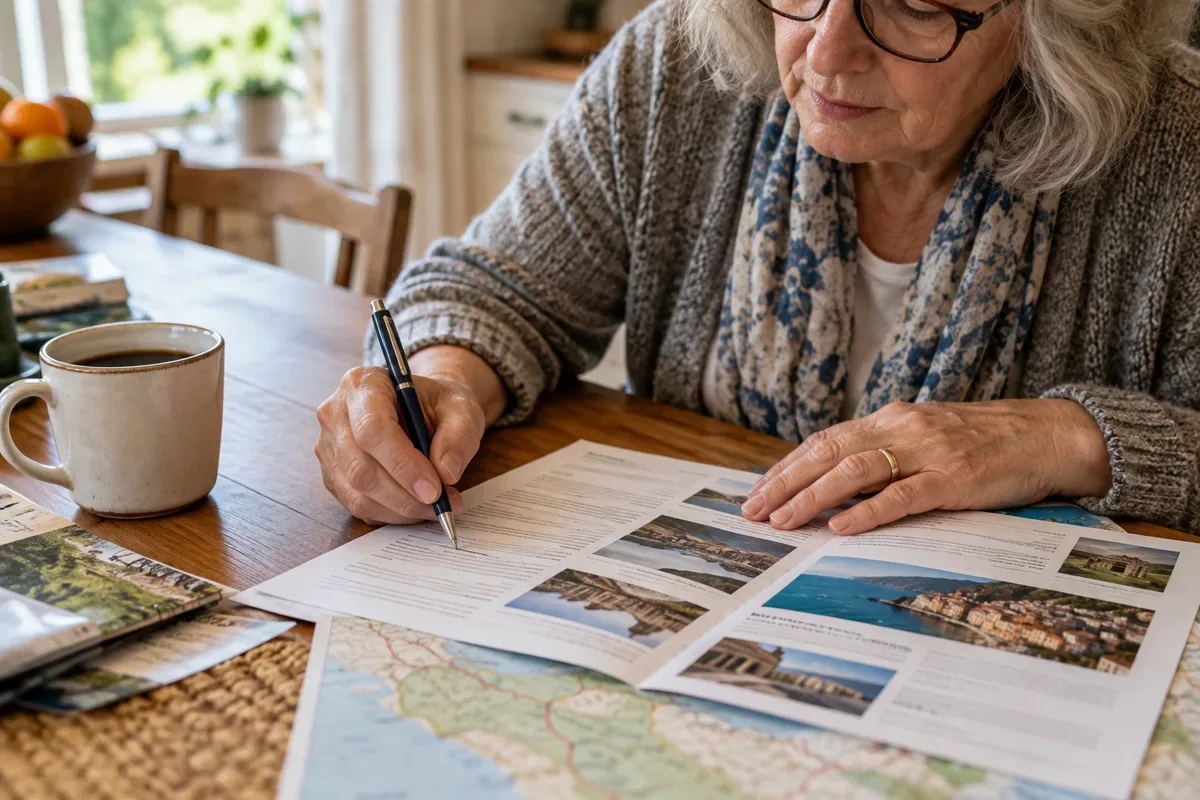
The terms and conditions page is dull, and even with the best tour companies for seniors, it's the most important page on the site. Print it and read it with a pen. Look for:
- Deposit and final payment dates. Many companies take a deposit at booking and the balance weeks or months before departure.
- Cancellation fees. They usually grow as the departure date gets closer. Put each deadline on your calendar.
- What happens if the company cancels. A refund, a credit or a choice?
- Price changes. Some terms allow surcharges after you book.
- Flights. If the company books them, who do you call when a flight is delayed?
It's also worth asking whether the company belongs to the United States Tour Operators Association, which describes a consumer protection program for members' customers on its website, ustoa.com. Check the details there.
If any line is unclear, email the company and ask for a written answer. Keep that email with your booking.
Single travelers and the single supplement
Many people choose a tour because they'd rather not travel alone. The catch is the single supplement: prices are often based on two people sharing a room, so a solo traveler pays extra for a private one.
- Ask about roommate matching. Some companies pair you with another solo traveler of the same sex. Ask what happens if no match is found.
- Look for reduced or waived supplements. Some companies offer them on certain departures.
- Travel with a friend. Two friends booking together get the shared-room rate.
Red flags and getting ready
Be wary of any tour sold by a caller who contacted you first, anyone who asks for payment by gift card or wire transfer, and any deal that's only good if you pay today. The FTC's consumer advice pages describe these travel scams.
Once you've booked, check your passport and the entry rules of every country on the route on the State Department's international travel pages. If you'd like wheelchair help at the airport, request it when you book your flight.
Start walking more in the weeks before you leave, in the shoes you'll bring. On tour days you'll carry water, a layer and your phone, so a comfortable lightweight daypack helps. It carries our Researched label. Try any bag on with some weight in it before you buy.
Most tours include a free day or two. An AI travel planner can help you sketch those free hours, as long as you check the details yourself.
Frequently Asked Questions
Which travel company is best for older adults?
No single company is best for everyone. Road Scholar, a nonprofit, builds learning trips for older travelers; escorted coach operators like Trafalgar and Insight Vacations handle every detail; small-group companies like Overseas Adventure Travel keep groups smaller with more walking. Compare activity level, group size, what's included and the cancellation terms, then choose the style that fits your pace.
What are the highest rated tour companies?
There's no official rating for tour companies, and some ranking lists online come from sites that are paid when you book. Traveler reviews help, but read the recent ones and look for comments about pace, guides and how problems were handled. Also ask whether the company belongs to a trade group with a consumer protection program, and read its terms.
What are the best tour companies for people over 60?
The best tour companies for seniors are the ones whose pace matches yours. Names that come up often include Road Scholar, Overseas Adventure Travel, Rick Steves' Europe, EF Go Ahead Tours and Trafalgar, each with a different style. Ask each one the same questions about walking, group size, single rates and refunds, and compare the answers on one sheet.
One thing to try this week
Pick two tour companies of different styles and find one trip from each to the same region. Print both day-by-day itineraries and both terms pages. Answer the 8 questions above for each trip, side by side, on one sheet of paper. The better fit is usually clear by question five.
Sources
- Federal Trade Commission, Consumer Advice
- U.S. Department of State, International Travel
- U.S. Department of Transportation, Aviation Consumer Protection
- United States Tour Operators Association, consumer protection program
- Tour operator terms to read before booking (not consulted for this article): Road Scholar, Overseas Adventure Travel, Rick Steves' Europe, EF Go Ahead Tours, Trafalgar, Insight Vacations
For the bigger picture, from paperwork to pacing, go back to our travel for seniors guide.