
Disclosure: this guide contains affiliate links. If you purchase through our links, we may earn a commission at no extra cost to you. All eyeliner information is independently researched.
Eyeliner is the makeup step that intimidates the most people and gets skipped most often -- and for good reason. The techniques demonstrated in beauty tutorials are usually designed for firm, taut eyelids, a steady hand and a mirror at eye level. Most people over 60 are working with a different set of conditions: a lid surface that may not be as firm, eyes that may be more sensitive to product near the waterline, and less tolerance for tugging and dragging. The right formula and the right application approach changes all of this. For a full guide to makeup for mature skin, see our guide to best makeup for mature skin.
Why standard eyeliner advice does not always work for mature eyes
Most eyeliner advice assumes three things: a flat, taut lid surface; a mirror at standing height; and a hand steady enough to apply liner in one continuous stroke. For women over 60, one or more of these conditions is often different.
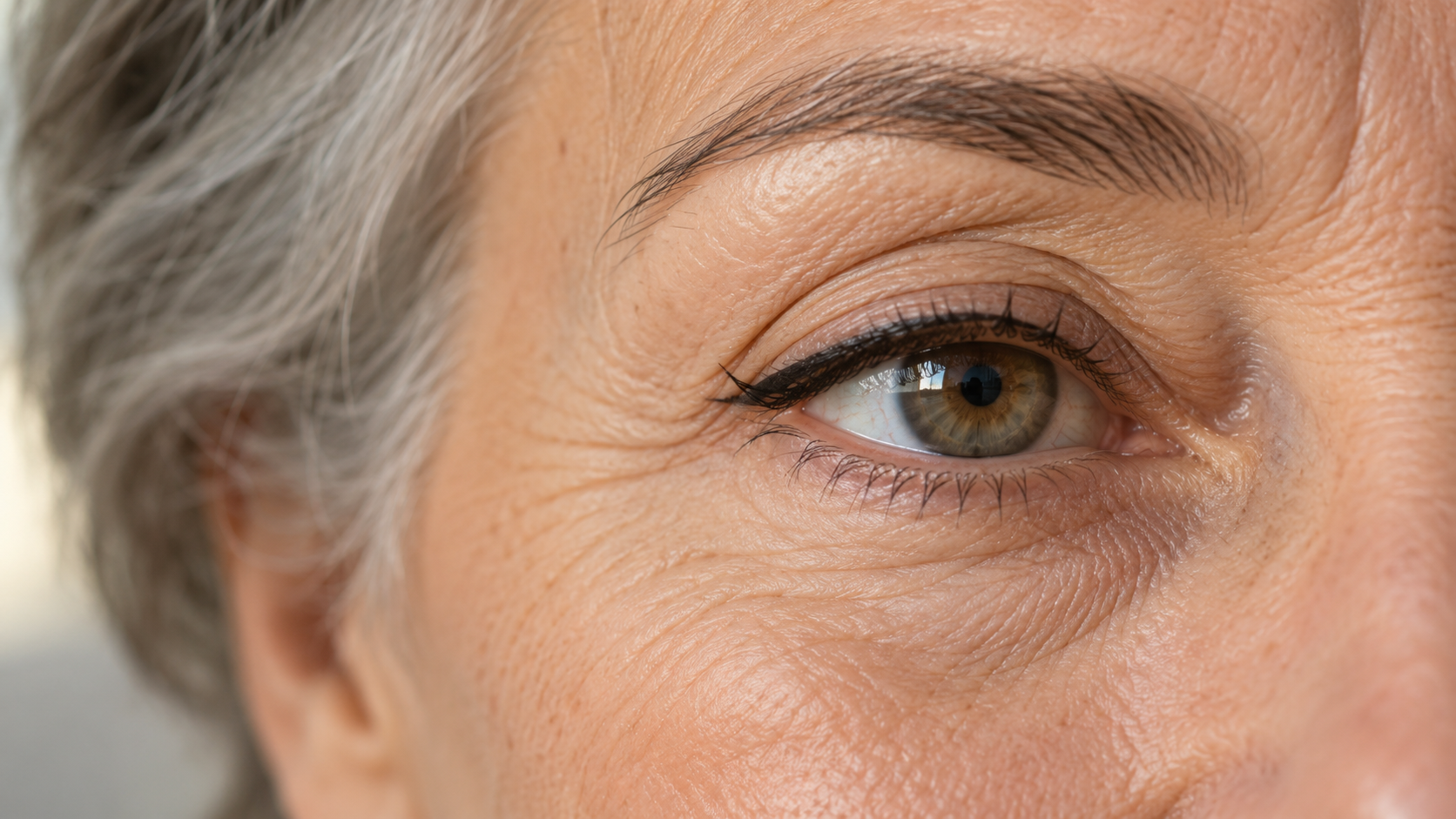
Hooded or drooping lids: when the upper lid falls over the lash line at rest, liner applied above the lashes may not be visible when the eye is open, or may transfer to the upper lid. The solution is application with the eye open and slightly looking down, placing liner where it is actually visible.
Less taut skin: the lid and the area beneath the lash line is thinner and less firmly anchored. Any formula that requires dragging or pressure to deposit color causes the skin to move rather than the product going on cleanly.
Sensitivity near the waterline: contact lens wearers and people with dry eyes often find that any product near the waterline causes irritation. Ophthalmologist-tested formulas reduce this risk.
Steadiness: the hand that holds and guides a liner brush or pencil must maintain consistent pressure and direction. Resting the elbow (not the wrist) on a surface eliminates most unsteadiness.
Eyeliner formulas: what each does
Pencil liner (Researched)
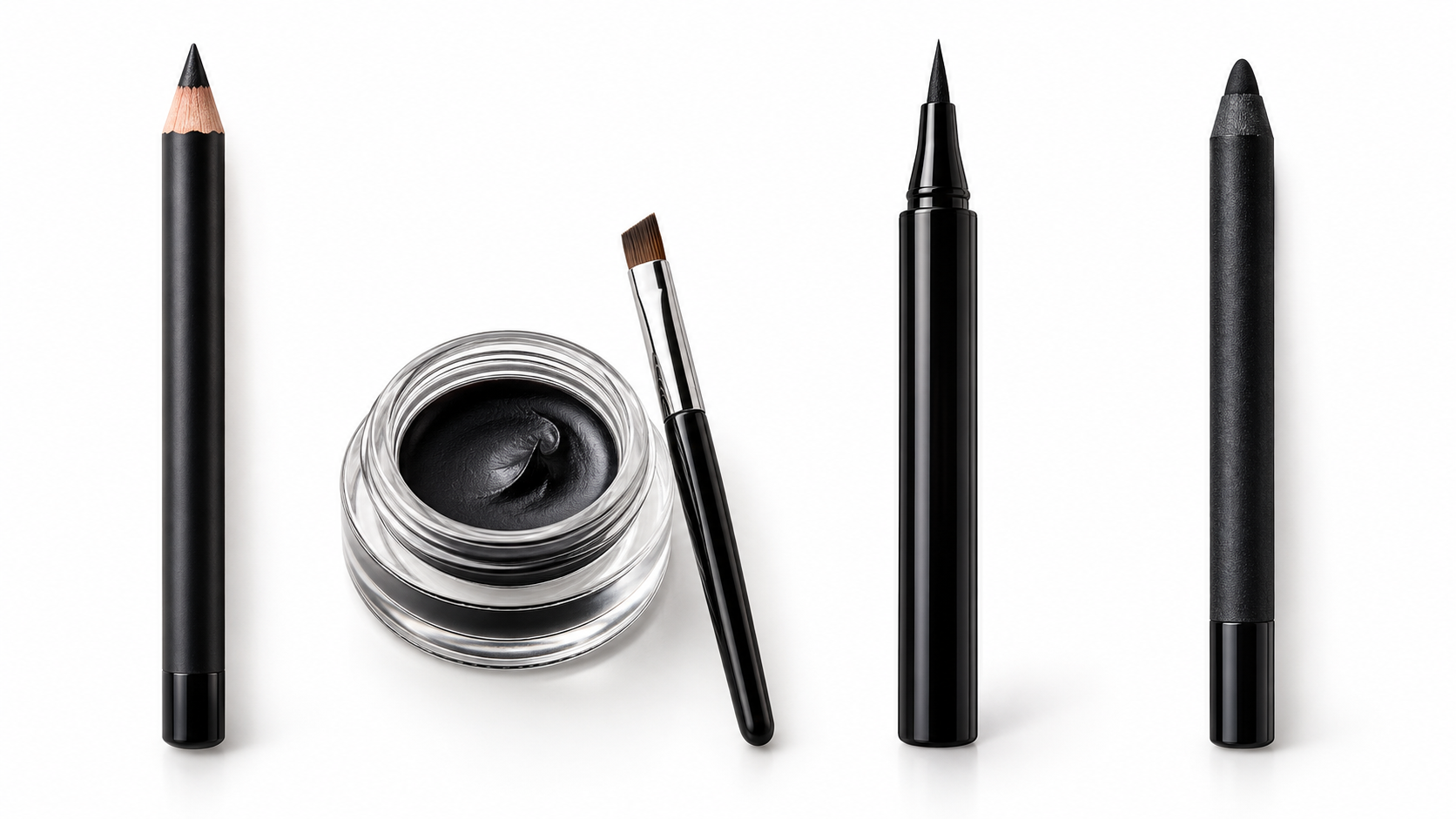
The most forgiving formula for beginners and for anyone who wants a soft, blendable line. A slightly soft pencil goes on without heavy pressure and can be smudged with a fingertip or a small blending brush for a more diffused look.
For mature eyes: choose a pencil that is soft enough to glide without dragging but firm enough to stay in place. A pencil that is too soft transfers to the upper lid and disappears within an hour. Test a pencil on the back of your hand -- it should leave color without requiring pressure.
Longevity: most pencil liners need touch-ups by mid-afternoon. Setting with a matching eyeshadow over the liner extends wear significantly.
Best use: upper lash line and lower lash line. Not recommended for tight-lining the waterline (the inner rim of the lid) unless the formula is specifically made for waterline use, which is noted on the product.
Gel liner (Researched)
Gel liner from a small pot, applied with a thin angled brush, gives more precision and longer wear than most pencils. The gel formula glides on without dragging and dries to a semi-matte finish that resists smudging better than pencil.
For mature eyes: gel liner with a small angled brush is excellent because the brush can be loaded with product and then applied in controlled strokes. The hand does not need to remain moving -- you can pause, check placement, and continue. Gel liner also allows a thinner or thicker line depending on how the brush is held.
Longevity: gel liner typically lasts all day without transfer if applied on a clean, primed lid.
Best use: upper lash line and the outer third of the lower lash line. Not recommended for full lower lash line coverage unless the eye is deep-set -- it can make the eye appear smaller.
Liquid liner and felt-tip liner (Researched)
Liquid liner from a pot with a brush and felt-tip pen liners both create a precise, graphic line. They require the most technical skill and hand steadiness of any formula.
For mature eyes: felt-tip liner with a fine tip is more manageable than traditional liquid liner because the tip deposits product without requiring a continuous wet stroke. Short, overlapping dashes create a line without the need for one perfect sweep.
When to use: for a cleaner, more defined line on an occasion where you have time to correct mistakes. Not the daily go-to formula for most women with mature eyes.
Application technique for mature eyes
The elbow rest method
The most important technique change for steady liner application is resting the elbow of the application hand on a flat surface -- the bathroom counter, a table, a book -- while bringing the mirror down to eye level. This is the opposite of the usual approach of holding a mirror in one hand and liner in the other.
A handheld mirror held at eye level or slightly below, with your elbow resting on the counter, stabilizes the hand far more effectively than any wrist rest technique. Many makeup artists and dermatologists recommend a magnifying mirror on a stand for this reason.
Apply in dashes, not strokes
Instead of attempting one continuous line from inner corner to outer corner, apply liner in three to five short connected dashes. Start at the center of the lash line (the most visible area when the eye is open), then connect toward the outer corner, then fill in toward the inner corner if needed.
This approach allows you to pause, check placement and correct without starting over.
Color placement for hooded eyes
For eyes where the upper lid folds over the lash line when open, apply liner with the eye open and looking straight ahead at the mirror. Place liner where it is visible -- which may be only the outer third of the lash line. A liner placed at the inner corner may be hidden under the hood when the eye is relaxed.
Lower lid approach
A full lower lash line in dark liner can make the eye appear smaller and can settle into the fine lines beneath the eye by midday. Alternatives:
- Apply liner only to the outer third of the lower lash line, from the outer corner to the center
- Use a light-reflecting nude or flesh-toned pencil on the waterline to open the eye
- Skip lower liner entirely and use a light eyeshadow instead
For a guide to brushes for precise liner application, see our guide to best makeup brushes.
What to avoid
- Pulling the outer corner tight while applying: the line distorts when you release the skin
- Applying liner to the inner waterline with a formula not made for it: irritation and infection risk
- Pure black liner for a soft daytime look: try brown, dark gray or plum instead
- Applying liner before eyeshadow: eyeshadow fallout lands on the liner and blurs it
- Going over a line that has already dried: it smears rather than corrects -- remove and reapply
Frequently Asked Questions
What is the best eyeliner for older women?
Soft pencil or gel liner with a small brush. Both apply without dragging and are forgiving of imprecision.
How do I apply eyeliner without pulling the skin?
Rest your elbow on a solid surface. Use a mirror at eye level. Apply in short dashes, not one stroke. Never pull the outer corner taut.
Is liquid eyeliner bad for mature eyes?
Not harmful, but technically demanding. Felt-tip pen liner is a more manageable alternative for a precise line.
What color eyeliner is most flattering for women over 60?
Brown, dark gray or plum. Pure black creates high contrast that can emphasize fine lines.
One thing to try this week
Rest your elbow on the bathroom counter and hold a small mirror at eye level rather than applying liner standing at the wall mirror. Apply liner in three short dashes from the center of the lash line outward, then inward. This single technique change -- resting the elbow and working at eye level -- removes more instability than any other adjustment. For a full guide to mature skin makeup, see our guide to best makeup for mature skin.
Information based on publicly available dermatology and ophthalmology resources. Affiliate links used where applicable.
Sources
- American Academy of Ophthalmology, Eye Makeup Safety: aao.org/eye-health/tips-prevention
- American Academy of Dermatology: aad.org/public/everyday-care/skin-care-secrets/routine/mature-skin