Bed rails for seniors help with two different things: getting in and out of bed safely, and staying in bed safely during sleep. The type you need depends on which of those applies to you. This guide explains the main types of bed rail, what to check before you buy, and one safety step the CPSC says most people skip. It is part of our wider guide to mattresses for seniors, which covers mattress types, toppers and bed bases.
Why a bed rail can make a real difference
The CDC identifies getting in and out of bed as one of the situations where older adults are most likely to fall. The NIA includes bed safety aids in its home safety guidance for older adults. Both point to the same issue: transitions — the moment you shift from lying down to sitting, or from sitting to standing — are when balance is most challenged.
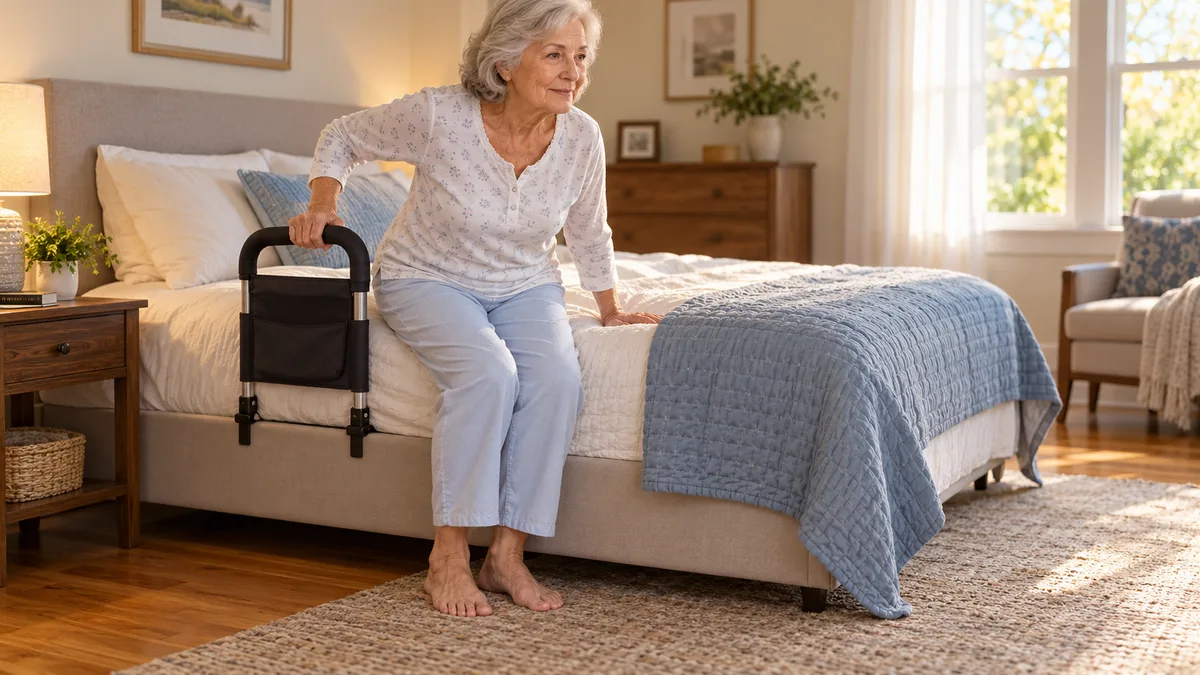
My mother is 84 and gets up twice most nights. We put a bed assist handle in her room three years ago, and it changed the routine completely. She pushes herself up with one hand on the handle, sits for a moment before standing, and then walks to the bathroom. She stopped waking us because she stopped feeling unsteady. That one small thing gave her back some independence.
A bed rail or assist handle doesn't fix a balance problem. But it gives you something solid to push against and hold while your body adjusts to being upright.
The main types compared
Every type on this page carries our Researched label: descriptions come from public product pages and manufacturer specifications. We did not test any of these products, and no brand is ranked.
| Type | Main purpose | Fits under mattress? | Bed frame required? |
|---|---|---|---|
| Bed assist handle | Getting in and out of bed | Yes, strap under mattress | No |
| Half-length rail | Getting in and out; light support | Yes, strap or bracket | Usually not |
| Full-length rail | Preventing rolling out during sleep | Bracket on frame | Yes |
Bed assist handles (Researched)
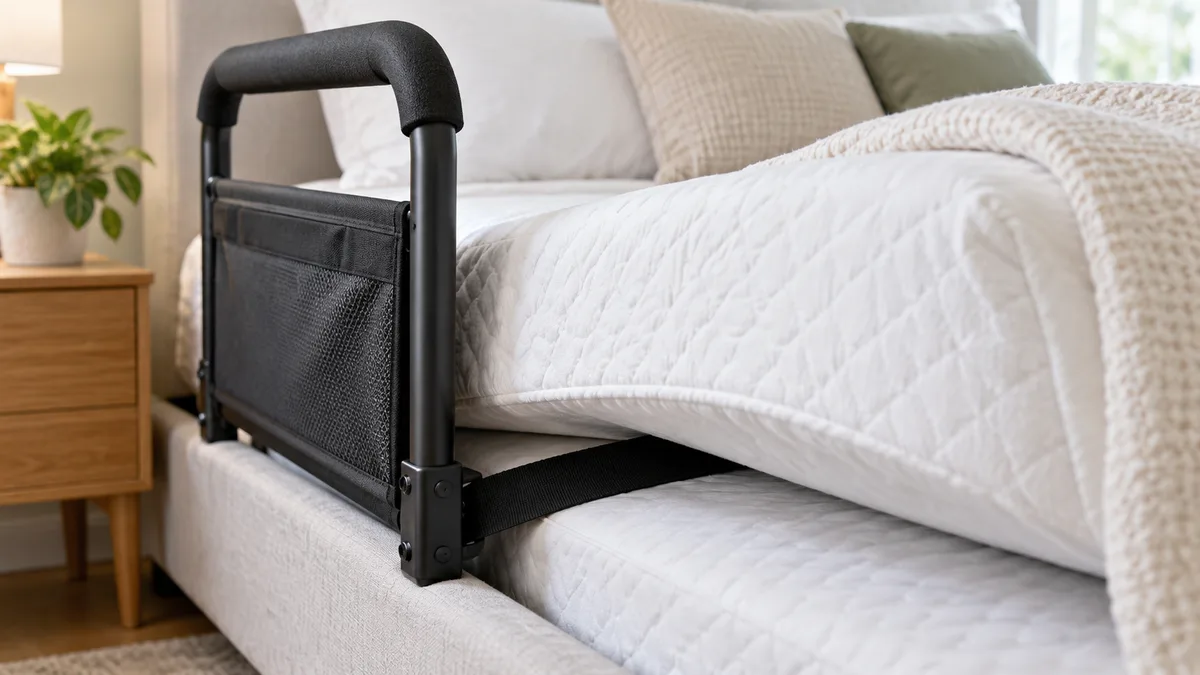
A bed assist handle is a single padded bar that slides under the mattress on a flat base. The weight of the mattress holds it in place. You push yourself up by pressing down on the handle, which gives you leverage to go from lying to sitting to standing.
Good for: people who have trouble pushing themselves up from lying down, and anyone who gets up at night and needs a steady point of contact. Limits: it is not designed to stop you from rolling out during sleep. If that is your concern, a rail is the better choice. What to look at: a wide, stable base (narrower bases can shift if the mattress is very soft), a grip height that matches your bed height when you are seated, and padding that is firm enough to press against without compressing.
Half-length rails (Researched)
A half-length rail runs alongside roughly half the bed, usually at the head-to-middle section. It gives you something to hold while you change position and helps during the transition of getting up.
Good for: people who want more surface to hold than a single handle offers, and those who shift position during the night and want support. Limits: not long enough to prevent rolling out from the foot of the bed. Installation usually involves a strap under the mattress and a bracket that hooks onto the bed frame edge. What to look at: the height adjustment range (the rail should extend above the mattress surface to about shoulder height when you are sitting on the bed), and whether the bracket is compatible with your bed frame type.
Full-length bed rails (Researched)
Full-length rails run most of the bed's length and attach to the bed frame. Their main purpose is preventing a person from rolling out during sleep, not helping with transitions.
Good for: people who roll in their sleep or have restless nights, and those who have been told by a doctor or caregiver that fall prevention during sleep is a priority. Limits: require a compatible bed frame to attach to; many models are not compatible with adjustable bases or platform beds without an adapter. Heavier and more complex to install than assist handles. What to look at: frame compatibility before anything else; the specific attachment mechanism (bolt-on, hook-over, or strap); and whether it folds down to allow normal access to the bed.
One safety check most people skip
The CPSC has published safety guidance specifically about portable bed rails. The main risk they identify is entrapment: a gap between the rail and the mattress edge that can form if the rail does not fit the mattress properly.
This can happen when:
- the mattress is a memory foam type that compresses near the edge;
- the mattress is thicker or thinner than the rail's recommended range;
- the bedding shifts and the rail moves slightly out of position.
The CPSC recommends doing a gap check before every use: place the rail in position and run your hand along the space between the rail and the mattress. There should be no gap wider than one finger. If there is a gap, the rail is not the right fit for that mattress.
This check takes thirty seconds. It is worth doing every time you change the sheets.
What to compare before you buy
Five questions sort out most choices:
- What do I need it for? Getting in and out of bed: assist handle or half-rail. Preventing rolling out: full-length rail.
- What type of mattress do I have? Memory foam, adjustable base and thick pillow-top mattresses all have specific compatibility requirements. Check these before buying.
- What is my bed height? Measure from the floor to the top of the mattress. The grip or rail should extend above the mattress surface to a comfortable hold height when seated on the bed.
- Does my bed frame have rails? Full-length bed rails need a frame to attach to. Platform beds and adjustable bases may need adapters or may not be compatible.
- What are the return terms? Check before you buy that returns are straightforward if the product doesn't fit your specific setup.
For more about choosing the right mattress and bed base to pair with a rail, see our guide to mattresses for seniors. For tips on staying steady when you get up, our guide to balance exercises for seniors covers simple daily habits.
Stop if...
- the rail shifts or wobbles when you press against it;
- you notice a gap forming between the rail and the mattress edge;
- the base or strap is not seated flat under the mattress.
Stop using the rail and recheck the installation before continuing. Follow the manufacturer's instructions for your specific mattress type. Talk with your doctor or a physical therapist if you are unsure which type of bed rail suits your situation.
Frequently Asked Questions
What are the best bed rails for seniors?
The best choice depends on why you need one. For getting in and out of bed, a bed assist handle or half-length rail works well. For preventing rolling out during sleep, a full-length rail is more appropriate. Always check that the rail fits your mattress type and thickness before buying.
What is the difference between a bed rail and a bed assist handle?
A bed assist handle is a single padded grip that slides under the mattress and sticks up beside it. It helps you push yourself up to sit or stand. A bed rail is a longer bar or frame that runs along the side of the bed. It can help with getting in and out, or it can prevent rolling out — depending on length and placement.
Are bed rails safe for older adults?
A properly fitted rail on a compatible mattress is safe. The main risk is a gap between the rail and the mattress edge — if the mattress is too soft or the rail doesn't fit the bed frame, a gap can form. The CPSC recommends checking this fit carefully before every use. Follow the manufacturer's instructions for your specific mattress type.
How do I know if a bed rail fits my mattress?
Lay the rail against the mattress edge with the strap under the mattress. There should be no gap wider than one finger between the rail and the mattress. Do this check every time you change the bedding or move the mattress. A memory foam mattress compresses differently than an innerspring, which can affect the fit.
One thing to try this week
Sit on the edge of your bed and push yourself up to standing using only your hands on the mattress surface. Notice which side feels more natural and where you reach. That is where a bed assist handle or half-rail would help most. For a stronger foundation before you add any equipment, see our guide to mattresses for seniors.
Sources
- CPSC, Portable Bed Rail Safety: cpsc.gov/portable-bed-rails
- CDC, Older Adult Fall Prevention: cdc.gov/falls
- NIA, Home Safety Checklist for Older Adults: nia.nih.gov/health/home-safety-checklist-older-adults