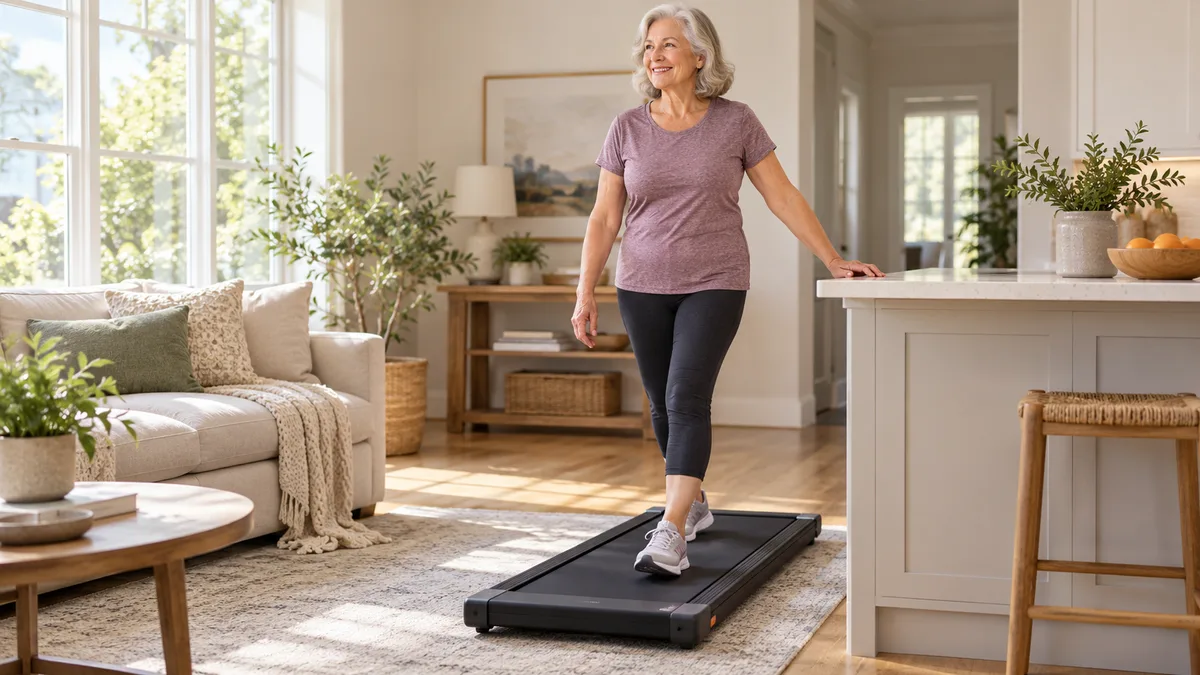
A walking pad is a slim, flat belt that sits low to the floor and lets you walk indoors at a steady pace, without the size or noise of a full treadmill. This guide compares the main types of walking pad and explains what to look at before you buy. It belongs to our wider guide to exercise equipment for seniors, which covers resistance bands, light weights, mats and more.
Why a walking pad works well at home
The CDC describes walking as one of the safest forms of physical activity for older adults. The NIA includes regular walking in its guidance for staying active after 60. Both point to the same idea: short walks done most days matter more than occasional long ones.
That's where a walking pad helps. Here in Tucson, July and August are too hot to walk outside before nine in the morning. A walking pad gave my mother a way to keep her fifteen minutes a day without waiting for the heat to break. She keeps it flat under the couch and slides it out after breakfast.
A walking pad doesn't require a special room, a gym membership or help setting up. You unfold it, step on and walk. That simplicity is most of its value.
Walking pad vs treadmill: the main differences
Many people use the two words interchangeably, but they describe different products.
| Walking pad | Standard treadmill | |
|---|---|---|
| Height from floor | Very low, 3 to 6 inches | Taller, often 12 inches or more |
| Handles | Often none, or fold-flat bar | Fixed upright handles |
| Top speed | Usually 3.7 to 5 mph | Often 10 mph or more |
| Belt length | Shorter, typically 40 to 47 inches | Longer, 50 to 60 inches |
| Storage | Folds flat or slides under furniture | Folds upright, takes more room |
| Noise | Quieter on most models | Louder at higher speeds |
For walking at a steady, comfortable pace, the shorter belt of a walking pad is enough for most people. For running or longer strides, a standard treadmill suits you better.
The main types of walking pad compared
Every type on this page carries our Researched label: descriptions come from public product pages and manufacturer specifications. We did not test any of these products, and no brand is ranked.
Walking pads without a handlebar (Researched)
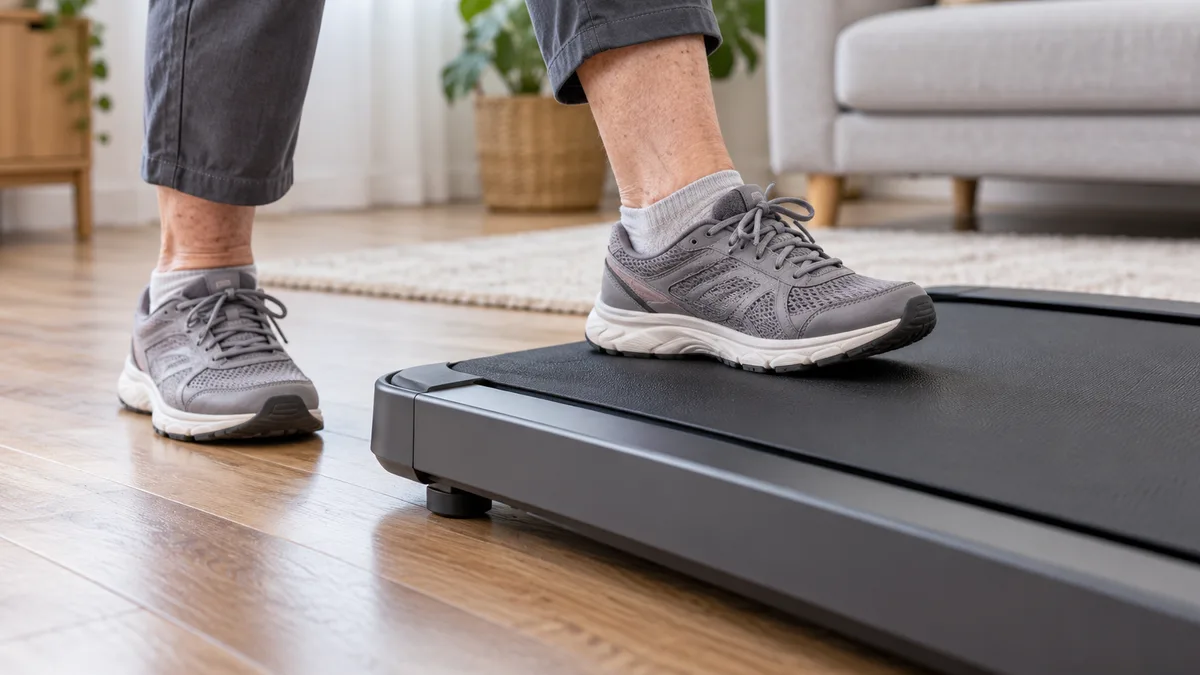
The most common style: a flat belt with a small control panel on the frame or a remote you carry. You walk freely, arms at your sides.
- Good for: people who are already steady on their feet and want a simple, low-profile machine.
- Limits: nothing to hold if you feel unsteady. You need a nearby counter or wall.
- Who it suits: anyone who walks around the house without holding anything and wants indoor steps on days they can't go outside.
What to look at: a belt at least 16 inches wide so your feet don't drift off the sides, a slow minimum speed (0.5 mph is gentler than 1.0 mph for starting), and a clear emergency stop.
Walking pads with a support bar or handlebar (Researched)
Some models include a bar that folds up for use and folds flat for storage. It gives you something to rest your hands on and steadies your steps.
- Good for: people who feel more confident with something to hold, or who are returning to regular movement after a break.
- Limits: the bar adds height and sometimes weight. Check that it folds easily and that the folded pad still fits your storage space.
- Who it suits: most older adults starting with a walking pad. Having a bar doesn't slow you down; it may let you walk a little longer.
What to look at: a bar at the right height for your arms to rest comfortably without gripping hard, a solid connection at the base, and a folding mechanism you can manage alone.
Under-desk walking pads (Researched)
The flattest type, designed to slide under a standing desk. Belt length is often shorter. Usually no handlebar.
- Good for: people who want to add steps while working at a standing desk.
- Limits: the shorter belt means less room for your feet. These work best at a slow pace of 1 to 2 mph, not for an active walking session.
- Who it suits: people already comfortable standing at a desk who want gentle movement throughout the day.
What to look at: compatible desk height (the pad adds a few inches to your standing position), belt width, and whether the remote is easy to reach while you work.
What to compare before you buy
Six questions sort out most choices:
- Do I want a bar to hold? If you're not certain, choose a model with one. You can always walk without holding it once you feel steady.
- What is the weight limit? Check it against your own weight before anything else.
- What is the minimum speed? The lower the minimum, the more gently you can start. 0.5 mph is gentler than 1.0 mph.
- How does it fold? Try the folding motion in the product video: can you manage it alone?
- Does it fit where I plan to use it? Measure your floor space, then add a foot on each end for stepping on and off safely.
- What are the return terms? A walking pad is heavy. Check whether returns are free and who arranges pickup.
If you want a machine with more exercise options, our comparison of the exercise bike for seniors covers recumbent bikes, upright bikes and seated pedal exercisers.
A simple way to start
My mother started with five minutes, once a day, at the slowest speed. She wore her regular closed shoes and kept one hand close to the wall for the first week. By the third week, she was doing ten minutes twice a day and had stopped reaching for the wall.
Here's what I'd suggest:
- Put the walking pad where you normally spend time, not in a back room you won't reach.
- Use it in the same shoes you would wear for a walk outside: flat sole, closed toe, laces tied.
- Step on while holding the bar or a counter, even if you feel steady.
- Start at the lowest speed. Five minutes is a real session.
- Add two minutes each week only when five feels easy and not tiring.
The CDC's physical activity guidance for older adults says breaking activity into shorter sessions works just as well as one longer one. Ten minutes in the morning and ten minutes in the evening counts the same as twenty minutes at once. A walking pad makes that easy on the days when stepping outside isn't the right call.
Stop if...
- the belt speed feels too fast to control safely;
- you feel dizzy, short of breath or off-balance;
- a foot catches the edge of the belt;
- anything hurts.
Step off from the back of the belt, never the sides, and sit down. Rest, and call for help if you need it. Check with your doctor before starting a new routine.
Frequently Asked Questions
What is the best walking pad for seniors?
The best walking pad is the one you will use safely and regularly. For most older adults, a model with a support bar gives the most confidence. Look for a low minimum speed, a belt wide enough for your feet and a return policy that costs you nothing if the product doesn't suit you.
What is the difference between a walking pad and a treadmill?
A walking pad is shorter, flatter and lighter. It has a lower top speed and, on most models, no fixed upright handles. It is designed for walking, not running, and stores more easily. A standard treadmill is larger, louder and better suited for faster or longer sessions.
Are walking pads safe for older adults?
A walking pad can be safe for older adults who are steady on their feet and walk regularly. The main risk is losing balance, so a model with a handlebar or starting near a counter reduces that risk. Always wear closed shoes, start at the lowest speed and never step off the sides of the moving belt. Talk with your doctor if balance is something you are working on.
How long should I walk on a walking pad?
Start with five minutes and add time slowly. The CDC says shorter sessions add up, so two ten-minute walks a day counts just as well as one twenty-minute walk. Build only when the current amount feels comfortable and not tiring.
One thing to try this week
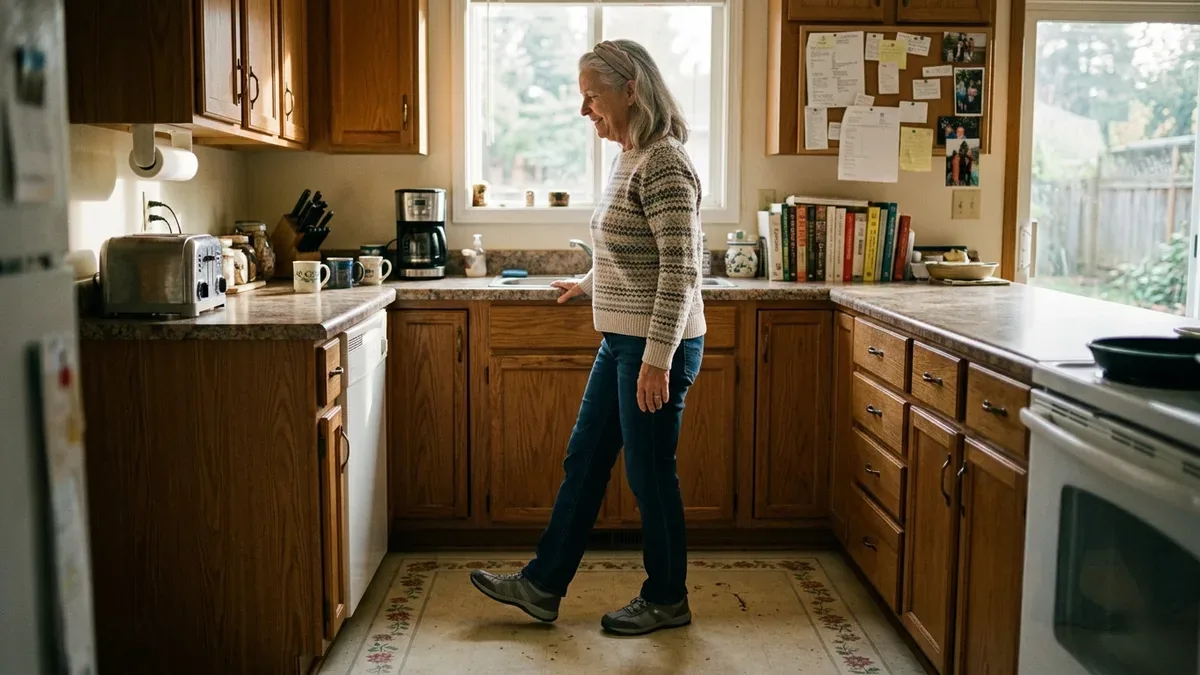
Before you search for a walking pad, put on your regular walking shoes and walk in place in your kitchen for five minutes. Notice how your balance feels without anything to hold. If you reach for the counter, look for a model with a handlebar. If you felt steady throughout, either type works. For more simple ways to stay active at home, see our full guide to exercise equipment for seniors.
Sources
- National Institute on Aging, Exercise and Physical Activity: nia.nih.gov/health/exercise-and-physical-activity
- CDC, Physical Activity Basics: cdc.gov/physical-activity-basics
- CDC, Older Adult Fall Prevention: cdc.gov/falls